Babbitt’s Etherio-Atomic Model
Babbitt imagined atoms as nested spirals carrying streams of ether. Figure 135 explains the model, with a comparison to spiritual vibration in Celestion.
In this article
An atom made of coils
Edwin D. Babbitt’s etherio-atomic model pictures the atom as nested coils with channels for streams of ether. He used it to explain how heat, electricity and other forces might pass through particles. Figure 135 shows the structure he proposed in the nineteenth century. [5][6][7]
The Principles of Light and Color by Edwin D. Babbitt
In The Principles of Light and Color, Edwin D. Babbitt gives the atom positive and negative ends. Finer spirals sit within the outer coils. To explain the passages for his proposed fluids, he compares them to tubes that carry material through plants and animals. [6][8][7]
Babbitt then describes groups of atoms. In his converse layers, neighbouring lines run parallel in opposite directions. Transverse layers cross, and he also considers diagonal arrangements. He uses those configurations to explain differences between materials and their magnetic behaviour. [9][10][11][12]
Babbitt likens the inner and outer currents to blood circulating through veins and arteries. He ultimately gives spirit the power to animate the system, ranking it beyond the finest ether he describes. [13][14]
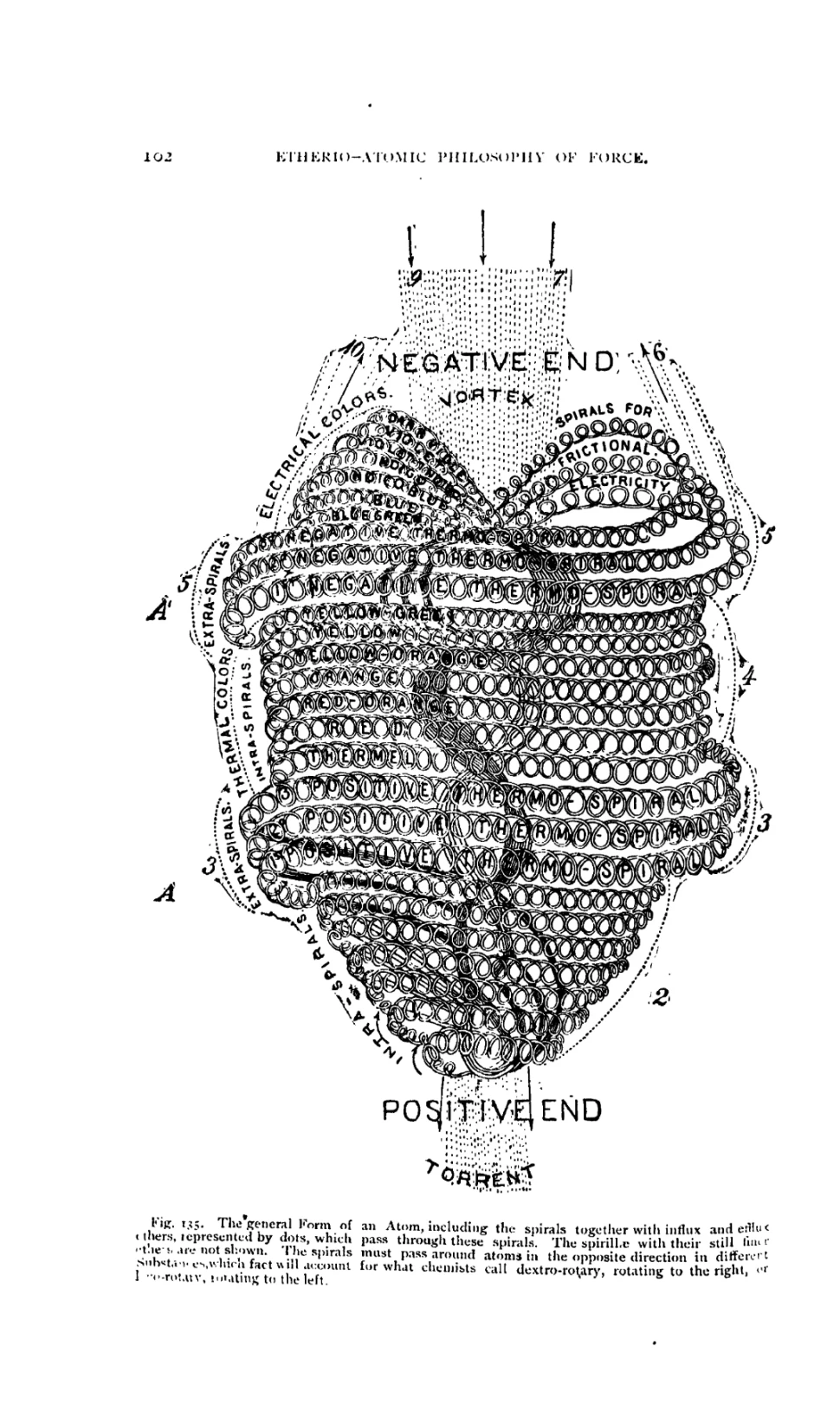
Figure 135 shows Babbitt’s proposed atom with its positive and negative ends. Nested coils provide paths for streams of ether in the model.
Edwin D. Babbitt, The Principles of Light and Color, second edition, 1896. Lumitheca Library facsimile. · Image source ↗ · Public Domain
See references (9)
- The Principles of Light and Color, printed p. 97, Reader page 104
- The Principles of Light and Color, printed p. 102, Reader page 109
- The Principles of Light and Color, printed p. 100, Reader page 107
- The Principles of Light and Color, printed p. 115, Reader page 122
- The Principles of Light and Color, printed p. 117, Reader page 124
- The Principles of Light and Color, printed p. 119, Reader page 126
- The Principles of Light and Color, printed p. 135, Reader page 142
- The Principles of Light and Color, printed p. 151, Reader page 158
- The Principles of Light and Color, printed p. 152, Reader page 159
The Angels’ Diary and Celestion Study of Man
In The Angels’ Diary and Celestion Study of Man, the account attributed to Effie M. Shirey and Charles Samson describes the divine life-principle as spiral vibrations and electrical cells, visible to spiritual sight. Their union forms what the text calls the indestructible essence of immortal life. [2][3][4]
What spirals explain in the two books
Babbitt draws coils to explain how currents travel through a material particle. The Celestion study uses spiral vibrations to picture a life-principle of divine origin. The shared image serves two accounts of what matter can carry. [6][7][2][3][4]
See references (5)
- The Angels’ Diary and Celestion Study of Man, Reader page 86
- The Angels’ Diary and Celestion Study of Man, printed p. 89, Reader page 87
- The Angels’ Diary and Celestion Study of Man, printed p. 90, Reader page 88
- The Principles of Light and Color, printed p. 97, Reader page 104
- The Principles of Light and Color, printed p. 102, Reader page 109
In the library
The Principles of Light and Color
Reading note
Separately attributed primary Library account, cited on exact verified Reader leaves.
The Angels’ Diary and Celestion Study of Man
Reading note
Separately attributed primary Library account, cited on exact verified Reader leaves.
Sources
See references (14)
- Figure 135, Babbitt’s spiral atom, printed p. 102, Reader page 109Edwin D. Babbitt, The Principles of Light and Color, second edition, 1896. Lumitheca Library facsimile.Read this page in The Principles of Light and Color ↗
- The Angels’ Diary and Celestion Study of Man, Reader page 86Effie M. Shirey and Charles Samson, The Angels’ Diary and Celestion Study of Man (1903), communicated through Elizabeth Maud Weatherhead according to the volume’s acknowledgment. Accounts below refer to the exact retained Library edition IMJ-0055-E001.Read this page in The Angels’ Diary and Celestion Study of Man ↗
- The Angels’ Diary and Celestion Study of Man, printed p. 89, Reader page 87Effie M. Shirey and Charles Samson, The Angels’ Diary and Celestion Study of Man (1903), communicated through Elizabeth Maud Weatherhead according to the volume’s acknowledgment. Accounts below refer to the exact retained Library edition IMJ-0055-E001.Read this page in The Angels’ Diary and Celestion Study of Man ↗
- The Angels’ Diary and Celestion Study of Man, printed p. 90, Reader page 88Effie M. Shirey and Charles Samson, The Angels’ Diary and Celestion Study of Man (1903), communicated through Elizabeth Maud Weatherhead according to the volume’s acknowledgment. Accounts below refer to the exact retained Library edition IMJ-0055-E001.Read this page in The Angels’ Diary and Celestion Study of Man ↗
- The Principles of Light and Color, printed p. 94, Reader page 101Edwin D. Babbitt, The Principles of Light and Color, second edition, College of Fine Forces, East Orange, New Jersey, 1896. Lumitheca Library edition IMJ-0607-E001.Read this page in The Principles of Light and Color ↗
- The Principles of Light and Color, printed p. 97, Reader page 104Edwin D. Babbitt, The Principles of Light and Color, second edition, College of Fine Forces, East Orange, New Jersey, 1896. Lumitheca Library edition IMJ-0607-E001.Read this page in The Principles of Light and Color ↗
- The Principles of Light and Color, printed p. 102, Reader page 109Edwin D. Babbitt, The Principles of Light and Color, second edition, College of Fine Forces, East Orange, New Jersey, 1896. Lumitheca Library edition IMJ-0607-E001.Read this page in The Principles of Light and Color ↗
- The Principles of Light and Color, printed p. 100, Reader page 107Edwin D. Babbitt, The Principles of Light and Color, second edition, College of Fine Forces, East Orange, New Jersey, 1896. Lumitheca Library edition IMJ-0607-E001.Read this page in The Principles of Light and Color ↗
- The Principles of Light and Color, printed p. 115, Reader page 122Edwin D. Babbitt, The Principles of Light and Color, second edition, College of Fine Forces, East Orange, New Jersey, 1896. Lumitheca Library edition IMJ-0607-E001.Read this page in The Principles of Light and Color ↗
- The Principles of Light and Color, printed p. 117, Reader page 124Edwin D. Babbitt, The Principles of Light and Color, second edition, College of Fine Forces, East Orange, New Jersey, 1896. Lumitheca Library edition IMJ-0607-E001.Read this page in The Principles of Light and Color ↗
- The Principles of Light and Color, printed p. 119, Reader page 126Edwin D. Babbitt, The Principles of Light and Color, second edition, College of Fine Forces, East Orange, New Jersey, 1896. Lumitheca Library edition IMJ-0607-E001.Read this page in The Principles of Light and Color ↗
- The Principles of Light and Color, printed p. 135, Reader page 142Edwin D. Babbitt, The Principles of Light and Color, second edition, College of Fine Forces, East Orange, New Jersey, 1896. Lumitheca Library edition IMJ-0607-E001.Read this page in The Principles of Light and Color ↗
- The Principles of Light and Color, printed p. 151, Reader page 158Edwin D. Babbitt, The Principles of Light and Color, second edition, College of Fine Forces, East Orange, New Jersey, 1896. Lumitheca Library edition IMJ-0607-E001.Read this page in The Principles of Light and Color ↗
- The Principles of Light and Color, printed p. 152, Reader page 159Edwin D. Babbitt, The Principles of Light and Color, second edition, College of Fine Forces, East Orange, New Jersey, 1896. Lumitheca Library edition IMJ-0607-E001.Read this page in The Principles of Light and Color ↗