Earth Mother
Earth Mother names a way of imagining the earth as a living source of life. Compare the Greek Gaia with Dion Fortune’s Earth Mother.
In this article
What does Earth Mother mean?
An Earth Mother is a divine figure who embodies the earth as a source of life. In Hesiod’s Theogony, Gaia brings forth the starry sky, the mountains and the sea. The landscape begins with births in a divine family. [1]
Homeric Hymn 30 praises Earth as mother of all because animals and people depend on her for food. The hymn connects that dependence with harvests, children and prosperity. [1][2]
On an Attic cup attributed to the Kodros Painter, Gaia rises from the ground and hands the infant Erichthonius to Athena. This Athenian story gives a particular child a birth from the earth. [3][2]
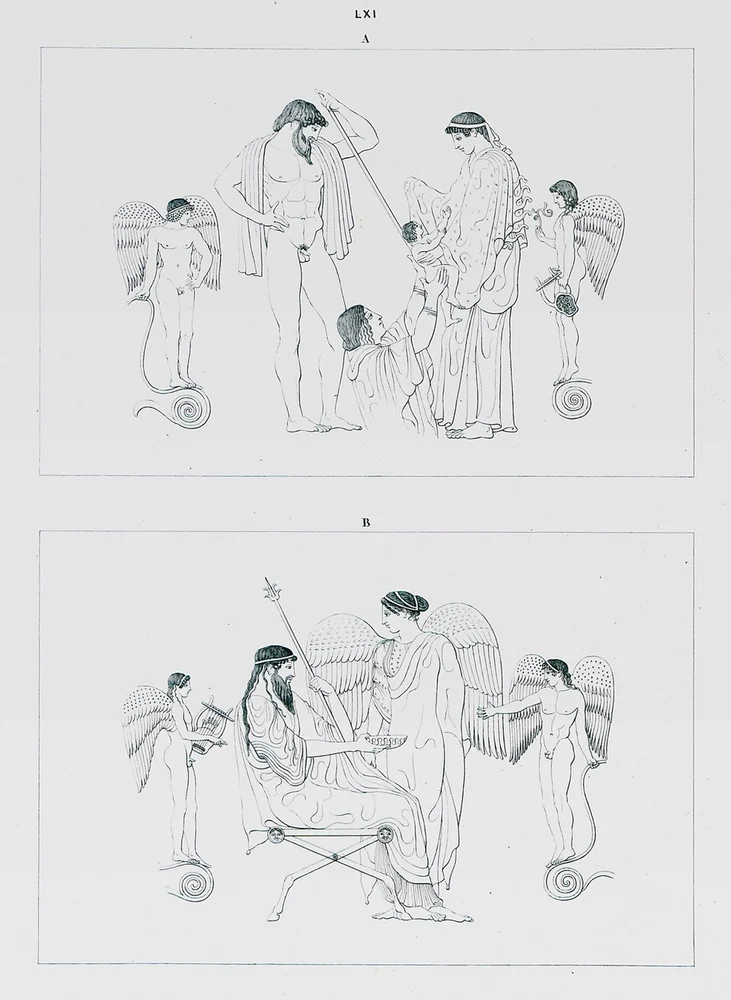
In the upper scene of Brøndsted’s 1830 plate, Gaia rises from the ground and holds the infant Erichthonius out to Athena. The design is from an Attic cup now in Berlin.
Peter Oluf Brøndsted, Reisen und Untersuchungen in Griechenland, 1830. Digitized reproduction via Wikimedia Commons. · Image source ↗ · Public Domain
The Earth Mother in The Goat-Foot God
In Dion Fortune’s The Goat-Foot God, Mona finds steadiness while planting aromatic herbs. As she tends the soil, she feels the Earth Mother respond. Gardening gives her a way to feel what she receives from the ground she is working. [5][6][7]
Hugh turns to the richness of the earth at a moment when his inherited idea of heaven offers little comfort. In the final scene he and Mona feel they draw vitality from an earth-soul. In the appended invocation the priestess identifies herself with the moon and with the waiting earth. [8][9][10]
Nourishment in the hymn and the novel
The hymn praises Earth for feeding creatures and sustaining households. Fortune starts with someone working the soil and then takes that dependence into a vision. Earth nourishes Mona through the garden and through the vitality she feels while tending it. [2][5][6][9]
Read further in the library
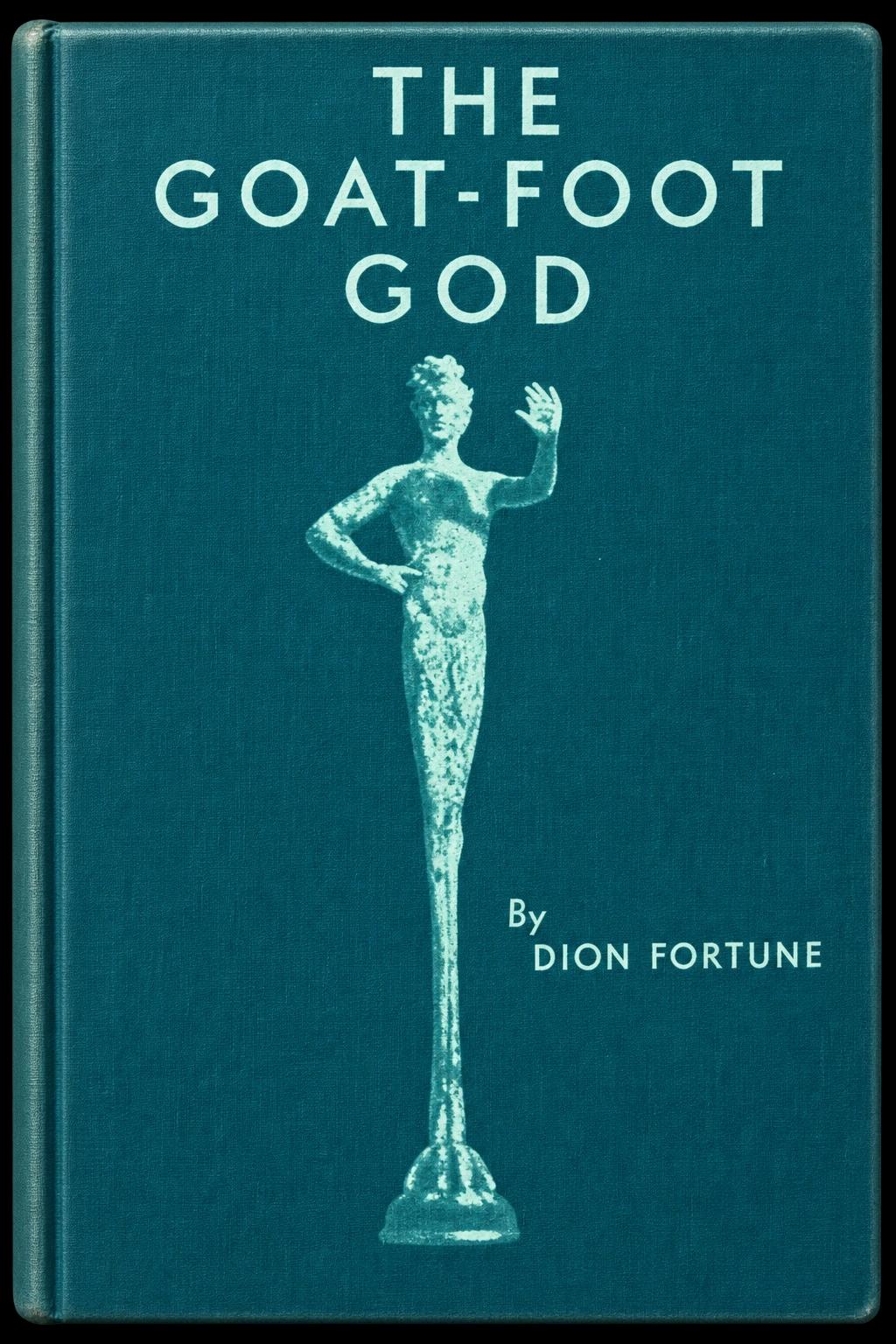
The Goat-Foot God
Reading note
The separately titled account draws on exact passages in the consulted Library edition.
Sources
See references (10)
- Hesiod, Theogony, lines 116–138 ↗Hesiod, Theogony, the emergence of Earth and her offspring, Center for Hellenic Studies.Return to text ↑
- Homeric Hymn 30, To Earth the Mother of All ↗Anonymous, Homeric Hymn 30, H. G. Evelyn-White translation (1914).Return to text ↑
- Attic kylix with the birth of Erichthonius, Berlin F 2537 ↗Staatliche Museen zu Berlin, Antikensammlung, F 2537. Attributed to the Kodros Painter.Return to text ↑
- Plate of the birth of Erichthonius ↗Peter Oluf Brøndsted, Reisen und Untersuchungen in Griechenland, 1830. Digitized reproduction via Wikimedia Commons.
- The Goat-Foot God, Reader page 271Dion Fortune, The Goat-Foot God. Undated digital Library edition IMJ-0643-E001. Numbered references use the Library Reader sequence.Read this page in The Goat-Foot God ↗Return to text ↑
- The Goat-Foot God, Reader page 272Dion Fortune, The Goat-Foot God. Undated digital Library edition IMJ-0643-E001. Numbered references use the Library Reader sequence.Read this page in The Goat-Foot God ↗Return to text ↑
- The Goat-Foot God, Reader page 273Dion Fortune, The Goat-Foot God. Undated digital Library edition IMJ-0643-E001. Numbered references use the Library Reader sequence.Read this page in The Goat-Foot God ↗Return to text ↑
- The Goat-Foot God, Reader page 325Dion Fortune, The Goat-Foot God. Undated digital Library edition IMJ-0643-E001. Numbered references use the Library Reader sequence.Read this page in The Goat-Foot God ↗Return to text ↑
- The Goat-Foot God, Reader page 352Dion Fortune, The Goat-Foot God. Undated digital Library edition IMJ-0643-E001. Numbered references use the Library Reader sequence.Read this page in The Goat-Foot God ↗Return to text ↑
- The Goat-Foot God, Reader page 355Dion Fortune, The Goat-Foot God. Undated digital Library edition IMJ-0643-E001. Numbered references use the Library Reader sequence.Read this page in The Goat-Foot God ↗Return to text ↑