Dragon Pearls
A dragon pearl may be a treasure under a sleeping dragon’s chin, a gift from a sea palace or a flaming orb in Chinese art.
In this article
What is a dragon pearl?
A dragon pearl in Chinese legend is a treasure associated with a dragon. In one tale it lies beneath a sleeping dragon’s chin. In another it belongs to a princess’s hoard. In art a shining or flaming pearl can sit between two dragons without identifying any particular tale. [1][2][3][5]
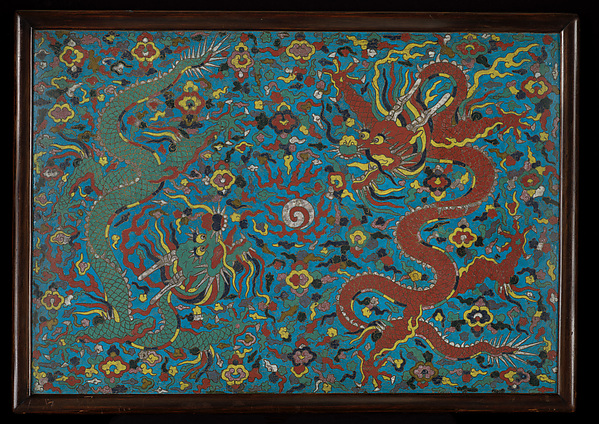
A late Ming panel presents the flaming pearl as the focus of two approaching dragons.
Panel with dragons amid clouds. late 16th–early 17th century. The Metropolitan Museum of Art. Gift of Edward G. Kennedy, 1929. Public Domain. · Image source ↗ · Public Domain
In The Chinese Fairy Book
In Richard Wilhelm’s The Chinese Fairy Book, translated by Frederick H. Martens, a wise man tells the emperor that the daughter of the Eastern Sea’s Dragon King guards vast stores of pearls. He recalls a fisherboy who took a pearl from beneath the chin of a sleeping black dragon. The story then turns from a hazardous taking to an exchange of gifts. The princess returns the emperor’s gifts with great, small and ordinary pearls. [3][4]
The wise man distinguishes the largest pearls by their light. He calls one a wishing pearl and two others black dragon pearls. Some of the smaller pearls, he says, change size with the moon. The court doubts he can tell them apart, so each detail matters to the exchange. [5]
The black dragon’s pearl in the Zhuangzi
In the chapter Lie Yu-kou, in James Legge’s translation, a father tells his son that a pearl of great price must have come from beneath a sleeping black dragon. The story is then applied to someone who boasts of support from the king of Song. It makes the pearl a lesson about the risk behind an apparently fortunate gain. [1]
The flaming pearl in art
On the Ming textile, the pearl sits between two dragons on a field of clouds. Its flame makes it the first thing the eye sees between them. The pearl can carry the whole design without a story explaining how somebody found it. [2][3][5]
In the library
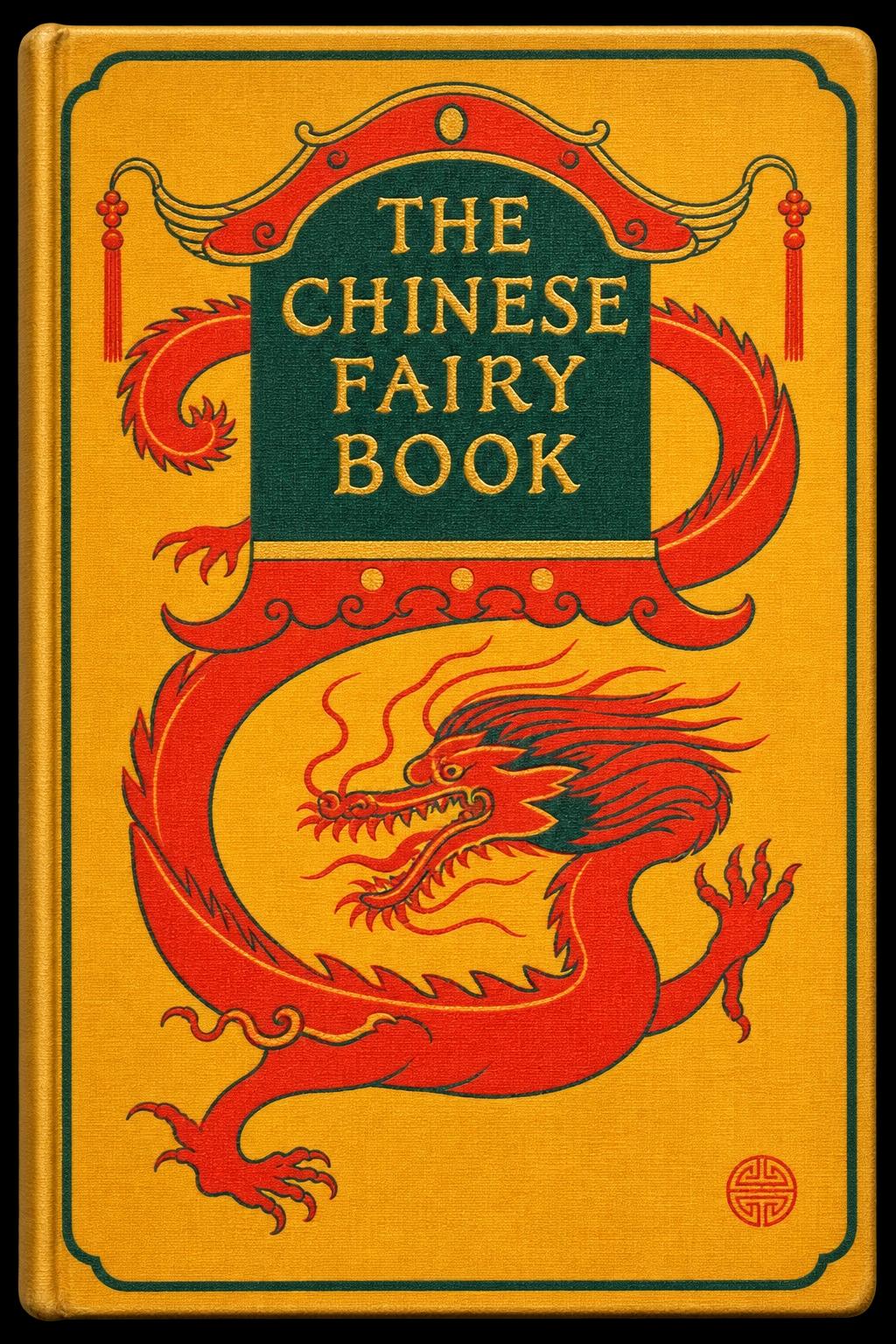
The Chinese Fairy Book
Reading note
Read how the dragon princess returns the emperor’s gifts and how a wise man distinguishes the pearls she sends.
Sources
See references (5)
- Zhuangzi, chapter 32, Lie Yu-kou, translated by James Legge ↗Chinese Text Project
- Panel with dragons amid clouds ↗Panel with dragons amid clouds. late 16th–early 17th century. The Metropolitan Museum of Art. Gift of Edward G. Kennedy, 1929. Public Domain.
- The Chinese Fairy Book, Library Reader page 154Richard Wilhelm, editor. Frederick H. Martens, translator. The Chinese Fairy Book. Frederick A. Stokes Company, New York, 1921. Lumitheca Library edition IMJ-0478-E002.Read this page in The Chinese Fairy Book ↗
- The Chinese Fairy Book, Library Reader page 158Richard Wilhelm, editor. Frederick H. Martens, translator. The Chinese Fairy Book. Frederick A. Stokes Company, New York, 1921. Lumitheca Library edition IMJ-0478-E002.Read this page in The Chinese Fairy Book ↗
- The Chinese Fairy Book, Library Reader page 159Richard Wilhelm, editor. Frederick H. Martens, translator. The Chinese Fairy Book. Frederick A. Stokes Company, New York, 1921. Lumitheca Library edition IMJ-0478-E002.Read this page in The Chinese Fairy Book ↗