Dracula vs. Vlad the Impaler
Was Dracula based on Vlad the Impaler? Follow the historical ruler, Stoker’s research notes and three scenes in the 1897 novel.
In this article
Follow Dracula from the records to the novel
Choose a stop to compare a historical source with what Stoker and his characters make of it.
- 1462 · Historical record
The ruler’s letter
A campaign reported to the king of Hungary
Vlad writes from Giurgiu. Two surviving manuscript copies give different tallies. - 1490 · Surviving manuscript
Efrosin’s tale
A medieval story about Dracula
The colophon names an earlier version from 1486. - 1820 and 1890 · Research
Wilkinson and the name
A historical account becomes a novelist’s source
Read the printed footnote beside the evidence of Stoker’s reading in Whitby. - 1897 · Chapter 1
The castle in the mountains
A journey through places real and imagined
Harker’s route takes him to the Borgo Pass. Bran’s association comes from outside the novel. - 1897 · Chapter 3
The Count’s own account
Harker records a speech about wars and ancestry
Compare the voice of the Count with Van Helsing’s theory in chapters 18 and 23. - 1914 · Library Reader
Two chapters in Wright
Folk beliefs and fiction have separate chapters
See the different uses of vampire by turning from printed p. 142 to p. 150.
Was Dracula based on Vlad the Impaler?
Bram Stoker borrowed the name Dracula and material about a Wallachian ruler’s wars from William Wilkinson’s history. The historical ruler Vlad III and the novel’s vampire are connected through that reading. Stoker built the Count’s supernatural powers, Transylvanian castle and pursuit through England into the fiction. The dated notes and the characters’ speech let us see where the connection is strongest. [4][6][10][11][12]
A voivode was a ruler or military governor. Vlad held that title in Wallachia, south of the Carpathians. Harker encounters a count in a fictional castle in the mountains associated with Transylvania. When Van Helsing later proposes a Wallachian identity for him, he is trying to solve a mystery inside the novel. [3][2][9][11]
See references (8)
- The Tale of Dracula the Voivode, Efrosin’s 1490 manuscript
- Ambras portrait of Vlad III, GG 8285
- Wilkinson’s account and footnote on the name Dracula, printed pp. 17–19
- Stoker’s dated research in Whitby
- Dracula, chapter 1 · Harker’s journey
- Dracula, chapter 3 · the Count’s family history
- Dracula, chapter 18 · Van Helsing’s identification
- Dracula, chapter 23 · the Count’s fictional powers
Vlad III in the records
Vlad III ruled Wallachia, including a reign from 1456 to 1462. In February 1462 he reported his campaign along the Danube to Matthias Corvinus, king of Hungary. The letter is a strong link to a particular ruler, place and conflict. Its two surviving manuscript copies also show how the evidence can diverge. They give different totals, and their individual figures fail to add up to those totals. [1][3]
The letter and its register record wartime deaths. Other witnesses and later accounts describe acts of punishment. A later retelling can bring the reports together and change their scale or framing. On a very different sort of record, the Ambras portrait, the costume identifies an image of a ruler remembered by a later generation. The museum dates the object to the second half of the sixteenth century. [1][3][16]
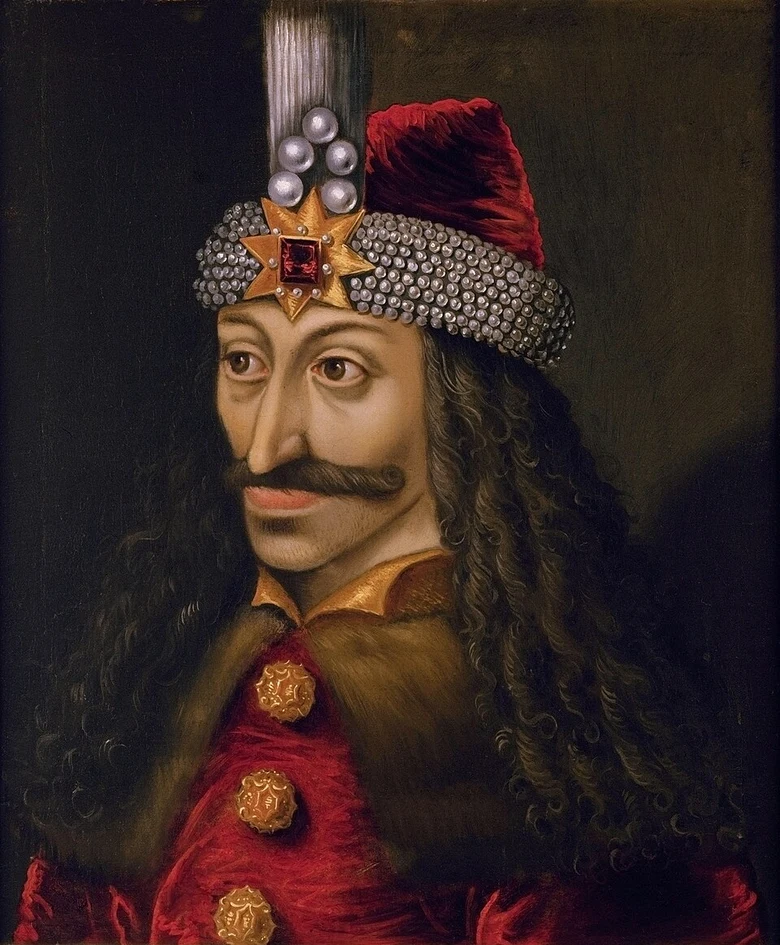
This portrait was painted in the second half of the sixteenth century, decades after Vlad’s death. It records a later image of the ruler.
Anonymous German painter, portrait of Vlad III, Kunsthistorisches Museum, GG 8285, Schloss Ambras. Wikimedia Commons. Public domain. · Image source ↗ · Public Domain
The Dracula story before Stoker
A late medieval account already calls its ruler Dracula. In the surviving version of The Tale of Dracula the Voivode, the monk Efrosin says he wrote the tale in 1486 and rewrote it in 1490. Look at the opening and the closing note together. The opening makes the name part of its judgement of the ruler. The closing dates the act of copying and rewriting. [2]
The tale shows that the name had a literary life long before the Victorian novel. Its episodes present a ruler whose conduct is being judged. That resemblance across centuries is a comparison between texts. Stoker’s surviving notes give a different, traceable route for the name through Wilkinson. [2][5][7]
The footnote Stoker read in Whitby
On printed p. 19, Wilkinson describes a voivode named Dracula crossing the Danube in a conflict with the Ottoman sultan. A footnote glosses the name as devil and associates its use with courage, cruelty or cunning. Stoker recorded the gloss in his notes from Whitby in 1890. Read the footnote as a nineteenth-century explanation that helped shape the novelist’s choice of name. [4][6][7]
The same source also supplied details Stoker could turn into family history, including the crossing and the role of a brother. For the historical family, the Ambras catalogue identifies Vlad III as the son of Vlad Dracul. The Stanford edition discusses competing explanations of the name. These sources let the reader distinguish a family association from Wilkinson’s memorable translation. [4][10][3][2]
See references (6)
What chapters 3, 18 and 23 actually say
In chapter 3, the Count recounts wars and crossings of the Danube to Harker. He speaks about people of his own race and about a Dracula whose brother betrayed him. The speech makes family glory part of the Count’s self-portrait. Read the shifts from an individual voivode to other members of the line before taking the whole speech as a single person’s biography. [10][4]
In chapter 18, Van Helsing says the vampire must have been a voivode who fought across the river, then qualifies the identification. His authority in the scene comes from the reports of Arminius, a character in the novel. In chapter 23 he also calls the Count an alchemist and describes a mind that survives death. The chapters use historical language to make this invented adversary feel as if he could be researched. [11][12]
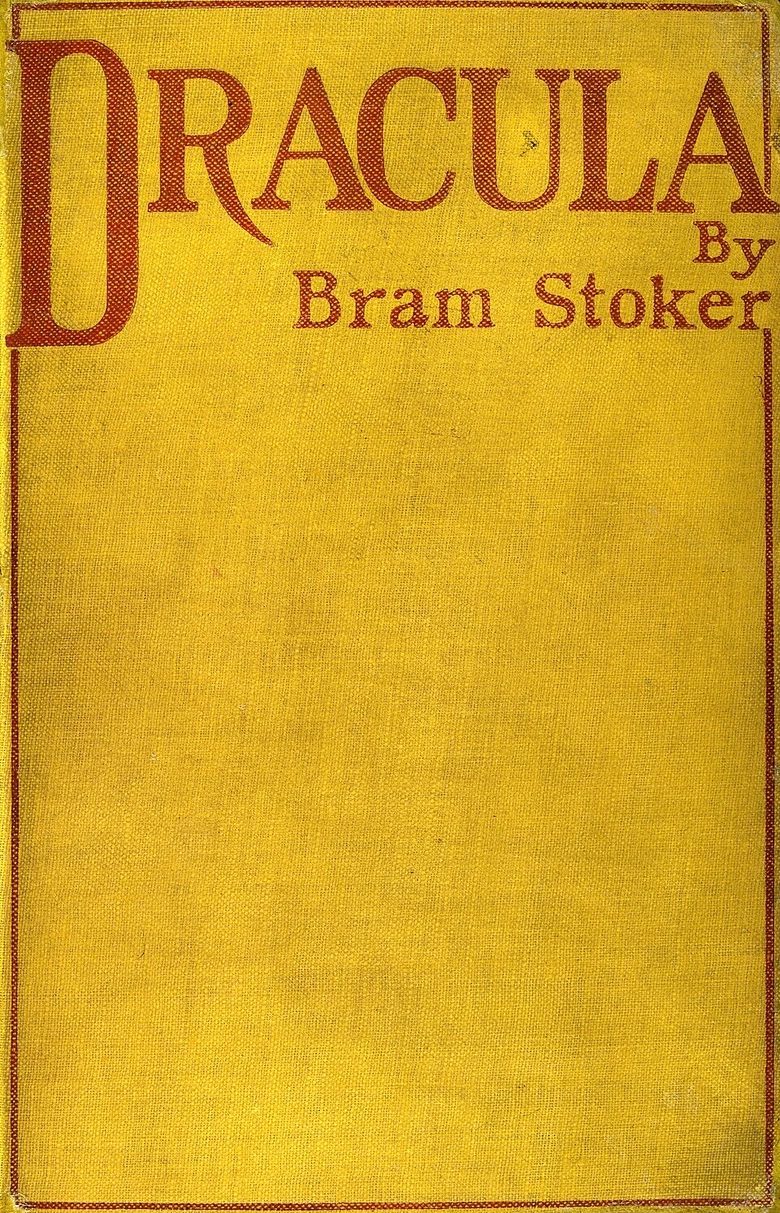
The British Library’s copy of the 1897 first edition identifies the book and author in red on yellow cloth.
Bram Stoker, Dracula, Archibald Constable and Company, 1897. British Library, Cup.410.f.718. Wikimedia Commons. Public domain. · Image source ↗ · Public Domain
Bran Castle and the castle in the novel
Harker starts from Bistritz and leaves the public coach at the Borgo Pass, where the Count’s carriage collects him. Bran Castle is a real fortress farther south, near Brașov. It has become associated with the fictional Count, but the novel does not name it as his castle. The narrative deliberately leaves Harker without an exact location he could find on a map. [9][15][14]
Bran’s own history gives Vlad a limited role in the story of the fortress. When a source says Dracula’s castle, ask whether it means the place in the novel, a proposed visual inspiration for Stoker, or a modern name used for a visitor attraction. Those are different historical claims and each needs its own evidence. [15][14][5]
The vampire sources around Dracula
The sources that shaped the vampire need a different line of inquiry from those that supplied the name. Stoker took notes from Emily Gerard’s 1885 account of Transylvanian beliefs. Compare the Estate’s reproduction of that research with its material on Wilkinson. A description of a belief and the history of a ruler offered Stoker different kinds of material. [8][7][5]
Dudley Wright helps make the distinction visible within one book. In 1914 he places reports of living beings called murony in a folklore chapter. Eight pages later he discusses Stoker’s novel in his chapter on literature. Burton’s Victorian adaptation offers a separate comparison. Its Memorial Edition uses vampire to introduce the baital, a being that animates a corpse and tells stories in a South Asian tale cycle. [18][19][20]
Read further in the library
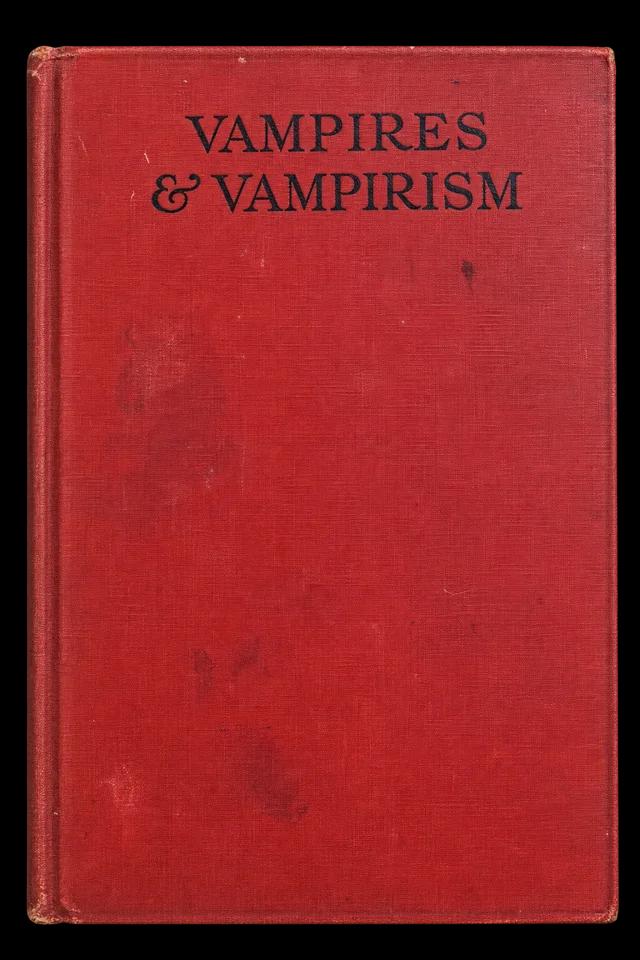
Vampires and Vampirism
Reading note
Compare Wright’s treatment of Wallachian vampire beliefs with his separate discussion of Dracula as literature.
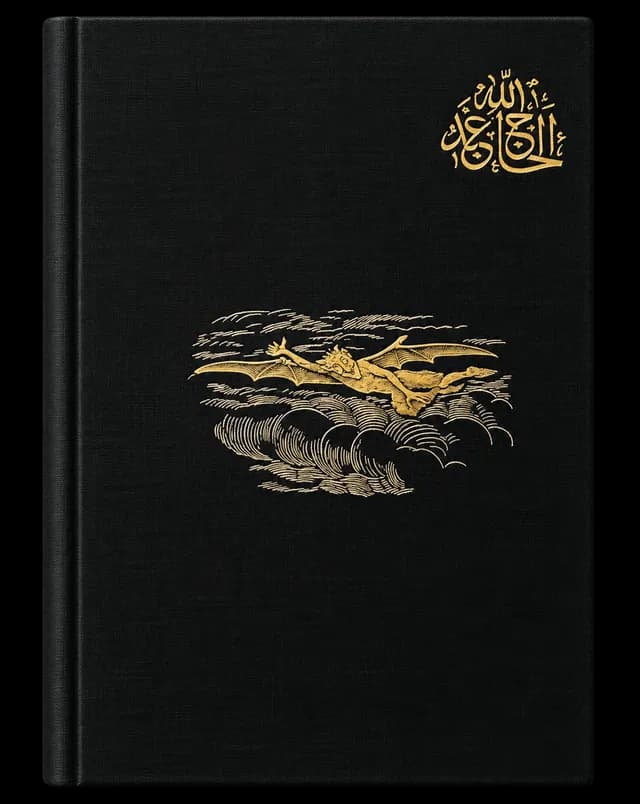
Vikram and the Vampire
Reading note
See how the Memorial Edition of Vikram and the Vampire used the English word for a being from another story tradition.
Sources
See references (20)
- Vlad’s letter of 11 February 1462 and the two manuscript witnesses ↗Royal Historical Society research article, discussion of the letter and footnotes 63–66.Return to text ↑
- The Tale of Dracula the Voivode, Efrosin’s 1490 manuscript ↗Russian National Library, Efrosin Collection, fond 351, no. 11/1088, fols. 204–217. Stanford Global Medieval Sourcebook transcription and translation.Return to text ↑
- Ambras portrait of Vlad III, GG 8285 ↗Schloss Ambras Innsbruck, Kunsthistorisches Museum.Return to text ↑
- Wilkinson’s account and footnote on the name Dracula, printed pp. 17–19 ↗William Wilkinson, An Account of the Principalities of Wallachia and Moldavia, London, 1820. Historical scan via Wikimedia Commons.Return to text ↑
- Dracula notes and outline, EL3 .S874d MS ↗The Rosenbach Museum & Library, Guide to Bram Stoker Holdings. The original notes and the bibliographic record for the published facsimile.Return to text ↑
- Stoker’s dated research in Whitby ↗Bram Stoker Estate presentation of the dated notes and the Whitby Museum visitor book.Return to text ↑
- Wilkinson and Gerard in Stoker’s surviving research ↗Bram Stoker Estate, including reproductions from the Rosenbach and the Wilkinson footnote.Return to text ↑
- Transylvanian Superstitions, 1885 ↗Emily Gerard, The Nineteenth Century 18, pp. 130–150. Project Gutenberg transcription.Return to text ↑
- Dracula, chapter 1 · Harker’s journey ↗Bram Stoker Estate chapter edition based on the Project Gutenberg transcription.Return to text ↑
- Dracula, chapter 3 · the Count’s family history ↗Corpus of Electronic Texts, University College Cork.Return to text ↑
- Dracula, chapter 18 · Van Helsing’s identification ↗Corpus of Electronic Texts, University College Cork.Return to text ↑
- Dracula, chapter 23 · the Count’s fictional powers ↗Corpus of Electronic Texts, University College Cork.Return to text ↑
- Dracula, first edition, Cup.410.f.718 ↗British Library, first edition dated 1897.
- Bran’s account of the historical fortress ↗Bran Castle’s historical account.Return to text ↑
- The book’s geography and proposed castle locations ↗Bram Stoker Estate annotated source map and chapter references.Return to text ↑
- Ambras portrait, public-domain reproduction ↗Anonymous German painter, portrait of Vlad III, Kunsthistorisches Museum, GG 8285, Schloss Ambras. Wikimedia Commons. Public domain.Return to text ↑
- First-edition cloth cover, public-domain reproduction ↗Bram Stoker, Dracula, Archibald Constable and Company, 1897. British Library, Cup.410.f.718. Wikimedia Commons. Public domain.
- Living Vampires · printed p. 142Dudley Wright, Vampires and Vampirism. William Rider and Son, 1914. Lumitheca Library facsimile.Read this page in Vampires and Vampirism ↗Return to text ↑
- The Vampire in Literature · printed p. 150Dudley Wright, Vampires and Vampirism. William Rider and Son, 1914. Lumitheca Library facsimile.Read this page in Vampires and Vampirism ↗Return to text ↑
- Preface to the Memorial Edition · printed p. xiIsabel Burton’s preface to Richard F. Burton’s Vikram and the Vampire. Tylston and Edwards, 1893.Read this page in Vikram and the Vampire ↗Return to text ↑