Divine influx
Divine influx is the ongoing reception of life, good and truth from God in Swedenborg’s theology. See how the source, the receiver and freedom fit together.
In this article
What is divine influx?
Divine influx is the ongoing reception of life, good and truth from God. In Swedenborg’s theology, life depends on its source as a stream depends on a fountain. What flows in takes a particular form through the affections and capacities of the person who receives it. [1][2]
The same influence can be received differently. What a person loves affects how they respond to what they receive. That distinction lets Swedenborg give the Lord a role as the source of all good while preserving a role for human choices. [3][4][5]
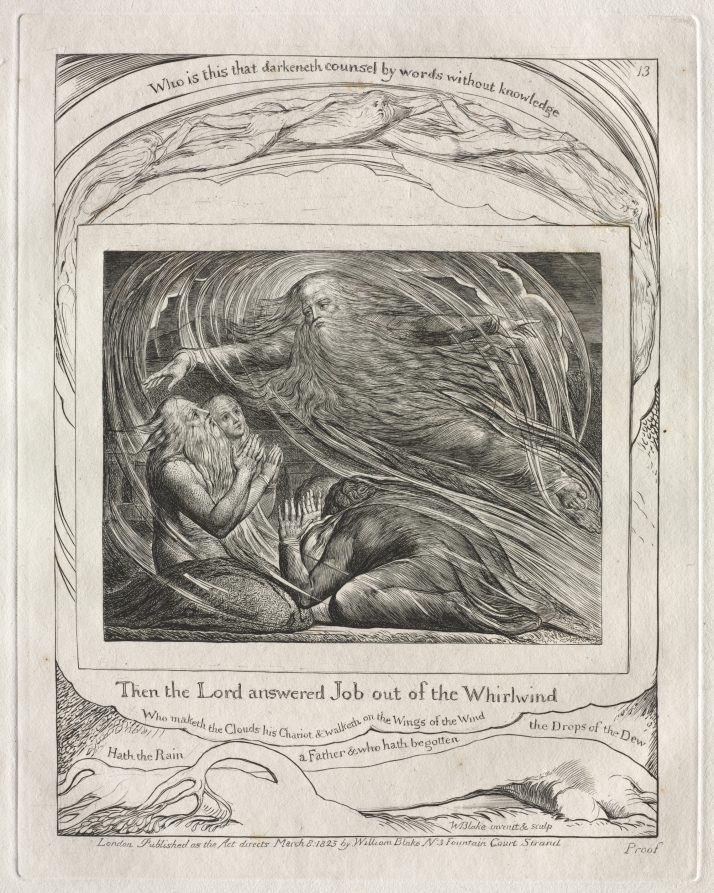
William Blake, Then the Lord answered Job out of the Whirlwind, 1825, plate 13 from The Book of Job. The engraving pictures Divine address through the biblical encounter. Swedenborg’s account also considers influence that does not take the form of spoken words.
The Cleveland Museum of Art. Mr. and Mrs. Charles G. Prasse Collection. 1963.303.14. CC0. · Image source ↗ · CC0
See references (5)
- Heaven and Its Wonders and Hell, printed p. 9, Reader page 16
- Heaven and Its Wonders and Hell, printed p. 10, Reader page 17
- Heaven and Its Wonders and Hell, printed p. 233, Reader page 240
- Heaven and Its Wonders and Hell, printed p. 234, Reader page 241
- Heaven and Its Wonders and Hell, printed p. 235, Reader page 242
Heaven and Its Wonders and Hell
Emanuel Swedenborg’s Heaven and Its Wonders and Hell distinguishes direct influx from the Lord and mediated influx through heaven. The Lord acts upon both the inmost and the outmost of a person’s life. Heavenly societies also communicate through an order in which higher degrees influence lower ones. Swedenborg treats the cooperation of these relations as necessary to spiritual life. [6][7][8][3][4][5]
Swedenborg compares reception to sunlight falling on flowers and on decaying matter. The same sunlight brings out different effects. The comparison helps him explain how life can have one source while being put to very different uses. [9][10][11]
Influence upon a person ordinarily concerns affection, from which thought follows. Swedenborg says the surrounding spirits’ own memories do not normally pour into the person’s memory as if all their experiences had become that person’s past. His chapter on spiritual companionship places reception within the habits and choices of a life, and distinguishes it from exceptional conscious conversations. [12][13][4][5][14]
Freedom limits what can become one’s own. Good imposed without the will’s participation has no lasting appropriation. Near the end of the book, Swedenborg specifies that human conjunction with heaven and hell is mediated through spirits in the intermediate world. Their relation preserves the equilibrium in which a person can choose, while the Lord remains the source of good. [15][16][17][18]
See references (16)
- Heaven and Its Wonders and Hell, printed p. 233, Reader page 240
- Heaven and Its Wonders and Hell, printed p. 234, Reader page 241
- Heaven and Its Wonders and Hell, printed p. 235, Reader page 242
- Heaven and Its Wonders and Hell, printed p. 28, Reader page 35
- Heaven and Its Wonders and Hell, printed p. 150, Reader page 157
- Heaven and Its Wonders and Hell, printed p. 151, Reader page 158
- Heaven and Its Wonders and Hell, printed p. 11, Reader page 18
- Heaven and Its Wonders and Hell, printed p. 533, Reader page 540
- Heaven and Its Wonders and Hell, printed p. 534, Reader page 541
- Heaven and Its Wonders and Hell, printed p. 229, Reader page 236
- Heaven and Its Wonders and Hell, printed p. 230, Reader page 237
- Heaven and Its Wonders and Hell, printed p. 236, Reader page 243
- Heaven and Its Wonders and Hell, printed p. 568, Reader page 575
- Heaven and Its Wonders and Hell, printed p. 569, Reader page 576
- Heaven and Its Wonders and Hell, printed p. 570, Reader page 577
- Heaven and Its Wonders and Hell, printed p. 571, Reader page 578
What the receiver contributes
A person can understand a truth before it shapes what they love or how they act. For Swedenborg, willingness makes that change possible. Influx connects each life to its source, while differences in reception help explain why people remain distinct. [19][20][21][15]
Read further in the library

Heaven and Its Wonders and Hell
Reading note
Direct and mediated reception connects Divine life, heavenly societies and human freedom.
Sources
See references (22)
- Heaven and Its Wonders and Hell, printed p. 9, Reader page 16Emanuel Swedenborg, Heaven and Its Wonders and Hell, translated by J. C. Ager. The American Swedenborg Printing and Publishing Society, New York, 1916. Original Latin work first published in 1758.Read this page in Heaven and Its Wonders and Hell ↗Return to text ↑
- Heaven and Its Wonders and Hell, printed p. 10, Reader page 17Emanuel Swedenborg, Heaven and Its Wonders and Hell, translated by J. C. Ager. The American Swedenborg Printing and Publishing Society, New York, 1916. Original Latin work first published in 1758.Read this page in Heaven and Its Wonders and Hell ↗Return to text ↑
- Heaven and Its Wonders and Hell, printed p. 233, Reader page 240Emanuel Swedenborg, Heaven and Its Wonders and Hell, translated by J. C. Ager. The American Swedenborg Printing and Publishing Society, New York, 1916. Original Latin work first published in 1758.Read this page in Heaven and Its Wonders and Hell ↗Return to text ↑
- Heaven and Its Wonders and Hell, printed p. 234, Reader page 241Emanuel Swedenborg, Heaven and Its Wonders and Hell, translated by J. C. Ager. The American Swedenborg Printing and Publishing Society, New York, 1916. Original Latin work first published in 1758.Read this page in Heaven and Its Wonders and Hell ↗Return to text ↑
- Heaven and Its Wonders and Hell, printed p. 235, Reader page 242Emanuel Swedenborg, Heaven and Its Wonders and Hell, translated by J. C. Ager. The American Swedenborg Printing and Publishing Society, New York, 1916. Original Latin work first published in 1758.Read this page in Heaven and Its Wonders and Hell ↗Return to text ↑
- Heaven and Its Wonders and Hell, printed p. 28, Reader page 35Emanuel Swedenborg, Heaven and Its Wonders and Hell, translated by J. C. Ager. The American Swedenborg Printing and Publishing Society, New York, 1916. Original Latin work first published in 1758.Read this page in Heaven and Its Wonders and Hell ↗Return to text ↑
- Heaven and Its Wonders and Hell, printed p. 150, Reader page 157Emanuel Swedenborg, Heaven and Its Wonders and Hell, translated by J. C. Ager. The American Swedenborg Printing and Publishing Society, New York, 1916. Original Latin work first published in 1758.Read this page in Heaven and Its Wonders and Hell ↗Return to text ↑
- Heaven and Its Wonders and Hell, printed p. 151, Reader page 158Emanuel Swedenborg, Heaven and Its Wonders and Hell, translated by J. C. Ager. The American Swedenborg Printing and Publishing Society, New York, 1916. Original Latin work first published in 1758.Read this page in Heaven and Its Wonders and Hell ↗Return to text ↑
- Heaven and Its Wonders and Hell, printed p. 11, Reader page 18Emanuel Swedenborg, Heaven and Its Wonders and Hell, translated by J. C. Ager. The American Swedenborg Printing and Publishing Society, New York, 1916. Original Latin work first published in 1758.Read this page in Heaven and Its Wonders and Hell ↗Return to text ↑
- Heaven and Its Wonders and Hell, printed p. 533, Reader page 540Emanuel Swedenborg, Heaven and Its Wonders and Hell, translated by J. C. Ager. The American Swedenborg Printing and Publishing Society, New York, 1916. Original Latin work first published in 1758.Read this page in Heaven and Its Wonders and Hell ↗Return to text ↑
- Heaven and Its Wonders and Hell, printed p. 534, Reader page 541Emanuel Swedenborg, Heaven and Its Wonders and Hell, translated by J. C. Ager. The American Swedenborg Printing and Publishing Society, New York, 1916. Original Latin work first published in 1758.Read this page in Heaven and Its Wonders and Hell ↗Return to text ↑
- Heaven and Its Wonders and Hell, printed p. 229, Reader page 236Emanuel Swedenborg, Heaven and Its Wonders and Hell, translated by J. C. Ager. The American Swedenborg Printing and Publishing Society, New York, 1916. Original Latin work first published in 1758.Read this page in Heaven and Its Wonders and Hell ↗Return to text ↑
- Heaven and Its Wonders and Hell, printed p. 230, Reader page 237Emanuel Swedenborg, Heaven and Its Wonders and Hell, translated by J. C. Ager. The American Swedenborg Printing and Publishing Society, New York, 1916. Original Latin work first published in 1758.Read this page in Heaven and Its Wonders and Hell ↗Return to text ↑
- Heaven and Its Wonders and Hell, printed p. 236, Reader page 243Emanuel Swedenborg, Heaven and Its Wonders and Hell, translated by J. C. Ager. The American Swedenborg Printing and Publishing Society, New York, 1916. Original Latin work first published in 1758.Read this page in Heaven and Its Wonders and Hell ↗Return to text ↑
- Heaven and Its Wonders and Hell, printed p. 568, Reader page 575Emanuel Swedenborg, Heaven and Its Wonders and Hell, translated by J. C. Ager. The American Swedenborg Printing and Publishing Society, New York, 1916. Original Latin work first published in 1758.Read this page in Heaven and Its Wonders and Hell ↗Return to text ↑
- Heaven and Its Wonders and Hell, printed p. 569, Reader page 576Emanuel Swedenborg, Heaven and Its Wonders and Hell, translated by J. C. Ager. The American Swedenborg Printing and Publishing Society, New York, 1916. Original Latin work first published in 1758.Read this page in Heaven and Its Wonders and Hell ↗Return to text ↑
- Heaven and Its Wonders and Hell, printed p. 570, Reader page 577Emanuel Swedenborg, Heaven and Its Wonders and Hell, translated by J. C. Ager. The American Swedenborg Printing and Publishing Society, New York, 1916. Original Latin work first published in 1758.Read this page in Heaven and Its Wonders and Hell ↗Return to text ↑
- Heaven and Its Wonders and Hell, printed p. 571, Reader page 578Emanuel Swedenborg, Heaven and Its Wonders and Hell, translated by J. C. Ager. The American Swedenborg Printing and Publishing Society, New York, 1916. Original Latin work first published in 1758.Read this page in Heaven and Its Wonders and Hell ↗Return to text ↑
- Heaven and Its Wonders and Hell, printed p. 345, Reader page 352Emanuel Swedenborg, Heaven and Its Wonders and Hell, translated by J. C. Ager. The American Swedenborg Printing and Publishing Society, New York, 1916. Original Latin work first published in 1758.Read this page in Heaven and Its Wonders and Hell ↗Return to text ↑
- Heaven and Its Wonders and Hell, printed p. 346, Reader page 353Emanuel Swedenborg, Heaven and Its Wonders and Hell, translated by J. C. Ager. The American Swedenborg Printing and Publishing Society, New York, 1916. Original Latin work first published in 1758.Read this page in Heaven and Its Wonders and Hell ↗Return to text ↑
- Heaven and Its Wonders and Hell, printed p. 365, Reader page 372Emanuel Swedenborg, Heaven and Its Wonders and Hell, translated by J. C. Ager. The American Swedenborg Printing and Publishing Society, New York, 1916. Original Latin work first published in 1758.Read this page in Heaven and Its Wonders and Hell ↗Return to text ↑
- The Book of Job: Pl. 13, Then the Lord answered Job out of the Whirlwind, 1825 ↗The Book of Job: Pl. 13, Then the Lord answered Job out of the Whirlwind, 1825. William Blake (British, 1757–1827). Engraving. The Cleveland Museum of Art, Mr. and Mrs. Charles G. Prasse Collection, 1963.303.14. CC0 open-access image.