Diabolical pact
A diabolical pact is a bargain said to exchange allegiance for a reward. Compare demonological accounts with Theophilus and Abra-Melin’s refusal.
In this article
What is a diabolical pact?
Understanding diabolical pact
A diabolical pact is a bargain in which a person is said to pledge allegiance to the devil in return for a benefit. Its reward can be an office, riches, pleasure or help. Christian demonological writers distinguish several forms, including a personal profession and an appeal made in writing or through an intermediary. [7][8][9][10][1][4]
See references (6)
- Francesco Maria Guazzo, Compendium Maleficarum, Book I, chapter VI, printed page 13 (1929 English edition)
- Francesco Maria Guazzo, Compendium Maleficarum, Book I, chapter VI, printed page 16 (1929 English edition)
- Magica Sexualis, Reader page 60
- Magica Sexualis, Reader page 61
- Magica Sexualis, Reader page 62
- Magica Sexualis, Reader page 63
Witchcraft Magic & Alchemy by Grillot de Givry
In Witchcraft, Magic and Alchemy, Grillot de Givry discusses the Theophilus legend through the sculpture at Souillac and Rutebeuf’s play. Theophilus signs an agreement to regain an office. Mary’s recovery of the document gives the bargain a visible means of being undone. [16][17][18]
De Givry also reproduces a handwritten vow attributed to Urbain Grandier in the Loudun papers. The document appears as evidence used against Grandier. Its reproduction preserves the accusation and the alleged instrument of the pact. [18][1][7][5][16][17]
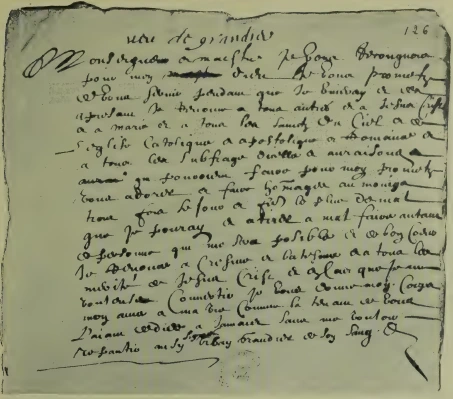
Vow attributed to Urbain Grandier, reproduced by De Givry as figure 87 in his account of the Loudun prosecution.
Handwritten vow attributed to Urbain Grandier. Bibliothèque nationale de France, Français 7619, p. 126, as reproduced by De Givry. · Image source ↗ · Public Domain
See references (6)
- Francesco Maria Guazzo, Compendium Maleficarum, Book I, chapter VI, printed page 13 (1929 English edition)
- Ludovico Maria Sinistrari, Demoniality, sections 11–12, printed page 21 (1879 English edition)
- Magica Sexualis, Reader page 60
- Witchcraft Magic & Alchemy, printed p. 116, Reader page 109
- Witchcraft Magic & Alchemy, printed p. 117, Reader page 110
- Witchcraft Magic & Alchemy, printed p. 119, Reader page 112
Demonological accounts
Compendium Maleficarum by Francesco Maria Guazzo
In Compendium Maleficarum, Book I, chapter VI, Francesco Maria Guazzo distinguishes express and tacit pacts. His eleven headings begin with religious renunciation and include mock baptism and a new name. The mark comes tenth. He says the devil offers help in this life and happiness after death. [1][2][3][4]
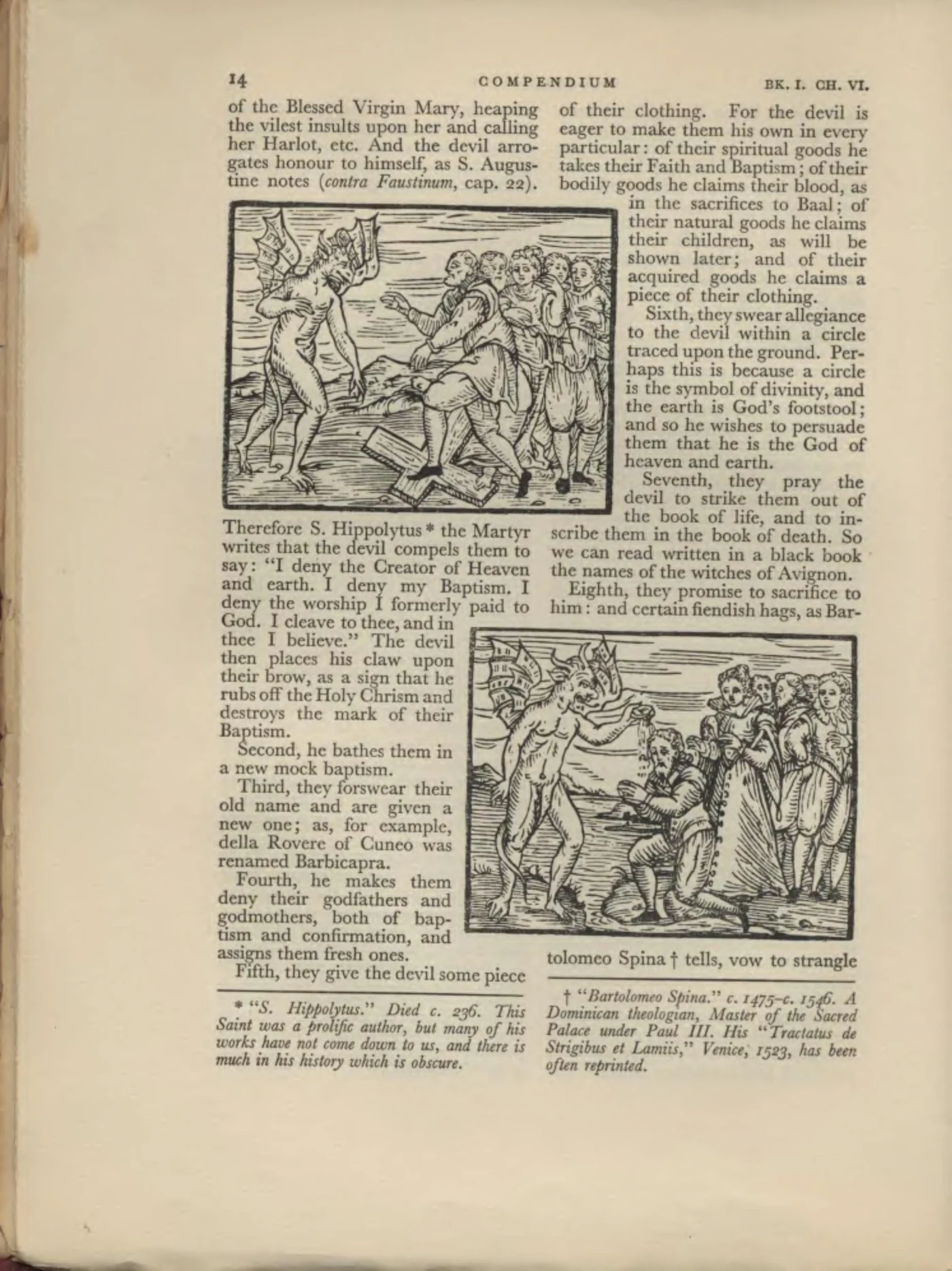
Illustrations accompanying the account of renunciation and mock baptism in the 1929 Guazzo edition, printed p. 14.
Illustrated page from Guazzo, Compendium Maleficarum, E. A. Ashwin translation, edited by Montague Summers, John Rodker, 1929. Historical illustrator unverified. Internet Archive scan. Public Domain. · Image source ↗ · Public Domain
See references (4)
- Francesco Maria Guazzo, Compendium Maleficarum, Book I, chapter VI, printed page 13 (1929 English edition)
- Francesco Maria Guazzo, Compendium Maleficarum, Book I, chapter VI, printed page 14 (1929 English edition)
- Francesco Maria Guazzo, Compendium Maleficarum, Book I, chapter VI, printed page 15 (1929 English edition)
- Francesco Maria Guazzo, Compendium Maleficarum, Book I, chapter VI, printed page 16 (1929 English edition)
Demoniality by Ludovico Maria Sinistrari
In Demoniality, sections 11–23, Ludovico Maria Sinistrari ascribes the collected ceremonies to Guazzo and says they were reported in admissions obtained under torture. On printed page 29 of the 1879 edition, the promises are followed by the assignment of an individual spirit called a magistellus. [5][6]
Magica Sexualis by Émile Laurent and Paul Nagour
In Magica Sexualis, Émile Laurent and Paul Nagour begin with an explicit compact before witnesses and describe honours, riches and pleasure in return. Their eleven-part scheme puts marking last. The account is introduced through material attributed to statements obtained under torture. [7][8][9][10]
The compilers later use the pact in retelling the prosecutions of Louis Gaufridi and Urbain Grandier. In both accounts, the allegations are part of the prosecution, with coercion also central to the story they give of Gaufridi’s confession. [11][12][13][14][15]
See references (9)
Abra-Melin and the comparison
The Book of the Sacred Magic of Abra-Melin the Mage, translated by S. L. MacGregor Mathers
In The Book of the Sacred Magic of Abra-Melin the Mage, translated by S. L. MacGregor Mathers, Abraham warns against submission to the Devil. When the spirits ask for terms and a sacrifice, the practitioner’s authority is said to come from God, and offerings are reserved for God. The oath Abraham expects from the spirits is an exercise of that claimed authority. [20][21][22][23][24][25][26]
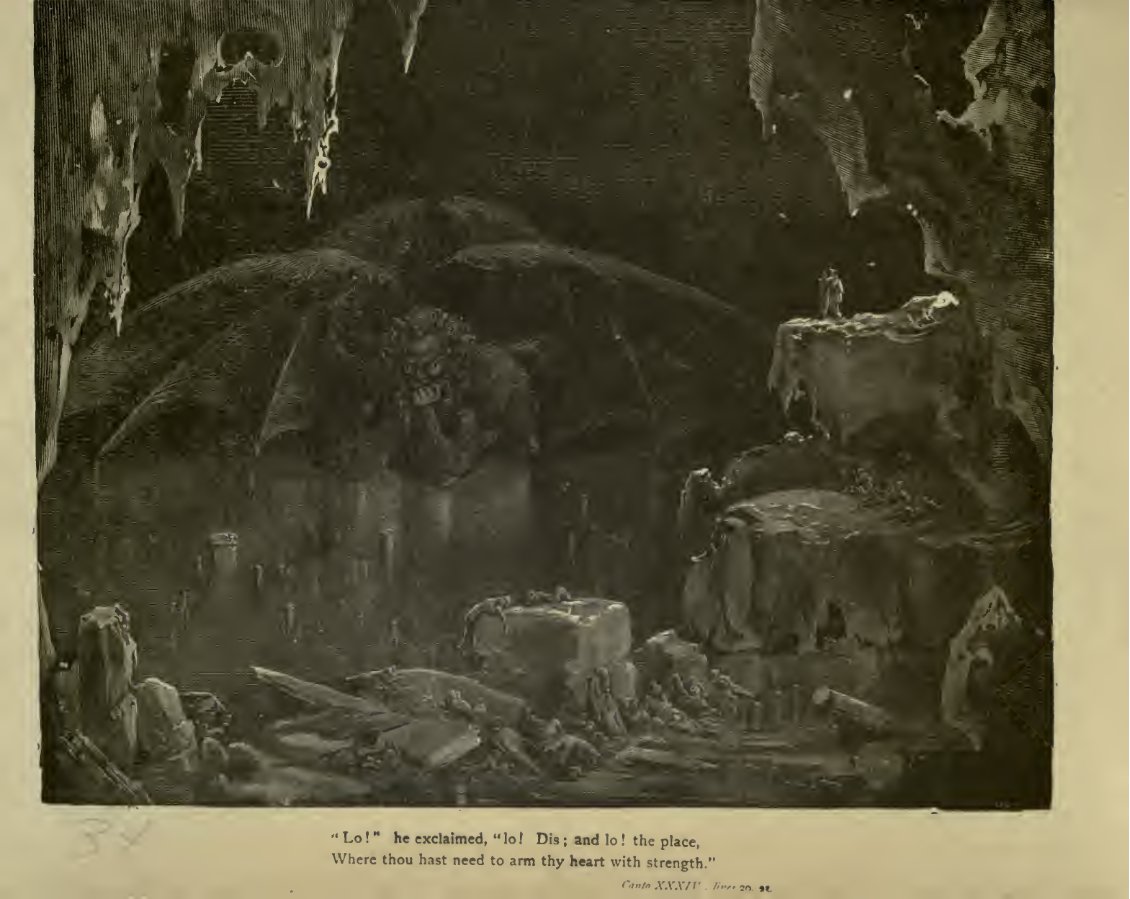
Gustave Doré’s Lucifer at the centre of Dante’s Inferno. Abra-Melin also names Lucifer in its own account of spiritual authority.
Design by Gustave Doré. Dante’s Inferno, translated by Henry Francis Cary, Thompson & Thomas, Chicago, undated New Edition. Public Domain. · Image source ↗ · Public Domain
See references (7)
- The Book of the Sacred Magic of Abra-Melin the Mage, Reader page 77
- The Book of the Sacred Magic of Abra-Melin the Mage, Reader page 137
- The Book of the Sacred Magic of Abra-Melin the Mage, Reader page 138
- The Book of the Sacred Magic of Abra-Melin the Mage, Reader page 25
- The Book of the Sacred Magic of Abra-Melin the Mage, Reader page 129
- The Book of the Sacred Magic of Abra-Melin the Mage, Reader page 131
- The Book of the Sacred Magic of Abra-Melin the Mage, Reader page 164
A bargain, a charge and a refusal
Guazzo begins with renunciation, while Magica Sexualis begins with the bargain. Sinistrari’s sequence gives a close parallel for the assistant spirit and points back to Guazzo as an authority. In the Theophilus legend, the agreement restores an office and can be recovered. Abra-Melin has the practitioner refuse the bargain altogether. [7][9][1][3][4][10][5][6][21][22][16][17]
See references (12)
- Francesco Maria Guazzo, Compendium Maleficarum, Book I, chapter VI, printed page 13 (1929 English edition)
- Francesco Maria Guazzo, Compendium Maleficarum, Book I, chapter VI, printed page 15 (1929 English edition)
- Francesco Maria Guazzo, Compendium Maleficarum, Book I, chapter VI, printed page 16 (1929 English edition)
- Ludovico Maria Sinistrari, Demoniality, sections 11–12, printed page 21 (1879 English edition)
- Ludovico Maria Sinistrari, Demoniality, section 23, printed page 29: the magistellus (1879 English edition)
- Magica Sexualis, Reader page 60
- Magica Sexualis, Reader page 62
- Magica Sexualis, Reader page 63
- Witchcraft Magic & Alchemy, printed p. 116, Reader page 109
- Witchcraft Magic & Alchemy, printed p. 117, Reader page 110
- The Book of the Sacred Magic of Abra-Melin the Mage, Reader page 137
- The Book of the Sacred Magic of Abra-Melin the Mage, Reader page 138
Read further in the library
Magica Sexualis
Reading note
The separately titled account draws on exact passages in the consulted Library edition.
Witchcraft Magic and Alchemy
Reading note
The separately titled account draws on exact passages in the consulted Library edition.
Dante's Inferno
Reading note
Separately attributed primary Library account, cited on exact verified Reader leaves.
The Book of the Sacred Magic of Abra-Melin the Mage
Reading note
The separately titled account draws on exact passages in the consulted Library edition.
Sources
See references (26)
- Francesco Maria Guazzo, Compendium Maleficarum, Book I, chapter VI, printed page 13 (1929 English edition) ↗Francesco Maria Guazzo, Compendium Maleficarum, translated by E. A. Ashwin, edited with notes by Montague Summers, London: John Rodker, 1929. Book I, chapter VI, printed page 13, visually checked against Archive zero-based leaf 40. Title page and selected original page images inspected. Guazzo’s argument is distinguished from Summers’s footnotes. Selected comparison passages only, not a complete additional book crawl.Return to text ↑
- Francesco Maria Guazzo, Compendium Maleficarum, Book I, chapter VI, printed page 14 (1929 English edition) ↗Francesco Maria Guazzo, Compendium Maleficarum, translated by E. A. Ashwin, edited with notes by Montague Summers, London: John Rodker, 1929. Book I, chapter VI, printed page 14, visually checked against Archive zero-based leaf 41. Title page and selected original page images inspected. Guazzo’s argument is distinguished from Summers’s footnotes. Selected comparison passages only, not a complete additional book crawl.Return to text ↑
- Francesco Maria Guazzo, Compendium Maleficarum, Book I, chapter VI, printed page 15 (1929 English edition) ↗Francesco Maria Guazzo, Compendium Maleficarum, translated by E. A. Ashwin, edited with notes by Montague Summers, London: John Rodker, 1929. Book I, chapter VI, printed page 15, visually checked against Archive zero-based leaf 42. Title page and selected original page images inspected. Guazzo’s argument is distinguished from Summers’s footnotes. Selected comparison passages only, not a complete additional book crawl.Return to text ↑
- Francesco Maria Guazzo, Compendium Maleficarum, Book I, chapter VI, printed page 16 (1929 English edition) ↗Francesco Maria Guazzo, Compendium Maleficarum, translated by E. A. Ashwin, edited with notes by Montague Summers, London: John Rodker, 1929. Book I, chapter VI, printed page 16, visually checked against Archive zero-based leaf 43. Title page and selected original page images inspected. Guazzo’s argument is distinguished from Summers’s footnotes. Selected comparison passages only, not a complete additional book crawl.Return to text ↑
- Ludovico Maria Sinistrari, Demoniality, sections 11–12, printed page 21 (1879 English edition) ↗Sinistrari of Ameno, Demoniality; or, Incubi and Succubi, Paris: Isidore Liseux, 1879. Sections 11–12, printed page 21, Archive zero-based leaf 42, actual image inspected. Title page says now first translated into English with Latin text; the English translator is not named there. Liseux’s French-translation credit is not silently assigned to this English text. Selected sections consulted, not the whole book.Return to text ↑
- Ludovico Maria Sinistrari, Demoniality, section 23, printed page 29: the magistellus (1879 English edition) ↗Sinistrari of Ameno, Demoniality; or, Incubi and Succubi, Paris: Isidore Liseux, 1879. Section 23, printed page 29, Archive zero-based leaf 50, actual image inspected. The surrounding English sections 11–24 and the adjacent Latin citation were consulted for the attribution. No original manuscript or every cited Guazzo edition inspected.Return to text ↑
- Magica Sexualis, Reader page 60Émile Laurent and Paul Nagour, Magica Sexualis, privately printed by Falstaff Press Inc., New York, undated inspected edition. Exact original Library edition IMJ-0105-E001. The work is a historical compilation; its quoted fiction, trial allegations and medical interpretations are not treated as independently verified facts. Current Reader positions are mapped separately from printed pagination.Read this page in Magica Sexualis ↗Return to text ↑
- Magica Sexualis, Reader page 61Émile Laurent and Paul Nagour, Magica Sexualis, privately printed by Falstaff Press Inc., New York, undated inspected edition. Exact original Library edition IMJ-0105-E001. The work is a historical compilation; its quoted fiction, trial allegations and medical interpretations are not treated as independently verified facts. Current Reader positions are mapped separately from printed pagination.Read this page in Magica Sexualis ↗Return to text ↑
- Magica Sexualis, Reader page 62Émile Laurent and Paul Nagour, Magica Sexualis, privately printed by Falstaff Press Inc., New York, undated inspected edition. Exact original Library edition IMJ-0105-E001. The work is a historical compilation; its quoted fiction, trial allegations and medical interpretations are not treated as independently verified facts. Current Reader positions are mapped separately from printed pagination.Read this page in Magica Sexualis ↗Return to text ↑
- Magica Sexualis, Reader page 63Émile Laurent and Paul Nagour, Magica Sexualis, privately printed by Falstaff Press Inc., New York, undated inspected edition. Exact original Library edition IMJ-0105-E001. The work is a historical compilation; its quoted fiction, trial allegations and medical interpretations are not treated as independently verified facts. Current Reader positions are mapped separately from printed pagination.Read this page in Magica Sexualis ↗Return to text ↑
- Magica Sexualis, Reader page 121Émile Laurent and Paul Nagour, Magica Sexualis, privately printed by Falstaff Press Inc., New York, undated inspected edition. Exact original Library edition IMJ-0105-E001. The work is a historical compilation; its quoted fiction, trial allegations and medical interpretations are not treated as independently verified facts. Current Reader positions are mapped separately from printed pagination.Read this page in Magica Sexualis ↗Return to text ↑
- Magica Sexualis, Reader page 122Émile Laurent and Paul Nagour, Magica Sexualis, privately printed by Falstaff Press Inc., New York, undated inspected edition. Exact original Library edition IMJ-0105-E001. The work is a historical compilation; its quoted fiction, trial allegations and medical interpretations are not treated as independently verified facts. Current Reader positions are mapped separately from printed pagination.Read this page in Magica Sexualis ↗Return to text ↑
- Magica Sexualis, Reader page 123Émile Laurent and Paul Nagour, Magica Sexualis, privately printed by Falstaff Press Inc., New York, undated inspected edition. Exact original Library edition IMJ-0105-E001. The work is a historical compilation; its quoted fiction, trial allegations and medical interpretations are not treated as independently verified facts. Current Reader positions are mapped separately from printed pagination.Read this page in Magica Sexualis ↗Return to text ↑
- Magica Sexualis, Reader page 124Émile Laurent and Paul Nagour, Magica Sexualis, privately printed by Falstaff Press Inc., New York, undated inspected edition. Exact original Library edition IMJ-0105-E001. The work is a historical compilation; its quoted fiction, trial allegations and medical interpretations are not treated as independently verified facts. Current Reader positions are mapped separately from printed pagination.Read this page in Magica Sexualis ↗Return to text ↑
- Magica Sexualis, Reader page 125Émile Laurent and Paul Nagour, Magica Sexualis, privately printed by Falstaff Press Inc., New York, undated inspected edition. Exact original Library edition IMJ-0105-E001. The work is a historical compilation; its quoted fiction, trial allegations and medical interpretations are not treated as independently verified facts. Current Reader positions are mapped separately from printed pagination.Read this page in Magica Sexualis ↗Return to text ↑
- Witchcraft Magic & Alchemy, printed p. 116, Reader page 109Grillot de Givry, Witchcraft Magic & Alchemy, translated by J. Courtenay Locke. Boston and New York, Houghton Mifflin Company, 1931.Read this page in Witchcraft Magic and Alchemy ↗Return to text ↑
- Witchcraft Magic & Alchemy, printed p. 117, Reader page 110Grillot de Givry, Witchcraft Magic & Alchemy, translated by J. Courtenay Locke. Boston and New York, Houghton Mifflin Company, 1931.Read this page in Witchcraft Magic and Alchemy ↗Return to text ↑
- Witchcraft Magic & Alchemy, printed p. 119, Reader page 112Grillot de Givry, Witchcraft Magic & Alchemy, translated by J. Courtenay Locke. Boston and New York, Houghton Mifflin Company, 1931.Read this page in Witchcraft Magic and Alchemy ↗Return to text ↑
- Dante’s Inferno, unpaginated plate for Inferno XXXIV, lines 20–21, Reader page 228Dante Alighieri, translated by Henry Francis Cary, designs by Gustave Doré. Thompson & Thomas, Chicago, undated New Edition.Read this page in Dante's Inferno ↗
- The Book of the Sacred Magic of Abra-Melin the Mage, Reader page 77The Book of the Sacred Magic of Abra-Melin the Mage, translated by S. L. MacGregor Mathers. London, John M. Watkins, 1898. Lumitheca Library edition IMJ-0601-E001.Read this page in The Book of the Sacred Magic of Abra-Melin the Mage ↗Return to text ↑
- The Book of the Sacred Magic of Abra-Melin the Mage, Reader page 137The Book of the Sacred Magic of Abra-Melin the Mage, translated by S. L. MacGregor Mathers. London, John M. Watkins, 1898. Lumitheca Library edition IMJ-0601-E001.Read this page in The Book of the Sacred Magic of Abra-Melin the Mage ↗Return to text ↑
- The Book of the Sacred Magic of Abra-Melin the Mage, Reader page 138The Book of the Sacred Magic of Abra-Melin the Mage, translated by S. L. MacGregor Mathers. London, John M. Watkins, 1898. Lumitheca Library edition IMJ-0601-E001.Read this page in The Book of the Sacred Magic of Abra-Melin the Mage ↗Return to text ↑
- The Book of the Sacred Magic of Abra-Melin the Mage, Reader page 25The Book of the Sacred Magic of Abra-Melin the Mage, translated by S. L. MacGregor Mathers. London, John M. Watkins, 1898. Lumitheca Library edition IMJ-0601-E001.Read this page in The Book of the Sacred Magic of Abra-Melin the Mage ↗Return to text ↑
- The Book of the Sacred Magic of Abra-Melin the Mage, Reader page 129The Book of the Sacred Magic of Abra-Melin the Mage, translated by S. L. MacGregor Mathers. London, John M. Watkins, 1898. Lumitheca Library edition IMJ-0601-E001.Read this page in The Book of the Sacred Magic of Abra-Melin the Mage ↗Return to text ↑
- The Book of the Sacred Magic of Abra-Melin the Mage, Reader page 131The Book of the Sacred Magic of Abra-Melin the Mage, translated by S. L. MacGregor Mathers. London, John M. Watkins, 1898. Lumitheca Library edition IMJ-0601-E001.Read this page in The Book of the Sacred Magic of Abra-Melin the Mage ↗Return to text ↑
- The Book of the Sacred Magic of Abra-Melin the Mage, Reader page 164The Book of the Sacred Magic of Abra-Melin the Mage, translated by S. L. MacGregor Mathers. London, John M. Watkins, 1898. Lumitheca Library edition IMJ-0601-E001.Read this page in The Book of the Sacred Magic of Abra-Melin the Mage ↗Return to text ↑