The Dew of the Sages
What is the dew of the sages? Compare alchemical imagery and the Zohar’s celestial dew with Hall’s symbolic reading of fluid in the brain.
In this article
Dew as a transforming substance
The dew of the sages is an alchemical image of moisture said to carry a hidden power of transformation. The image draws on the appearance of dew at dawn and, in some accounts, the care needed to gather and preserve it. [4][5][6][2][3]
See references (5)
- Lumen de Lumine, section II, letter from the Brothers of R.C.
- Zohar, Idra Rabba 4.16–17, the dew of the skull
- Man the Grand Symbol of the Mysteries, printed p. 221, Reader page 217
- Man the Grand Symbol of the Mysteries, printed p. 223, Reader page 219
- Man the Grand Symbol of the Mysteries, printed p. 224, Reader page 220
Lumen de Lumine by Thomas Vaughan
Thomas Vaughan includes a letter about a traveller seeking a hidden mountain. After a night of upheaval, the letter promises that a treasure will be revealed near dawn. Its most precious substance is a tincture said to be able to turn the world to gold. [2]
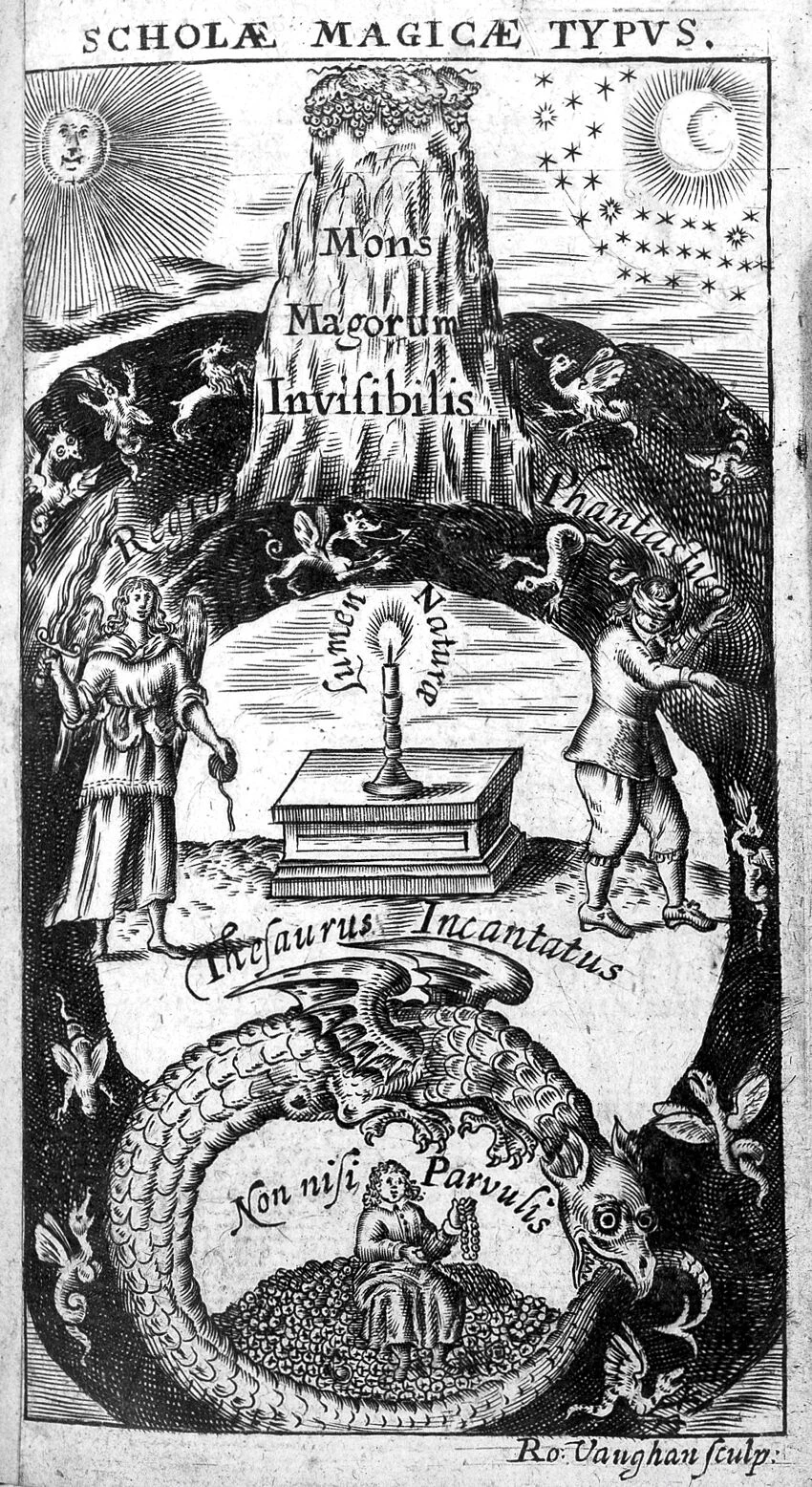
The emblem from Thomas Vaughan’s Lumen de Lumine depicts the invisible mountain and its hidden treasure.
Robert Vaughan, Scholae magicae typus, in Thomas Vaughan’s Lumen de Lumine, 1651. Wellcome Collection, L0018188. CC BY 4.0. Resized for display. · Image source ↗ · CC BY 4.0
Zohar, Idra Rabba, chapter 4
In the Idra Rabba, dew flows from the skull of Arich Anpin to Zeir Anpin. The passage associates it with divine light, with nourishment for holy beings and with the dead rising in the World to Come. [3]
Man the Grand Symbol of the Mysteries by Manly P. Hall
In Man the Grand Symbol of the Mysteries, Manly P. Hall associates the dew with a treasure revealed near daybreak in Thomas Vaughan’s Lumen de Lumine. He treats Vaughan’s transforming tincture as a clue to the meaning of the dew. [4][5][6]
Hall compares the alchemical dew with the dew of the skull in the Zohar’s Idra Rabba. He also proposes cerebrospinal fluid as its bodily counterpart, bringing both religious images into his own esoteric account of the brain. [4][7][8][9][10][11]
See references (8)
- Man the Grand Symbol of the Mysteries, printed p. 221, Reader page 217
- Man the Grand Symbol of the Mysteries, printed p. 223, Reader page 219
- Man the Grand Symbol of the Mysteries, printed p. 224, Reader page 220
- Man the Grand Symbol of the Mysteries, printed p. 225, Reader page 221
- Man the Grand Symbol of the Mysteries, printed p. 226, Reader page 222
- Man the Grand Symbol of the Mysteries, printed p. 229, Reader page 225
- Man the Grand Symbol of the Mysteries, printed p. 231, Reader page 227
- Man the Grand Symbol of the Mysteries, printed p. 232, Reader page 228
Three meanings of renewal
Vaughan’s tincture promises transformation. The Idra Rabba’s dew sustains holy beings and gives life to the dead. Hall uses both images when he interprets the body through the language of alchemy. [4][5][8][10][2][3]
See references (6)
- Lumen de Lumine, section II, letter from the Brothers of R.C.
- Zohar, Idra Rabba 4.16–17, the dew of the skull
- Man the Grand Symbol of the Mysteries, printed p. 221, Reader page 217
- Man the Grand Symbol of the Mysteries, printed p. 223, Reader page 219
- Man the Grand Symbol of the Mysteries, printed p. 226, Reader page 222
- Man the Grand Symbol of the Mysteries, printed p. 231, Reader page 227
In the library
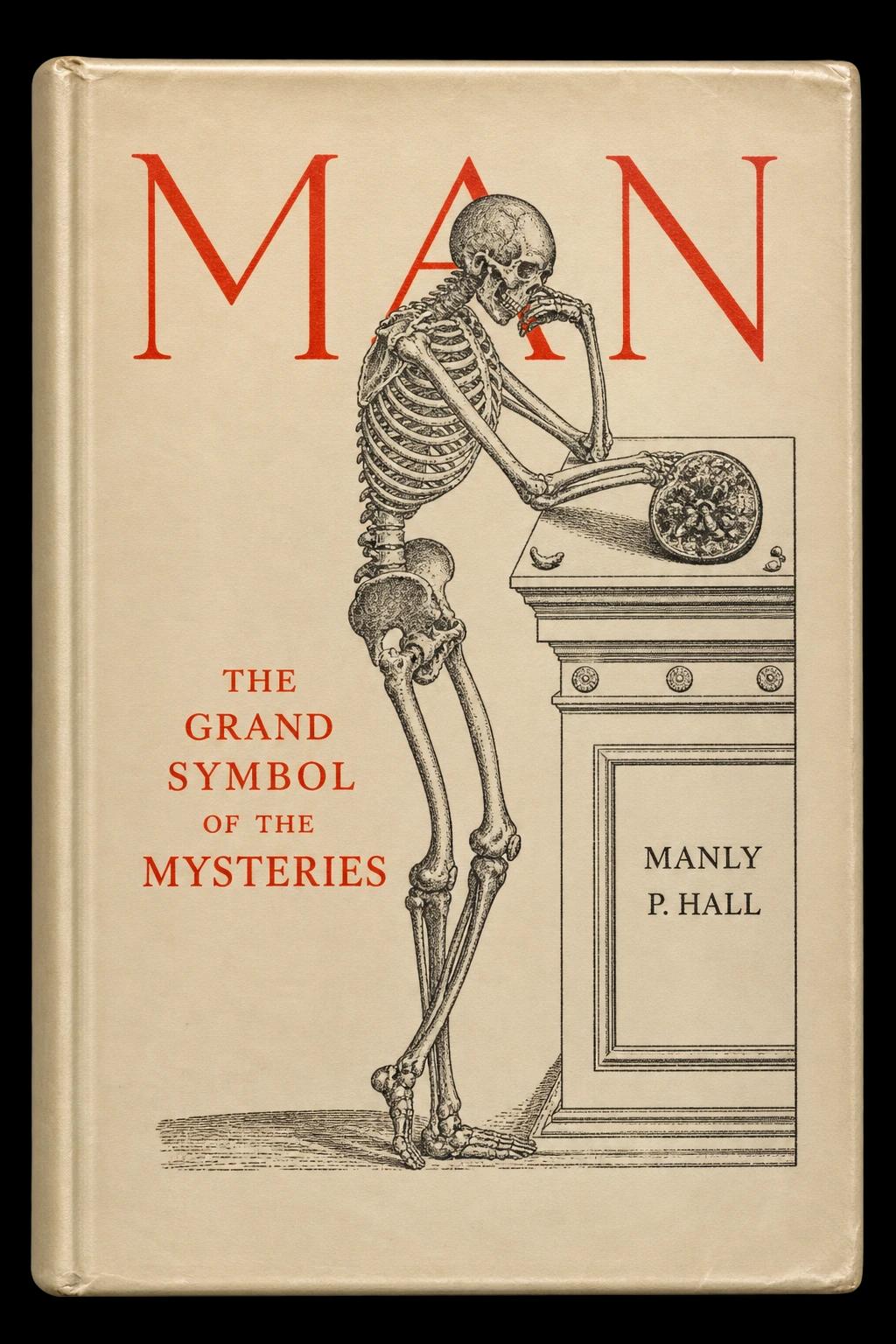
Man the Grand Symbol of the Mysteries
Reading note
The separately titled account draws on exact passages in the consulted Library edition.
Sources
See references (11)
- Scholae magicae typus ↗Robert Vaughan, Scholae magicae typus, in Thomas Vaughan’s Lumen de Lumine, 1651. Wellcome Collection, L0018188. CC BY 4.0. Resized for display.
- Lumen de Lumine, section II, letter from the Brothers of R.C. ↗Thomas Vaughan, Lumen de Lumine, 1651, the letter concerning the mountain and its hidden treasure.
- Zohar, Idra Rabba 4.16–17, the dew of the skull ↗Zohar, Idra Rabba, chapter 4, English text published by the Kabbalah Centre.
- Man the Grand Symbol of the Mysteries, printed p. 221, Reader page 217Manly P. Hall, Man the Grand Symbol of the Mysteries, Fourth Edition, The Philosophers Press, Los Angeles, 1937. Lumitheca Library edition IMJ-0603-E001.Read this page in Man the Grand Symbol of the Mysteries ↗
- Man the Grand Symbol of the Mysteries, printed p. 223, Reader page 219Manly P. Hall, Man the Grand Symbol of the Mysteries, Fourth Edition, The Philosophers Press, Los Angeles, 1937. Lumitheca Library edition IMJ-0603-E001.Read this page in Man the Grand Symbol of the Mysteries ↗
- Man the Grand Symbol of the Mysteries, printed p. 224, Reader page 220Manly P. Hall, Man the Grand Symbol of the Mysteries, Fourth Edition, The Philosophers Press, Los Angeles, 1937. Lumitheca Library edition IMJ-0603-E001.Read this page in Man the Grand Symbol of the Mysteries ↗
- Man the Grand Symbol of the Mysteries, printed p. 225, Reader page 221Manly P. Hall, Man the Grand Symbol of the Mysteries, Fourth Edition, The Philosophers Press, Los Angeles, 1937. Lumitheca Library edition IMJ-0603-E001.Read this page in Man the Grand Symbol of the Mysteries ↗
- Man the Grand Symbol of the Mysteries, printed p. 226, Reader page 222Manly P. Hall, Man the Grand Symbol of the Mysteries, Fourth Edition, The Philosophers Press, Los Angeles, 1937. Lumitheca Library edition IMJ-0603-E001.Read this page in Man the Grand Symbol of the Mysteries ↗
- Man the Grand Symbol of the Mysteries, printed p. 229, Reader page 225Manly P. Hall, Man the Grand Symbol of the Mysteries, Fourth Edition, The Philosophers Press, Los Angeles, 1937. Lumitheca Library edition IMJ-0603-E001.Read this page in Man the Grand Symbol of the Mysteries ↗
- Man the Grand Symbol of the Mysteries, printed p. 231, Reader page 227Manly P. Hall, Man the Grand Symbol of the Mysteries, Fourth Edition, The Philosophers Press, Los Angeles, 1937. Lumitheca Library edition IMJ-0603-E001.Read this page in Man the Grand Symbol of the Mysteries ↗
- Man the Grand Symbol of the Mysteries, printed p. 232, Reader page 228Manly P. Hall, Man the Grand Symbol of the Mysteries, Fourth Edition, The Philosophers Press, Los Angeles, 1937. Lumitheca Library edition IMJ-0603-E001.Read this page in Man the Grand Symbol of the Mysteries ↗