The Cowherd and the Weaver Girl
The Cowherd and the Weaver Girl meet across the Milky Way on the seventh night of the seventh lunar month. Their story is associated with Qixi.
In this article
Who are the Cowherd and the Weaver Girl?
The Cowherd and the Weaver Girl are lovers in Chinese star lore, associated with Altair and Vega on opposite sides of the Milky Way. They meet once a year, on the seventh day of the seventh lunar month. In some tellings, birds build the bridge between them. [1][2][7]
The festival of Qixi also gives people a chance to ask for the kind of skill the Weaver Girl possesses. Singapore’s National Library Board describes celebrations of the Seven Sisters in which women gathered and made crafts. [2]
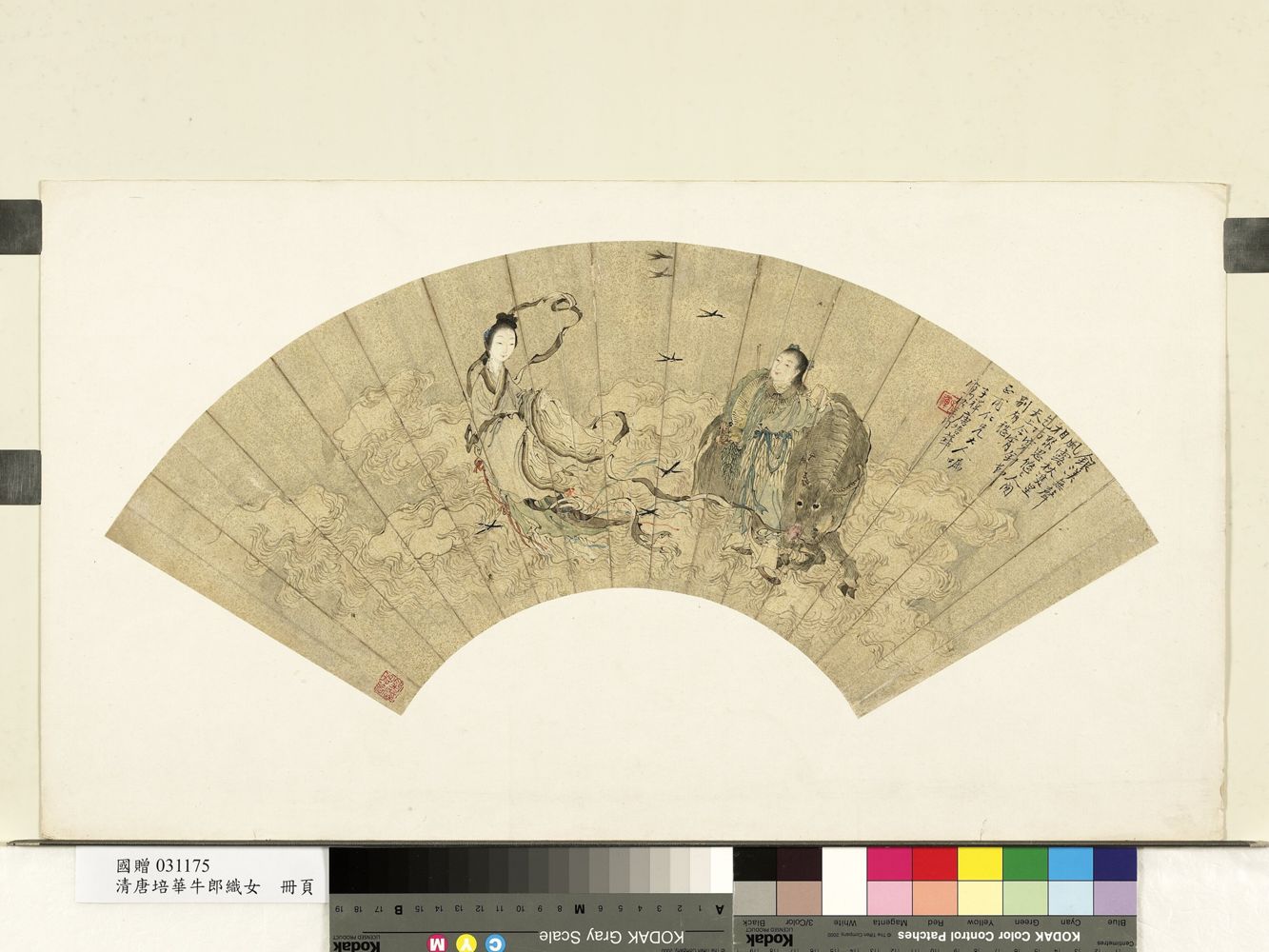
A Qing painting by Tang Peihua depicts the meeting associated with Qixi.
Tang Peihua. The Cowherd and Weaving Maiden. Qing dynasty. The National Palace Museum, Taipei. The National Palace Museum, Taipei, CC BY 4.0 @ www.npm.gov.tw. CC BY 4.0. · Image source ↗ · CC BY 4.0
In The Chinese Fairy Book
In Richard Wilhelm’s The Chinese Fairy Book, translated by Frederick H. Martens, a golden cow carries a boy to Heaven and tells him how to obtain the seventh daughter’s promise of marriage. He takes the Weaving Maiden’s clothes while she bathes. She disputes his demand, and the cow and a speaking willow give the marriage the sanction the story requires. The coercion is part of this retelling’s opening. [4][5]
After seven days the Maiden returns to her weaving. She draws a line in the sky with a hair needle and makes the Silver River. Crows form the bridge for their annual meeting. The edition also sees a yoke thrown by the boy and a spindle thrown back by the Maiden in the shapes of the stars. [6][7]
The paired stars return in the tale of Yang Guifei. She recalls how she and the emperor swore love while looking up at the Weaver Girl and Herd Boy, then gives their divided ring to a messenger. In that tale the annual meeting becomes a point of reference for a different pair of separated lovers. [8]
Why do the birds differ across tellings?
Wilhelm’s telling gives the bridge to crows. The National Palace Museum identifies the bridge in Tang Peihua’s fan painting as a magpie bridge. The lovers face each other as birds fly between them. The painting keeps the birds at the centre of the meeting. [6][3][1]
In the library
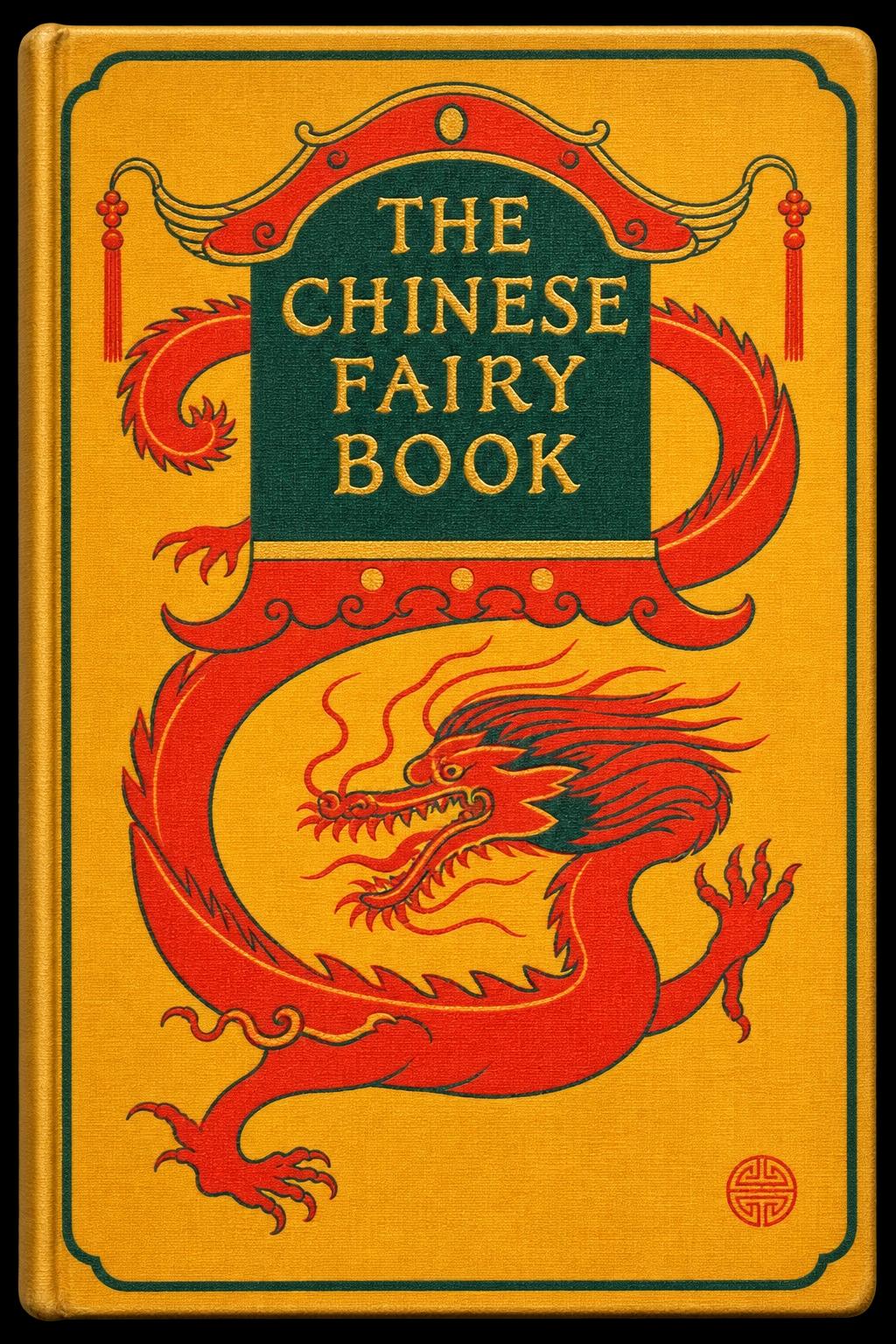
The Chinese Fairy Book
Reading note
Read how the Silver River appears and how the same stars return in the story of Yang Guifei.
Sources
See references (8)
- Qixi, the Chinese Valentine’s Day ↗Suzhou Municipal Government
- In Search of the Seven Sisters Festival ↗National Library Board of Singapore
- The Cowherd and Weaving Maiden ↗Tang Peihua. The Cowherd and Weaving Maiden. Qing dynasty. The National Palace Museum, Taipei. The National Palace Museum, Taipei, CC BY 4.0 @ www.npm.gov.tw. CC BY 4.0.
- The Chinese Fairy Book, Library Reader page 50Richard Wilhelm, editor. Frederick H. Martens, translator. The Chinese Fairy Book. Frederick A. Stokes Company, New York, 1921. Lumitheca Library edition IMJ-0478-E002.Read this page in The Chinese Fairy Book ↗
- The Chinese Fairy Book, Library Reader page 51Richard Wilhelm, editor. Frederick H. Martens, translator. The Chinese Fairy Book. Frederick A. Stokes Company, New York, 1921. Lumitheca Library edition IMJ-0478-E002.Read this page in The Chinese Fairy Book ↗
- The Chinese Fairy Book, Library Reader page 52Richard Wilhelm, editor. Frederick H. Martens, translator. The Chinese Fairy Book. Frederick A. Stokes Company, New York, 1921. Lumitheca Library edition IMJ-0478-E002.Read this page in The Chinese Fairy Book ↗
- The Chinese Fairy Book, Library Reader page 53Richard Wilhelm, editor. Frederick H. Martens, translator. The Chinese Fairy Book. Frederick A. Stokes Company, New York, 1921. Lumitheca Library edition IMJ-0478-E002.Read this page in The Chinese Fairy Book ↗
- The Chinese Fairy Book, Library Reader page 264Richard Wilhelm, editor. Frederick H. Martens, translator. The Chinese Fairy Book. Frederick A. Stokes Company, New York, 1921. Lumitheca Library edition IMJ-0478-E002.Read this page in The Chinese Fairy Book ↗