Pan and the Devil
Why do Pan and the Devil sometimes share horns and goat features? Compare the Homeric Hymn to Pan, Pamela Colman Smith’s tarot and Dion Fortune.
In this article
Why do Pan and the Devil look alike in some images?
Some images of Pan and the Devil share goat features. The Homeric Hymn to Pan makes horns and goat feet part of a Greek god who hunts and plays music. Revelation 12 pictures the Devil as a dragon and serpent. In Pamela Colman Smith’s tarot, the Devil has a goat’s head and presides over two chained figures. [1][2][3]
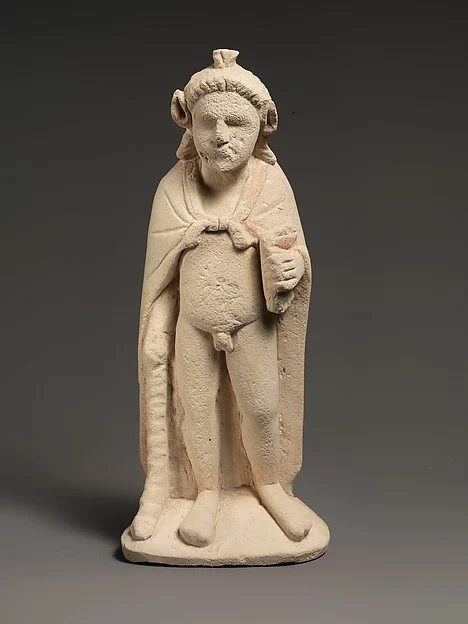
A Hellenistic Cypriot statuette with pipes and a shepherd’s crook, third century BCE. The Met identifies it as Pan or Opaon Melanthios, a Cypriot deity associated with rural life.
The Metropolitan Museum of Art. The Cesnola Collection, Purchased by subscription, 1874–76. 74.51.2735. · Image source ↗ · CC0
A resemblance under debate in The Goat-Foot God
Dion Fortune has Mona ask Hugh directly whether he thinks Pan and the Devil are the same. Hugh says Pan does not feel evil to him. He does think that an excess of what Pan represents could do harm. In the chapel, he imagines a goat-god’s throne while considering accusations against the Templars, then tries reading the altar as a figure for the universe. The alternatives belong to Hugh’s reasoning about the site. [5][6][7][8]
The debate enters local speech when Bill calls a fallen standing stone one of the Devil’s skittles. He still helps Hugh put it upright. A suggestion of a goat by smell follows, and Hugh takes the standing stone as his altar. Fortune uses the local name to bring the association into the scene as a joke and a practical hesitation. [9][10][11]
The horned figure in The Pictorial Key to the Tarot
Arthur Edward Waite describes the Devil card drawn by Pamela Colman Smith as a horned goat with bat wings and chained figures below. He explicitly discusses Éliphas Lévi’s interpretation of Baphomet when explaining his card. That reference establishes a connection within modern occult imagery. [3]
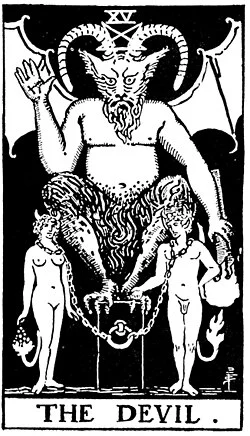
Pamela Colman Smith’s Devil has the head and horns of a goat, batlike wings and two chained figures beneath it.
Pamela Colman Smith, illustration for The Pictorial Key to the Tarot, Arthur Edward Waite (William Rider & Son, 1911), XV. · Image source ↗ · Public Domain
What does the resemblance establish?
The Hymn gives Pan’s animal features a place among Greek gods. Waite connects his Tarot Devil with Éliphas Lévi’s Baphomet. Fortune turns a resemblance into a question for her characters: why does one person read a place as sacred while another imagines a threat? [1][3][6][7][8]
Read further in the library
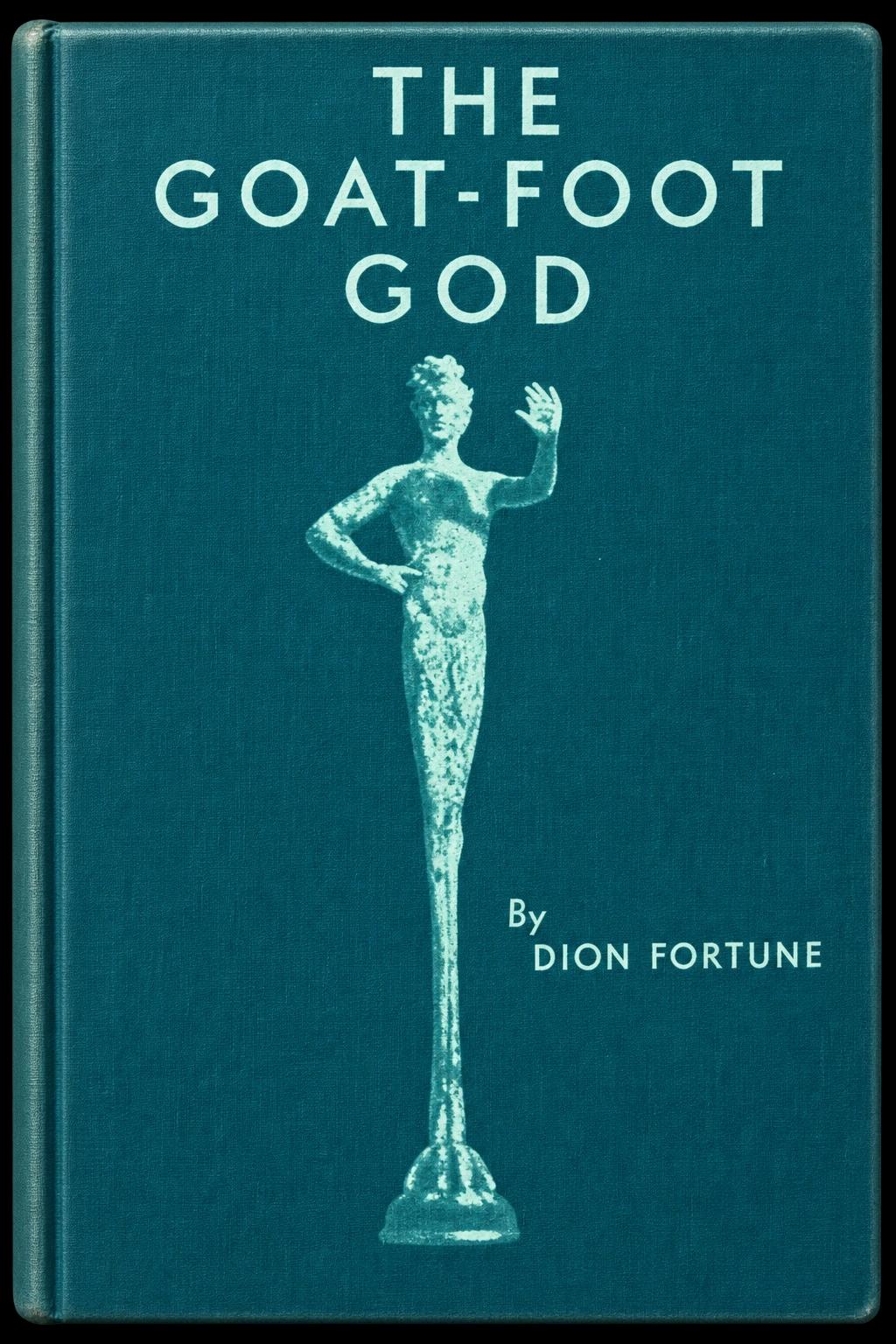
The Goat-Foot God
Reading note
The separately titled account draws on exact passages in the consulted Library edition.
Sources
See references (12)
- Homeric Hymn 19 to Pan, lines 1–26 and 34–47 ↗Homeric Hymn 19, To Pan, lines 1–26 and 34–47, translated by Hugh G. Evelyn-White, Loeb edition, 1914.Return to text ↑
- Revelation 12:7–12 ↗Revelation 12:7–12, New American Bible, Revised Edition, United States Conference of Catholic Bishops.Return to text ↑
- Arthur Edward Waite, The Pictorial Key to the Tarot, part II, XV, “The Devil” ↗Arthur Edward Waite, The Pictorial Key to the Tarot (William Rider & Son, 1911), part II, card XV, “The Devil,” illustrated by Pamela Colman Smith.Return to text ↑
- Card XV, The Devil, from The Pictorial Key to the Tarot ↗Pamela Colman Smith, illustration for The Pictorial Key to the Tarot, Arthur Edward Waite (William Rider & Son, 1911), XV.
- The Goat-Foot God, Reader page 154Dion Fortune, The Goat-Foot God. Undated digital Library edition IMJ-0643-E001. Numbered references use the Library Reader sequence.Read this page in The Goat-Foot God ↗Return to text ↑
- The Goat-Foot God, Reader page 155Dion Fortune, The Goat-Foot God. Undated digital Library edition IMJ-0643-E001. Numbered references use the Library Reader sequence.Read this page in The Goat-Foot God ↗Return to text ↑
- The Goat-Foot God, Reader page 239Dion Fortune, The Goat-Foot God. Undated digital Library edition IMJ-0643-E001. Numbered references use the Library Reader sequence.Read this page in The Goat-Foot God ↗Return to text ↑
- The Goat-Foot God, Reader page 240Dion Fortune, The Goat-Foot God. Undated digital Library edition IMJ-0643-E001. Numbered references use the Library Reader sequence.Read this page in The Goat-Foot God ↗Return to text ↑
- The Goat-Foot God, Reader page 335Dion Fortune, The Goat-Foot God. Undated digital Library edition IMJ-0643-E001. Numbered references use the Library Reader sequence.Read this page in The Goat-Foot God ↗Return to text ↑
- The Goat-Foot God, Reader page 336Dion Fortune, The Goat-Foot God. Undated digital Library edition IMJ-0643-E001. Numbered references use the Library Reader sequence.Read this page in The Goat-Foot God ↗Return to text ↑
- The Goat-Foot God, Reader page 337Dion Fortune, The Goat-Foot God. Undated digital Library edition IMJ-0643-E001. Numbered references use the Library Reader sequence.Read this page in The Goat-Foot God ↗Return to text ↑
- Limestone statuette of Pan or Opaon Melanthios ↗The Metropolitan Museum of Art. The Cesnola Collection, Purchased by subscription, 1874–76. 74.51.2735.