Chinese Fox Spirits
Chinese tales give fox spirits the power to take human form, speak and make strange lights. They can threaten a household or become part of one.
In this article
What are Chinese fox spirits?
Fox spirits in Chinese tales can speak, take human form and pass for members of a family. Some threaten the people they visit. Others turn out to be relatives or friends. One fox can even send a glowing ball towards the moon and catch it as it falls. [4][7][5][9][10]
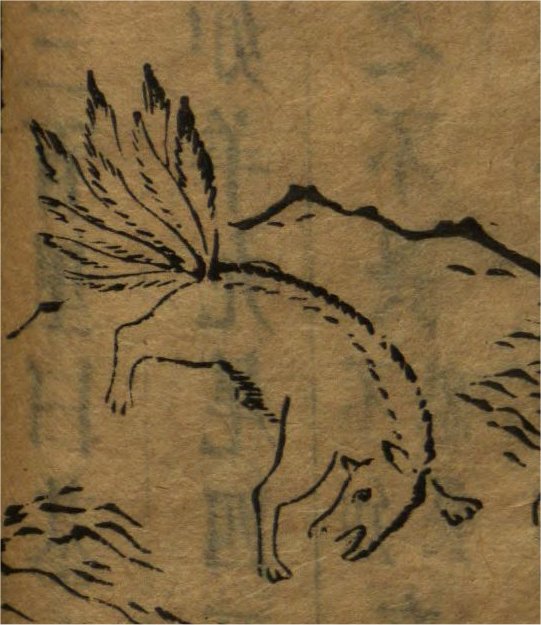
A late Ming Shanhai jing woodcut pictures the nine-tailed fox described at Qingqiu. The family in Giauna has a separate story.
Jiang Yinghao, illustrator. Li Wenxiao, engraver.. Nine-tailed fox in Classic of the Southern Mountains. 1628 to 1644. Library of Congress. Library of Congress scanned edition, via Wikimedia Commons. Public Domain. · Image source ↗ · Public Domain
In The Chinese Fairy Book
In Richard Wilhelm’s The Chinese Fairy Book, translated by Frederick H. Martens, The Panther uses the language of false kinship in a story which its note connects to the silver fox. The Talking Silver Foxes also gives a fox a human appearance and makes it capable of speech. Its jokes and threats unsettle a household that cannot trust appearances. [3][4][5][6]
In Fox-Fire, a fox sends a bright ball towards the moon and catches it again. A man steals the ball and keeps it for years before the fox gets it back. Wilhelm’s note describes it as an elixir formed by the fox. [7][8]
In Giauna the Beautiful, humans and foxes live as relatives. The family reveals its identity when a thunder trial threatens it. A human friend intervenes, and Giauna uses a red pellet to restore him. The note treats thunder as a recurring danger for foxes. The pellet’s role is different from the luminous ball taken in the Fox-Fire tale. [9][10][11][8]
See references (9)
- The Chinese Fairy Book, Library Reader page 33
- The Chinese Fairy Book, Library Reader page 36
- The Chinese Fairy Book, Library Reader page 186
- The Chinese Fairy Book, Library Reader page 187
- The Chinese Fairy Book, Library Reader page 181
- The Chinese Fairy Book, Library Reader page 182
- The Chinese Fairy Book, Library Reader page 295
- The Chinese Fairy Book, Library Reader page 296
- The Chinese Fairy Book, Library Reader page 297
Nine tails and a human household
The Classic of Mountains and Seas places a nine-tailed fox at Qingqiu. A late Ming woodcut shows the tails at a glance. In Giauna the Beautiful, someone can live with a fox family without knowing what they are. That discovery matters because the person making it has to decide whether to help friends in danger. [1][2][9][10]
In the library
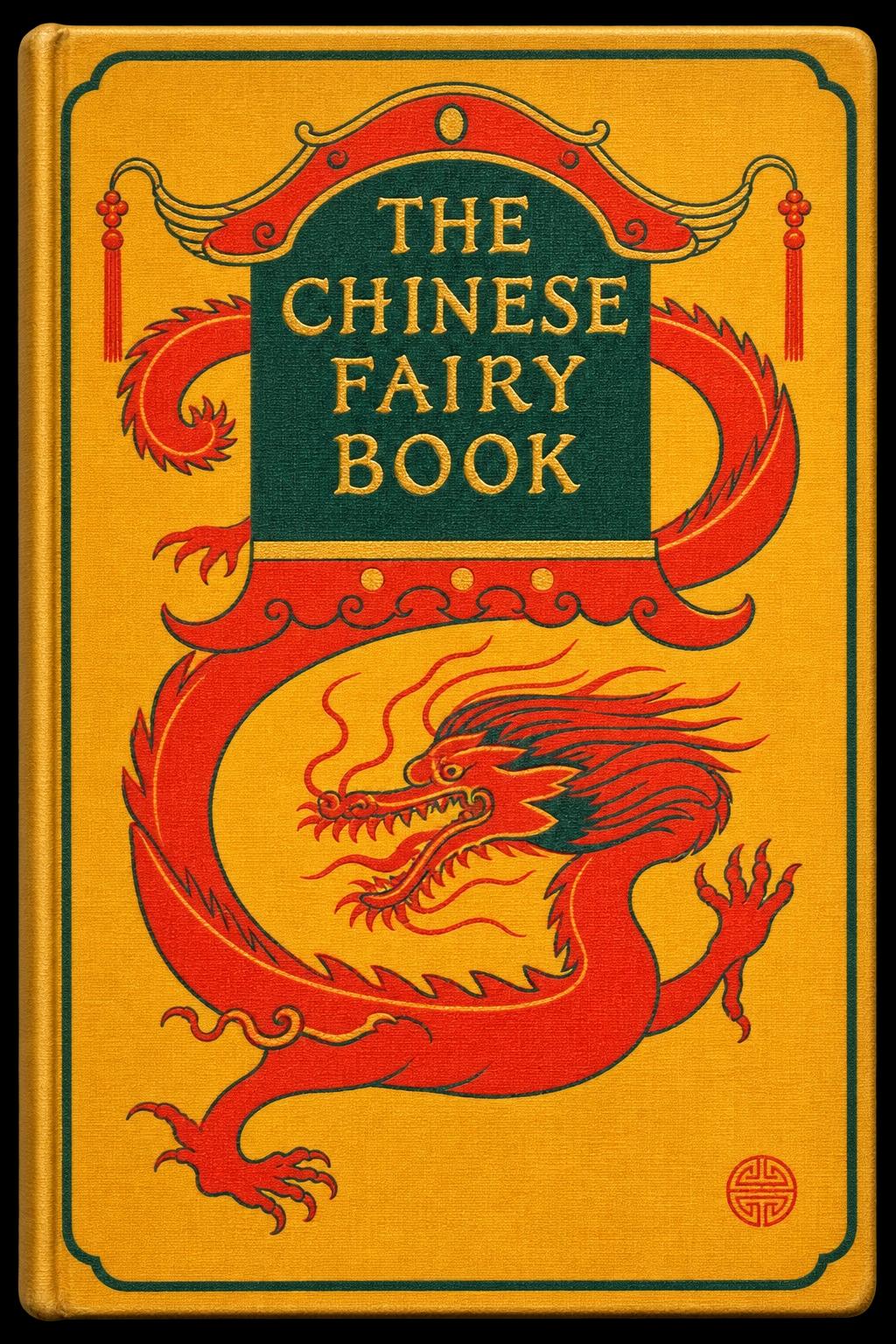
The Chinese Fairy Book
Reading note
Read “Fox-Fire” beside “Giauna the Beautiful” for two quite different encounters with fox spirits.
Sources
See references (11)
- Shanhai jing, Southern Mountain Classic, Qingqiu passage ↗Chinese Text Project
- Nine-tailed fox in Classic of the Southern Mountains ↗Jiang Yinghao, illustrator. Li Wenxiao, engraver.. Nine-tailed fox in Classic of the Southern Mountains. 1628 to 1644. Library of Congress. Library of Congress scanned edition, via Wikimedia Commons. Public Domain.
- The Chinese Fairy Book, Library Reader page 33Richard Wilhelm, editor. Frederick H. Martens, translator. The Chinese Fairy Book. Frederick A. Stokes Company, New York, 1921. Lumitheca Library edition IMJ-0478-E002.Read this page in The Chinese Fairy Book ↗
- The Chinese Fairy Book, Library Reader page 36Richard Wilhelm, editor. Frederick H. Martens, translator. The Chinese Fairy Book. Frederick A. Stokes Company, New York, 1921. Lumitheca Library edition IMJ-0478-E002.Read this page in The Chinese Fairy Book ↗
- The Chinese Fairy Book, Library Reader page 186Richard Wilhelm, editor. Frederick H. Martens, translator. The Chinese Fairy Book. Frederick A. Stokes Company, New York, 1921. Lumitheca Library edition IMJ-0478-E002.Read this page in The Chinese Fairy Book ↗
- The Chinese Fairy Book, Library Reader page 187Richard Wilhelm, editor. Frederick H. Martens, translator. The Chinese Fairy Book. Frederick A. Stokes Company, New York, 1921. Lumitheca Library edition IMJ-0478-E002.Read this page in The Chinese Fairy Book ↗
- The Chinese Fairy Book, Library Reader page 181Richard Wilhelm, editor. Frederick H. Martens, translator. The Chinese Fairy Book. Frederick A. Stokes Company, New York, 1921. Lumitheca Library edition IMJ-0478-E002.Read this page in The Chinese Fairy Book ↗
- The Chinese Fairy Book, Library Reader page 182Richard Wilhelm, editor. Frederick H. Martens, translator. The Chinese Fairy Book. Frederick A. Stokes Company, New York, 1921. Lumitheca Library edition IMJ-0478-E002.Read this page in The Chinese Fairy Book ↗
- The Chinese Fairy Book, Library Reader page 295Richard Wilhelm, editor. Frederick H. Martens, translator. The Chinese Fairy Book. Frederick A. Stokes Company, New York, 1921. Lumitheca Library edition IMJ-0478-E002.Read this page in The Chinese Fairy Book ↗
- The Chinese Fairy Book, Library Reader page 296Richard Wilhelm, editor. Frederick H. Martens, translator. The Chinese Fairy Book. Frederick A. Stokes Company, New York, 1921. Lumitheca Library edition IMJ-0478-E002.Read this page in The Chinese Fairy Book ↗
- The Chinese Fairy Book, Library Reader page 297Richard Wilhelm, editor. Frederick H. Martens, translator. The Chinese Fairy Book. Frederick A. Stokes Company, New York, 1921. Lumitheca Library edition IMJ-0478-E002.Read this page in The Chinese Fairy Book ↗