Chinese Dragon Kings
The Dragon Kings rule seas, lakes and rivers in Chinese legend. Their courts receive visitors, exchange gifts and hear disputes about rain.
In this article
Who are the Chinese Dragon Kings?
The Dragon Kings are divine rulers of water in Chinese legend. A king may preside over a sea, lake or river. Stories give these rulers households, guards and halls where a guest can seek an audience. They also give them duties over things people depend on, especially rain. [2][3][4][5][1]
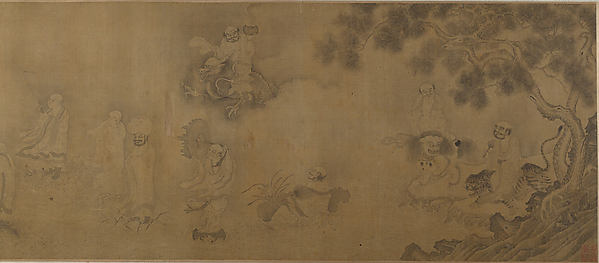
Detail from a Ming handscroll in which travellers reach a dragon king’s palace by crossing the sea.
Unidentified artist. Buddhist luohans crossing the sea to the palace of the dragon king. late 16th–early 17th century. The Metropolitan Museum of Art. Rogers Fund, 1918. Public Domain. · Image source ↗ · Public Domain
In The Chinese Fairy Book
In Richard Wilhelm’s The Chinese Fairy Book, translated by Frederick H. Martens, Nezha faces the Dragon Kings of the Four Seas after his quarrel with the Eastern Sea ruler. In a later tale a daughter of the Eastern Sea king guards pearls and sends some to the emperor in return for his gifts. A dragon who speaks the language of humans makes the exchange possible. [6][3][7]
The Golden Dragon King of the Yellow River can appear as a small golden snake. In a tale set at Lake Dongting, a castle rises from the water. Liu Yi enters it because a dragon princess needs him to carry a message. [2][4]
The Monk of the Yangtze-Kiang follows a rain dispute all the way to the underworld, where the old dragon’s complaint is heard. Sun Wukong’s visit to a sea palace leads to a dispute over Great Yu’s measuring rod. Together the two episodes show dragon rulers both answerable to other powers and capable of bringing a grievance. [5][8]
See references (7)
- The Chinese Fairy Book, Library Reader page 147
- The Chinese Fairy Book, Library Reader page 154
- The Chinese Fairy Book, Library Reader page 171
- The Chinese Fairy Book, Library Reader page 268
- The Chinese Fairy Book, Library Reader page 60
- The Chinese Fairy Book, Library Reader page 158
- The Chinese Fairy Book, Library Reader page 329
How a dragon palace enters a story
The Ming handscroll follows travellers across the water towards a dragon king’s palace. In Liu Yi’s story the water itself becomes a road. The Yellow River tale brings the dragon king closer to home, to a shrine where people can come to him. [1][2][4]
In the library
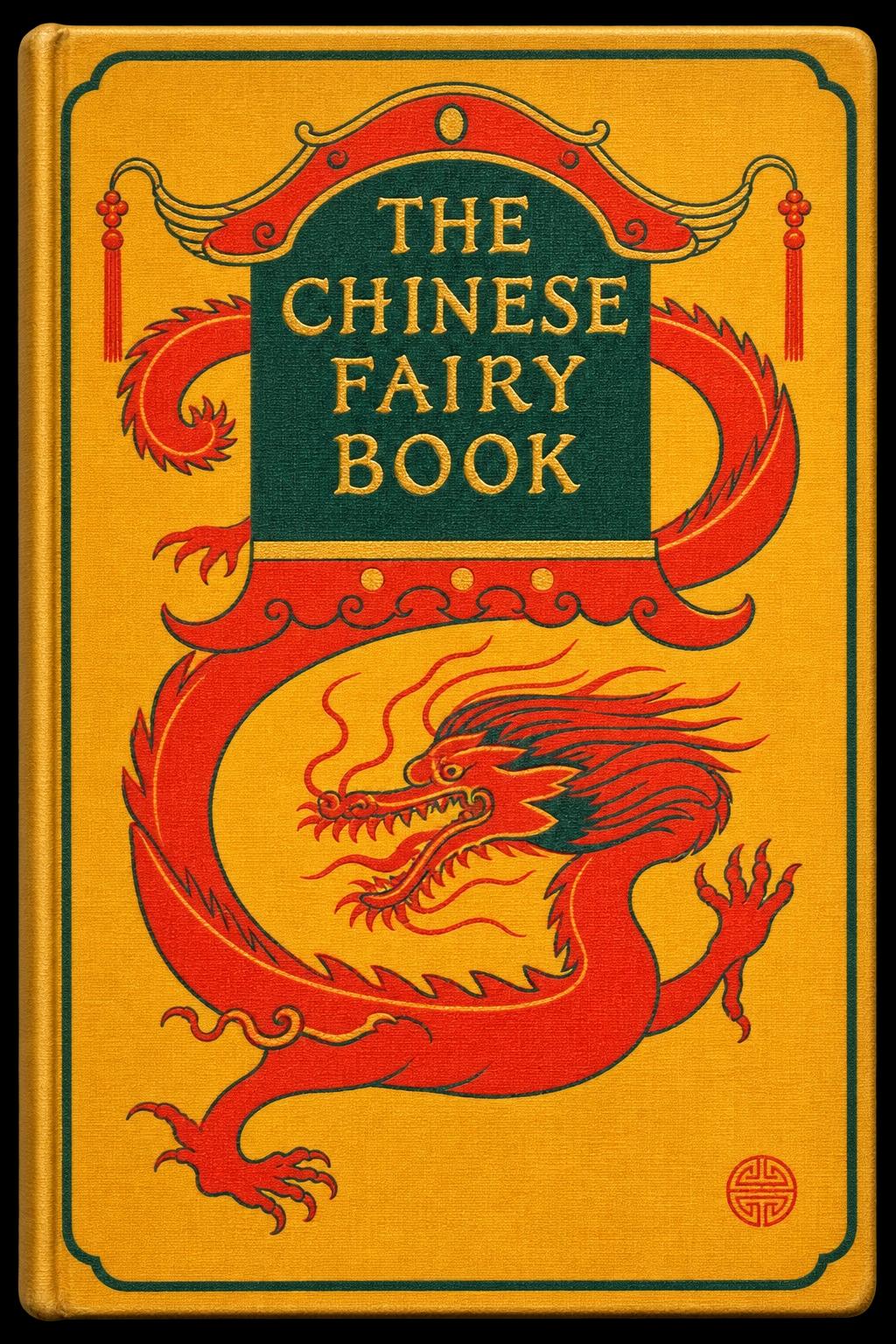
The Chinese Fairy Book
Reading note
Compare a court at the bottom of a lake with the Yellow River shrine and the palace where Sun Wukong asks for a weapon.
Sources
See references (8)
- Buddhist luohans crossing the sea to the palace of the dragon king ↗Unidentified artist. Buddhist luohans crossing the sea to the palace of the dragon king. late 16th–early 17th century. The Metropolitan Museum of Art. Rogers Fund, 1918. Public Domain.
- The Chinese Fairy Book, Library Reader page 147Richard Wilhelm, editor. Frederick H. Martens, translator. The Chinese Fairy Book. Frederick A. Stokes Company, New York, 1921. Lumitheca Library edition IMJ-0478-E002.Read this page in The Chinese Fairy Book ↗
- The Chinese Fairy Book, Library Reader page 154Richard Wilhelm, editor. Frederick H. Martens, translator. The Chinese Fairy Book. Frederick A. Stokes Company, New York, 1921. Lumitheca Library edition IMJ-0478-E002.Read this page in The Chinese Fairy Book ↗
- The Chinese Fairy Book, Library Reader page 171Richard Wilhelm, editor. Frederick H. Martens, translator. The Chinese Fairy Book. Frederick A. Stokes Company, New York, 1921. Lumitheca Library edition IMJ-0478-E002.Read this page in The Chinese Fairy Book ↗
- The Chinese Fairy Book, Library Reader page 268Richard Wilhelm, editor. Frederick H. Martens, translator. The Chinese Fairy Book. Frederick A. Stokes Company, New York, 1921. Lumitheca Library edition IMJ-0478-E002.Read this page in The Chinese Fairy Book ↗
- The Chinese Fairy Book, Library Reader page 60Richard Wilhelm, editor. Frederick H. Martens, translator. The Chinese Fairy Book. Frederick A. Stokes Company, New York, 1921. Lumitheca Library edition IMJ-0478-E002.Read this page in The Chinese Fairy Book ↗
- The Chinese Fairy Book, Library Reader page 158Richard Wilhelm, editor. Frederick H. Martens, translator. The Chinese Fairy Book. Frederick A. Stokes Company, New York, 1921. Lumitheca Library edition IMJ-0478-E002.Read this page in The Chinese Fairy Book ↗
- The Chinese Fairy Book, Library Reader page 329Richard Wilhelm, editor. Frederick H. Martens, translator. The Chinese Fairy Book. Frederick A. Stokes Company, New York, 1921. Lumitheca Library edition IMJ-0478-E002.Read this page in The Chinese Fairy Book ↗