Children’s Progressive Lyceums
Children’s Progressive Lyceums combined lessons, music, recitation and movement. Read Andrew Jackson Davis’s manual and Spirit Violet’s counterpart in Summerland.
In this article
The Lyceum on earth
Understanding children’s progressive lyceums
Children’s Progressive Lyceums were Sunday schools associated with nineteenth-century Spiritualism. Their programmes brought lessons, music, movement and recitation together. Life and Labor in the Spirit World imagines schools like them for children after death. [2][3][4][5][6]
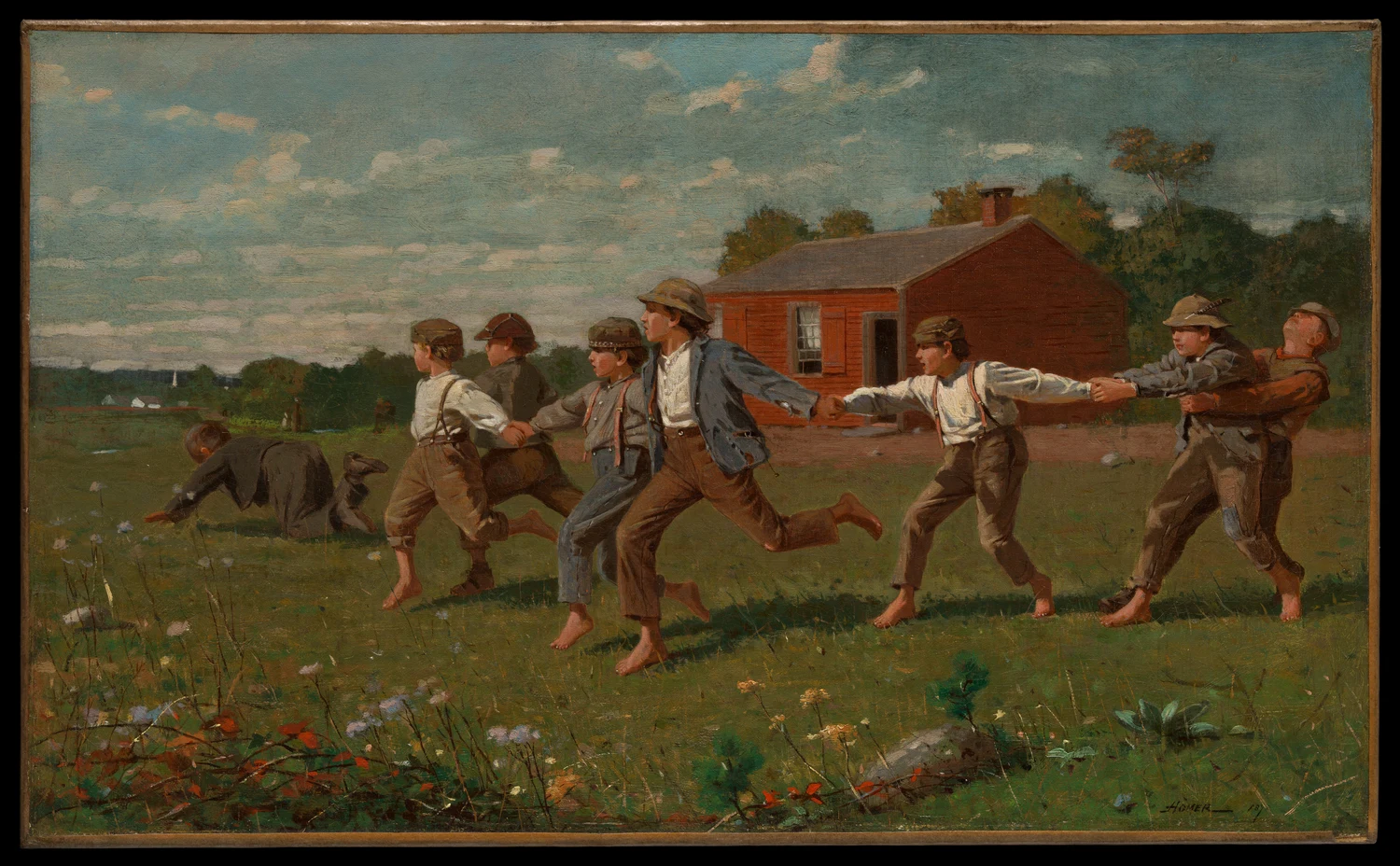
Winslow Homer, Snap the Whip, 1872. A chain of children plays in front of a schoolhouse. The painting is a contemporary image of learning and play outside the Spiritualist movement.
The Metropolitan Museum of Art. Gift of Christian A. Zabriskie, 1950. CC0. Resized and converted to WebP. · Image source ↗ · CC0
See references (5)
- Life and Labor in the Spirit World, printed p. 98, Reader page 99
- Life and Labor in the Spirit World, printed p. 99, Reader page 100
- Life and Labor in the Spirit World, printed p. 100, Reader page 101
- Life and Labor in the Spirit World, printed p. 101, Reader page 102
- Life and Labor in the Spirit World, printed p. 102, Reader page 103
The Children’s Progressive Lyceum by Andrew Jackson Davis
Andrew Jackson Davis’s manual records an inaugural address at Dodworth’s Hall in New York on 25 January 1863. He proposes an association dedicated to physical and spiritual development. The later sample programme puts singing, Silver-Chain recitation and coordinated movement beside conversation about the lessons. [15][16]
Violet’s spirit lyceum
Life and Labor in the Spirit World: Shelhamer’s spirit-band
In the collection credited to the spirit-band of M. T. Shelhamer, Spirit Violet describes children learning through songs, stories and coordinated movements. A flower, a bird or a work of art can begin a lesson. Those drawn to music study harmony, while children interested in painting or sculpture learn from teachers in those arts. [2][3][4]
Violet says her spirit lyceum meets daily. The continuing contact is meant to make teachers and children work well together and prepare the children to be guides and helpers. [3][4][5]
Golden-Chain recitation
In the Golden-Chain recitation, a poem moves through the room. The guardian begins, the teachers answer and groups of children take successive lines. Everybody speaks the last four lines. The poem uses ripening fruit to picture the growth the Lyceum expects from its pupils. [5][6]
Continued learning in Gone West
Gone West by J. S. M. Ward
J. S. M. Ward gives school a different purpose in Gone West. H. J. L. is said to have died at eighty and resists being treated as a beginner. A teacher uses questions about body, matter and form to lead him toward a different understanding. Ward distinguishes him from children who had little time to learn on earth. [7][8][9][10][11][12][13][14]
See references (8)
- Gone West, printed p. 1, Reader page 14
- Gone West, printed p. 2, Reader page 15
- Gone West, printed p. 23, Reader page 36
- Gone West, printed p. 24, Reader page 37
- Gone West, printed p. 25, Reader page 38
- Gone West, printed p. 26, Reader page 39
- Gone West, printed p. 20, Reader page 33
- Gone West, printed p. 21, Reader page 34
Learning through participation
Davis calls the shared recitation in his earthly programme Silver-Chain. Violet describes a Golden-Chain recitation within the daily life of her spirit school. Ward gives an older student a different task. His teacher asks him to reopen questions he thought a lifetime had already settled. [3][4][5][6][7][8][9][10][11][12][13][14][16]
See references (13)
- Life and Labor in the Spirit World, printed p. 99, Reader page 100
- Life and Labor in the Spirit World, printed p. 100, Reader page 101
- Life and Labor in the Spirit World, printed p. 101, Reader page 102
- Life and Labor in the Spirit World, printed p. 102, Reader page 103
- Gone West, printed p. 1, Reader page 14
- Gone West, printed p. 2, Reader page 15
- Gone West, printed p. 23, Reader page 36
- Gone West, printed p. 24, Reader page 37
- Gone West, printed p. 25, Reader page 38
- Gone West, printed p. 26, Reader page 39
- Gone West, printed p. 20, Reader page 33
- Gone West, printed p. 21, Reader page 34
- The Children’s Progressive Lyceum (1867), sample session, printed p. 98
Read further in the library
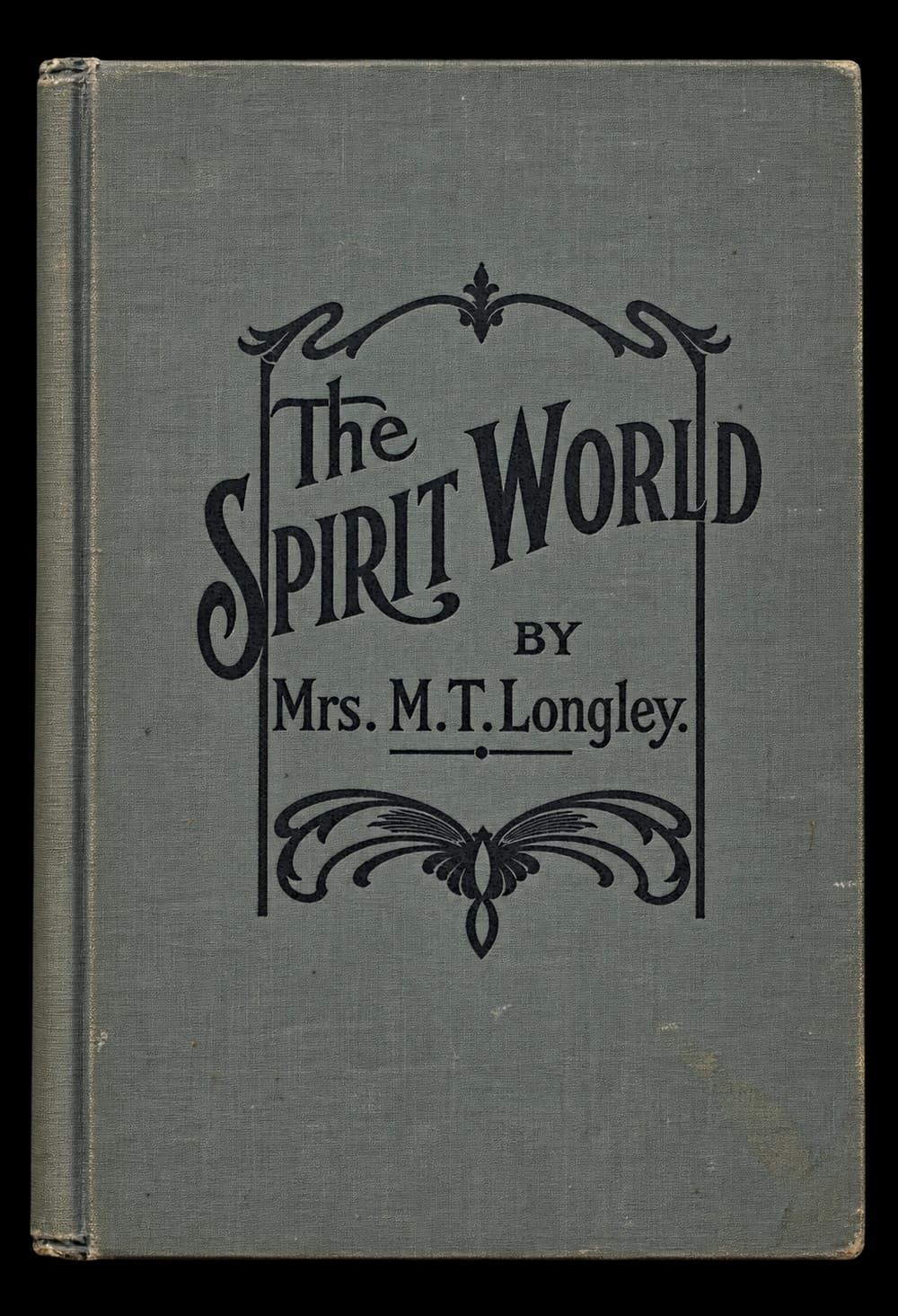
Life and Labour in the Spirit World
Reading note
The separately titled account draws on exact passages in the consulted Library edition.

Gone West
Reading note
Separately attributed comparison with exact previously researched Library passages.
Sources
See references (16)
- Snap the Whip, 1872 ↗The Metropolitan Museum of Art. Current museum metadata verifies this digital image as CC0; original historical work and context identified separately.
- Life and Labor in the Spirit World, printed p. 98, Reader page 99Members of the Spirit-Band of Miss M. T. Shelhamer, Life and Labor in the Spirit World, Second Thousand, Boston: Colby & Rich, 1885. Exact Library edition IMJ-0202-E001. Parts I, II and III are respectively attributed to Spirit Violet, Spirit May and John Critchley Prince. Original metadata and retained Library PageRefs verified; consequential passages checked against actual Library facsimiles. Original Library PDF bytes remain unavailable.Read this page in Life and Labour in the Spirit World ↗Return to text ↑
- Life and Labor in the Spirit World, printed p. 99, Reader page 100Members of the Spirit-Band of Miss M. T. Shelhamer, Life and Labor in the Spirit World, Second Thousand, Boston: Colby & Rich, 1885. Exact Library edition IMJ-0202-E001. Parts I, II and III are respectively attributed to Spirit Violet, Spirit May and John Critchley Prince. Original metadata and retained Library PageRefs verified; consequential passages checked against actual Library facsimiles. Original Library PDF bytes remain unavailable.Read this page in Life and Labour in the Spirit World ↗Return to text ↑
- Life and Labor in the Spirit World, printed p. 100, Reader page 101Members of the Spirit-Band of Miss M. T. Shelhamer, Life and Labor in the Spirit World, Second Thousand, Boston: Colby & Rich, 1885. Exact Library edition IMJ-0202-E001. Parts I, II and III are respectively attributed to Spirit Violet, Spirit May and John Critchley Prince. Original metadata and retained Library PageRefs verified; consequential passages checked against actual Library facsimiles. Original Library PDF bytes remain unavailable.Read this page in Life and Labour in the Spirit World ↗Return to text ↑
- Life and Labor in the Spirit World, printed p. 101, Reader page 102Members of the Spirit-Band of Miss M. T. Shelhamer, Life and Labor in the Spirit World, Second Thousand, Boston: Colby & Rich, 1885. Exact Library edition IMJ-0202-E001. Parts I, II and III are respectively attributed to Spirit Violet, Spirit May and John Critchley Prince. Original metadata and retained Library PageRefs verified; consequential passages checked against actual Library facsimiles. Original Library PDF bytes remain unavailable.Read this page in Life and Labour in the Spirit World ↗Return to text ↑
- Life and Labor in the Spirit World, printed p. 102, Reader page 103Members of the Spirit-Band of Miss M. T. Shelhamer, Life and Labor in the Spirit World, Second Thousand, Boston: Colby & Rich, 1885. Exact Library edition IMJ-0202-E001. Parts I, II and III are respectively attributed to Spirit Violet, Spirit May and John Critchley Prince. Original metadata and retained Library PageRefs verified; consequential passages checked against actual Library facsimiles. Original Library PDF bytes remain unavailable.Read this page in Life and Labour in the Spirit World ↗Return to text ↑
- Gone West, printed p. 1, Reader page 14J. S. M. Ward, Gone West, 1920 third impression as reproduced in the 2009 Geoff Cutler digital transcription.Read this page in Gone West ↗Return to text ↑
- Gone West, printed p. 2, Reader page 15J. S. M. Ward, Gone West, 1920 third impression as reproduced in the 2009 Geoff Cutler digital transcription.Read this page in Gone West ↗Return to text ↑
- Gone West, printed p. 23, Reader page 36J. S. M. Ward, Gone West, 1920 third impression as reproduced in the 2009 Geoff Cutler digital transcription.Read this page in Gone West ↗Return to text ↑
- Gone West, printed p. 24, Reader page 37J. S. M. Ward, Gone West, 1920 third impression as reproduced in the 2009 Geoff Cutler digital transcription.Read this page in Gone West ↗Return to text ↑
- Gone West, printed p. 25, Reader page 38J. S. M. Ward, Gone West, 1920 third impression as reproduced in the 2009 Geoff Cutler digital transcription.Read this page in Gone West ↗Return to text ↑
- Gone West, printed p. 26, Reader page 39J. S. M. Ward, Gone West, 1920 third impression as reproduced in the 2009 Geoff Cutler digital transcription.Read this page in Gone West ↗Return to text ↑
- Gone West, printed p. 20, Reader page 33J. S. M. Ward, Gone West, 1920 third impression as reproduced in the 2009 Geoff Cutler digital transcription.Read this page in Gone West ↗Return to text ↑
- Gone West, printed p. 21, Reader page 34J. S. M. Ward, Gone West, 1920 third impression as reproduced in the 2009 Geoff Cutler digital transcription.Read this page in Gone West ↗Return to text ↑
- The Children’s Progressive Lyceum (1867), “Origin,” printed p. 10 ↗Andrew Jackson Davis, The Children’s Progressive Lyceum, Boston, 1867. New York Public Library copy.Return to text ↑
- The Children’s Progressive Lyceum (1867), sample session, printed p. 98 ↗Andrew Jackson Davis, The Children’s Progressive Lyceum, Boston, 1867. New York Public Library copy.Return to text ↑