Chang’e
Chang’e is the Chinese moon goddess. One tale sends her to the moon after she takes Hou Yi’s elixir. Another brings a Tang emperor to visit her palace.
In this article
Who is Chang’e?
Chang’e is the Chinese moon goddess. In one widely told story she takes an elixir of immortality that belongs to the archer Hou Yi and rises to the moon. A Tang mirror and a painting in the Smithsonian both give her a companion there, the moon rabbit. [1][2][3][4]
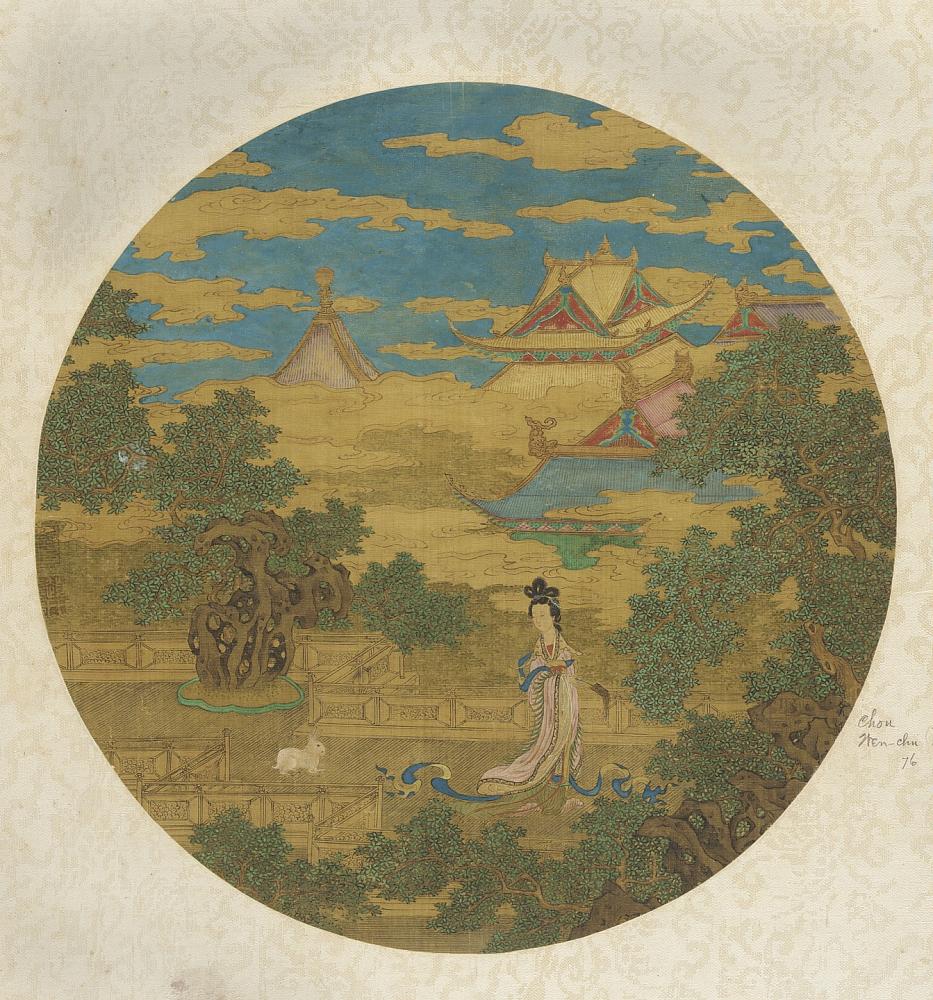
A painting from the Smithsonian collection places Chang’e and a white rabbit in the lunar palace, a setting the 1921 collection also gives to an imperial visitor.
Formerly attributed to Zhou Wenju. The Goddess Chang'e in the Lunar Palace. Smithsonian National Museum of Asian Art. Gift of Charles Lang Freer. CC0. · Image source ↗ · CC0
In The Chinese Fairy Book
In The Chinese Fairy Book, edited by Richard Wilhelm and translated by Frederick H. Martens, Hou Yi shoots nine of the ten suns that are scorching the earth. A runaway horse brings him to Mount Kunlun, where the Queen Mother gives him the herb of immortality. His wife takes some while he is away and rises to the lunar castle. [3]
On a mid-autumn night a Tang emperor crosses a bridge to the moon. Chang’e receives him in halls of crystal and calls for attendants to dance beneath the cassia tree. Nearby a jasper rabbit grinds herbs in a white marble mortar. Back on earth, the emperor has the songs he heard sung in his own garden. [4]
The ending note preserves a version in which Chang’e takes the shape of a toad. The palace story keeps its human-looking hostess and puts the rabbit beside the cassia tree. [5][4]
How artists picture the moon palace
The Tang mirror brings the goddess and rabbit together on its back. The Smithsonian painting gives them room in a palace landscape. The emperor’s visit also makes the palace feel like a place someone could enter, hear music in and remember after returning home. [1][2][4]
In the library
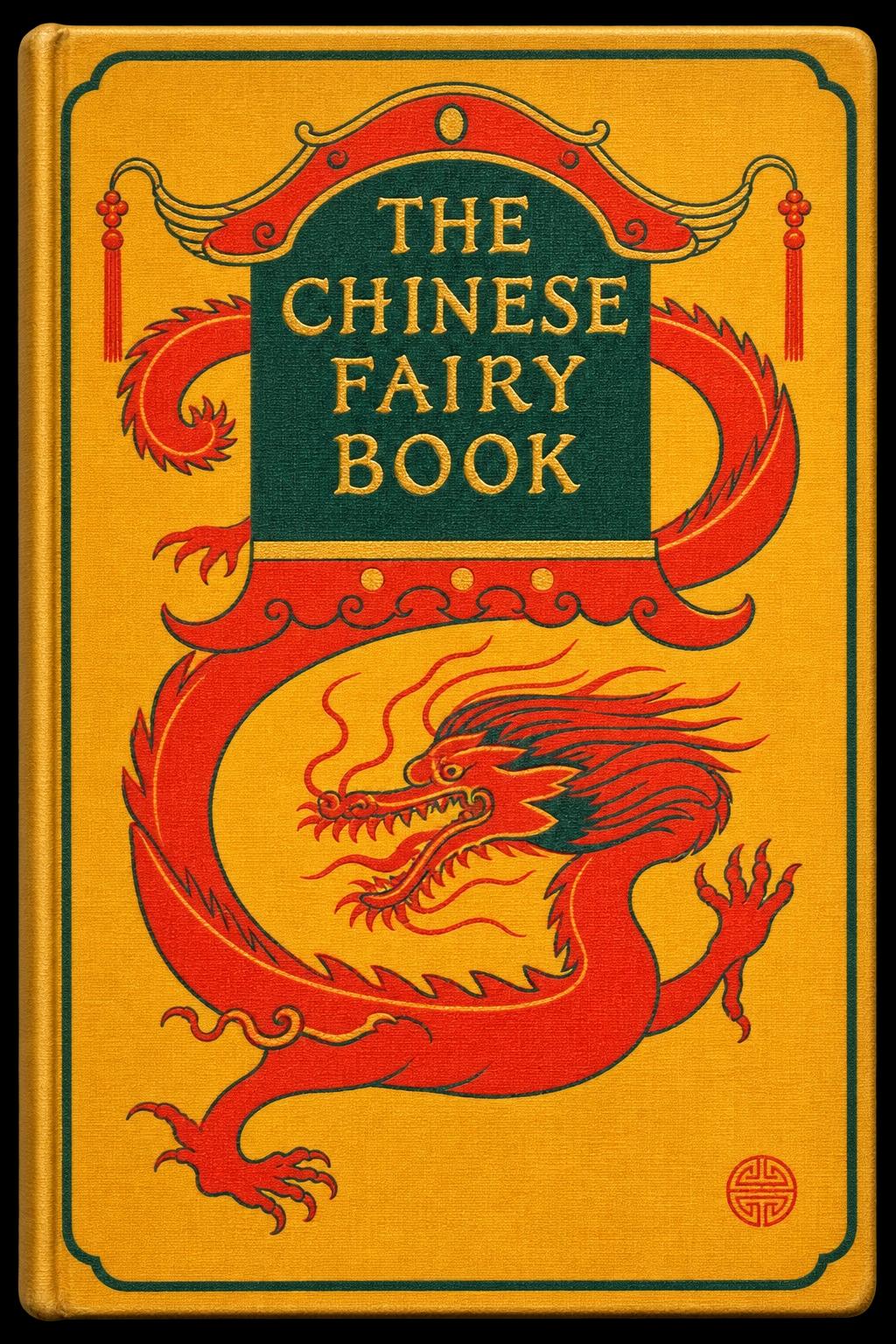
The Chinese Fairy Book
Reading note
Read “The Lady of the Moon” for both Chang’e’s ascent and the emperor’s visit to the crystal halls.
Sources
See references (5)
- Mirror with moon goddess and rabbit ↗The Metropolitan Museum of Art
- The Goddess Chang'e in the Lunar Palace ↗Formerly attributed to Zhou Wenju. The Goddess Chang'e in the Lunar Palace. Smithsonian National Museum of Asian Art. Gift of Charles Lang Freer. CC0.
- The Chinese Fairy Book, Library Reader page 65Richard Wilhelm, editor. Frederick H. Martens, translator. The Chinese Fairy Book. Frederick A. Stokes Company, New York, 1921. Lumitheca Library edition IMJ-0478-E002.Read this page in The Chinese Fairy Book ↗
- The Chinese Fairy Book, Library Reader page 66Richard Wilhelm, editor. Frederick H. Martens, translator. The Chinese Fairy Book. Frederick A. Stokes Company, New York, 1921. Lumitheca Library edition IMJ-0478-E002.Read this page in The Chinese Fairy Book ↗
- The Chinese Fairy Book, Library Reader page 69Richard Wilhelm, editor. Frederick H. Martens, translator. The Chinese Fairy Book. Frederick A. Stokes Company, New York, 1921. Lumitheca Library edition IMJ-0478-E002.Read this page in The Chinese Fairy Book ↗