Builders of the New Age in Theosophy
Who are the Builders of the New Age? Follow Challoner’s archers, elemental hosts and planetary lords, with a comparison to Blavatsky’s Builders.
In this article
Who carries an age into being?
The Builders of the New Age are the celestial agents of a transition in H. K. Challoner’s Theosophical poem. They carry a new impulse toward Earth and meet resistance from established forms. The builders connect change in the heavens with upheaval in human life. [3][4][5]
The Secret Doctrine by H. P. Blavatsky
In The Secret Doctrine, H. P. Blavatsky distinguishes three groups of Builders, each divided into seven. The first rebuilds systems after a period of rest. The second builds the planetary chain. The third is associated with the origin of humanity. [2]
Watchers of the Seven Spheres by H. K. Challoner
In The Builders of the New Age, a poem in H. K. Challoner’s Watchers of the Seven Spheres, the Solar Lord releases a creative Word after the planetary lords gain new powers. The speakers call themselves heavenly archers. They enlist spirits of heat, air and water, builders of form and guardians of nations. [3][4]
Older currents resist the new influence before finding another balance. The poem asks people who recognise the change to guide others at a cost to themselves. Its promise of a coming race belongs to its historical Theosophical framework. [4][5][6][7]
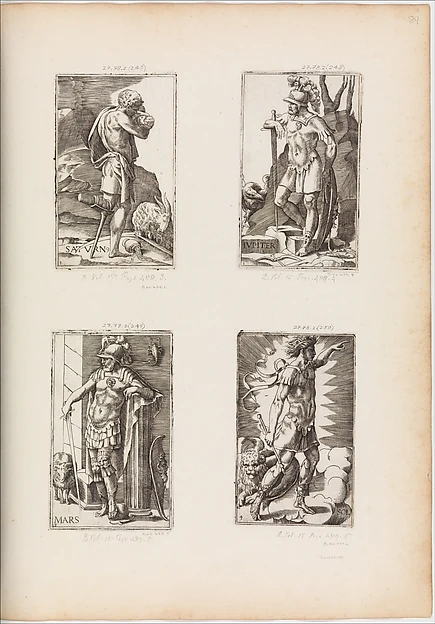
Giulio Bonasone depicts Sol alongside other planetary figures. Challoner’s poem distinguishes the solar and planetary lords from the builders who carry their influence.
Giulio Bonasone, Sol, from Planets, plate 4. The Metropolitan Museum of Art. Harris Brisbane Dick Fund, 1927. · Image source ↗ · CC0
See references (5)
The scale and timing of the work
Blavatsky distinguishes builders by what they make. Challoner follows several orders working together at a particular turning point. Her account gives existing forms an active role in resisting change. [3][4][5][2]
In the library
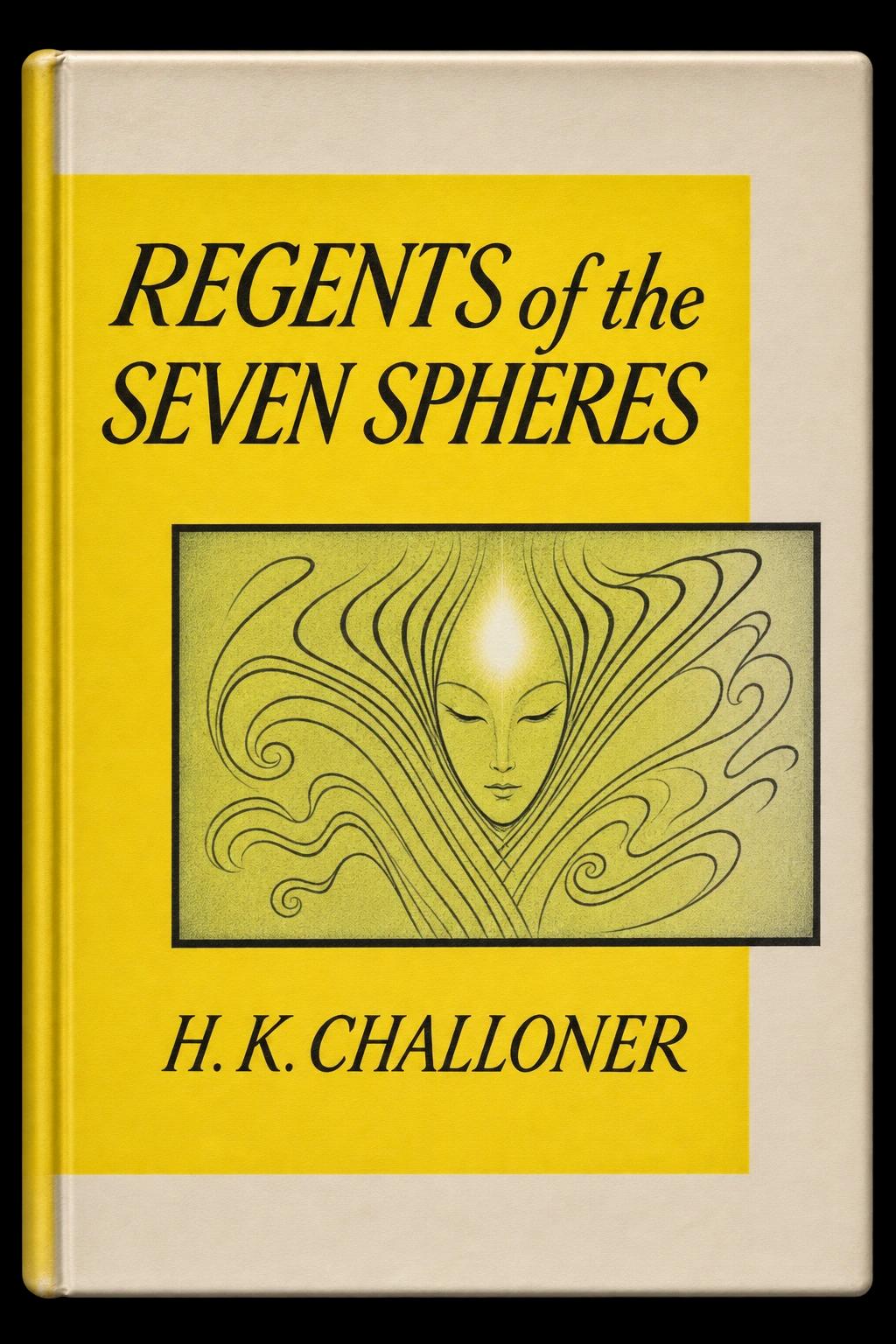
Watchers of the Seven Spheres
Reading note
The separately titled account draws on exact passages in the consulted Library edition.
Sources
See references (7)
- Giulio Bonasone, Sol, from Planets, plate 4 ↗Giulio Bonasone, Sol, from Planets, plate 4. The Metropolitan Museum of Art. Harris Brisbane Dick Fund, 1927.
- The Secret Doctrine, vol. I, pp. 127–128 ↗H. P. Blavatsky, The Secret Doctrine, vol. I, pp. 127–128.
- Watchers of the Seven Spheres, Reader page 66H. K. Challoner, Watchers of the Seven Spheres, London, George Routledge & Sons, 1933. Lumitheca Library edition IMJ-0604-E001.Read this page in Watchers of the Seven Spheres ↗
- Watchers of the Seven Spheres, printed p. 68, Reader page 67H. K. Challoner, Watchers of the Seven Spheres, London, George Routledge & Sons, 1933. Lumitheca Library edition IMJ-0604-E001.Read this page in Watchers of the Seven Spheres ↗
- Watchers of the Seven Spheres, printed p. 69, Reader page 68H. K. Challoner, Watchers of the Seven Spheres, London, George Routledge & Sons, 1933. Lumitheca Library edition IMJ-0604-E001.Read this page in Watchers of the Seven Spheres ↗
- Watchers of the Seven Spheres, printed p. 70, Reader page 69H. K. Challoner, Watchers of the Seven Spheres, London, George Routledge & Sons, 1933. Lumitheca Library edition IMJ-0604-E001.Read this page in Watchers of the Seven Spheres ↗
- Watchers of the Seven Spheres, printed p. 73, Reader page 72H. K. Challoner, Watchers of the Seven Spheres, London, George Routledge & Sons, 1933. Lumitheca Library edition IMJ-0604-E001.Read this page in Watchers of the Seven Spheres ↗