The Buddhist Wooden Fish
The wooden fish is a hollow percussion instrument that keeps time during Buddhist recitation. The fish shape is associated with wakefulness.
In this article
What is a wooden fish?
The wooden fish is a hollow wooden percussion instrument called muyu in Chinese and mokugyo in Japanese. When struck with a mallet, its dry sound can keep time during Buddhist recitation. Some examples look like fish and hang. Others are compact enough to sit beside a person chanting. [1][2]
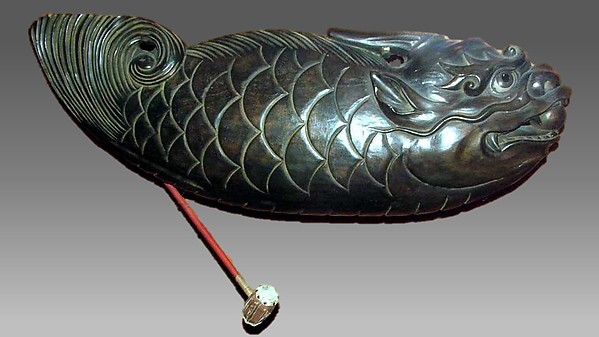
A nineteenth-century Japanese mokugyo shows the fish form clearly. The Met identifies this example as a suspended instrument.
Mokugyo (木魚). ca. 1800–1889. The Metropolitan Museum of Art. The Crosby Brown Collection of Musical Instruments, 1889. Public Domain. · Image source ↗ · Public Domain
See references (2)
In The Chinese Fairy Book
In Richard Wilhelm’s The Chinese Fairy Book, translated by Frederick H. Martens, the young monk later named Huan Dschuang comes to the residence where his mother is held. As he goes round the building he strikes a wooden fish and calls for release from suffering. The repeated sound and words reach his mother inside. She calls him in, and their recognition follows. [3][4]
The note connects the fish with watchfulness. In the story the sound does something anyone who has waited for a visitor can recognise. It tells the woman inside the house that someone has come. [5][3][4]
Rhythm and watchfulness
The Horniman Museum describes wooden fish used to accompany Buddhist chant and connects the shape to the idea of a fish that never sleeps. The Japanese example in the Met was designed to hang. Its fish shape remains clear even when seen at a distance. [1][2][3][5]
In the library
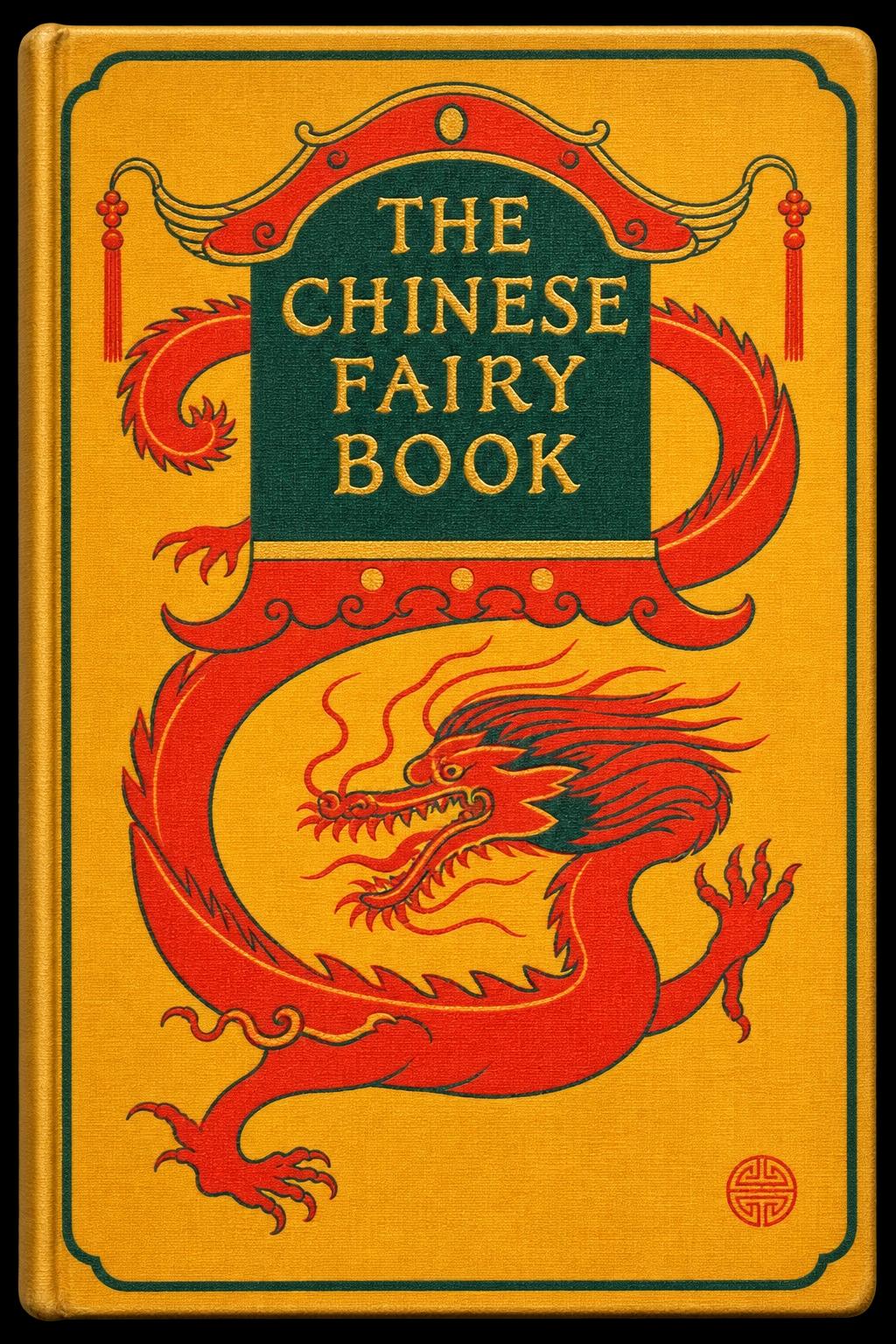
The Chinese Fairy Book
Reading note
Read what happens when the young monk strikes his wooden fish outside the house where his mother is held.
Sources
See references (5)
- Slit drums, including the Chinese muyu ↗Horniman Museum and Gardens
- Mokugyo (木魚) ↗Mokugyo (木魚). ca. 1800–1889. The Metropolitan Museum of Art. The Crosby Brown Collection of Musical Instruments, 1889. Public Domain.
- The Chinese Fairy Book, Library Reader page 271Richard Wilhelm, editor. Frederick H. Martens, translator. The Chinese Fairy Book. Frederick A. Stokes Company, New York, 1921. Lumitheca Library edition IMJ-0478-E002.Read this page in The Chinese Fairy Book ↗
- The Chinese Fairy Book, Library Reader page 272Richard Wilhelm, editor. Frederick H. Martens, translator. The Chinese Fairy Book. Frederick A. Stokes Company, New York, 1921. Lumitheca Library edition IMJ-0478-E002.Read this page in The Chinese Fairy Book ↗
- The Chinese Fairy Book, Library Reader page 273Richard Wilhelm, editor. Frederick H. Martens, translator. The Chinese Fairy Book. Frederick A. Stokes Company, New York, 1921. Lumitheca Library edition IMJ-0478-E002.Read this page in The Chinese Fairy Book ↗