Shakyō
Shakyō is the Buddhist practice of copying scripture by hand. In Japan it can be a devotional offering or a focused practice.
In this article
What is shakyō?
Shakyō is the practice of copying a Buddhist scripture by hand. Copying can preserve a text, serve as an offering or make room for sustained attention. The Heart Sutra is a common choice in Japan today. A long scripture can require many volumes and the work of more than one person. [1][6]
In Ancient Tales and Folk-lore of Japan
In Richard Gordon Smith’s Reincarnation, two monkeys ask a priest at Kinoto to copy a teaching they have heard. They bring him food while he writes. When they die, the priest buries them and prays for them. The copy remains unfinished. [2][3][4]
Years later, a governor asks to see the document. In Smith’s story he identifies himself as the elder monkey reborn as a human and resumes the copying. The unfinished manuscript gives the characters a task that can pass from one life to another. [5]
A manuscript can carry a dedication
The Chūsonji scroll shown here comes from a collection dedicated by Fujiwara no Hidehira for his father. The gold and silver on indigo paper give the offering a material form. Smith’s story puts the emphasis on a different gift, the time and labour that allow a text to be handed on. [3][5][6][1]
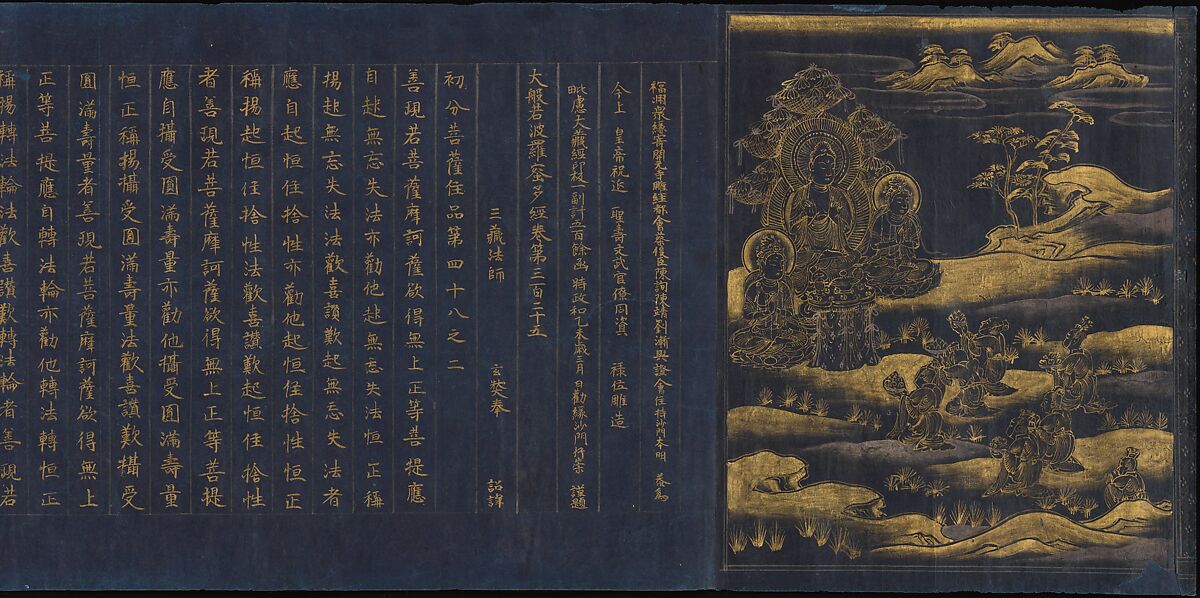
A handscroll from the Chūsonji collection illustrates the care devoted to copying sacred text, with lettering and imagery worked on indigo-dyed paper.
Unidentified Japanese artist or copyist, Great Wisdom Sutra (Daihannya-kyō) from the Chūsonji Temple Sutra Collection, 12th century. The Metropolitan Museum of Art. Public domain. · Image source ↗ · Public Domain
In the library
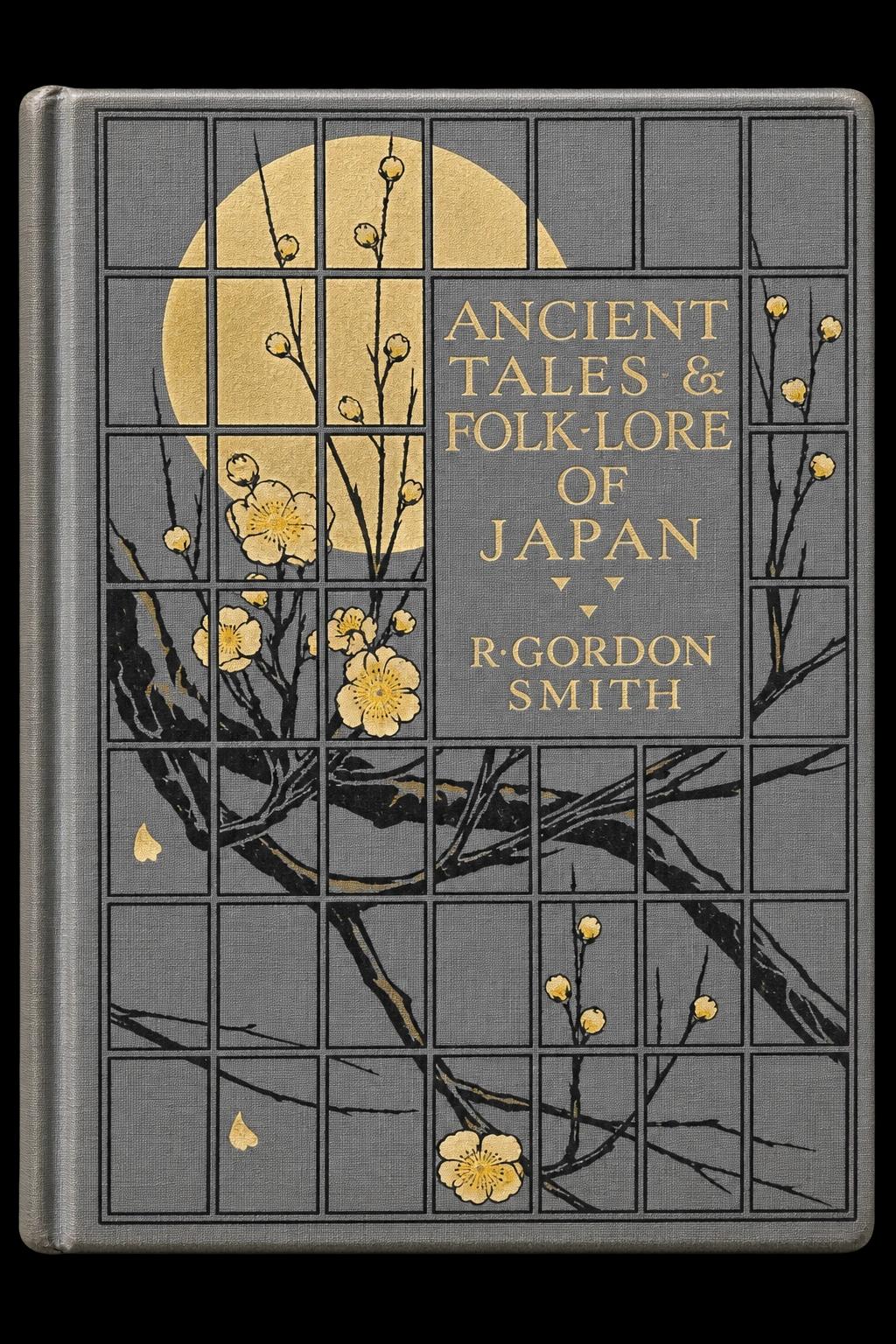
Ancient Tales and Folk-lore of Japan
Reading note
Read Richard Gordon Smith’s account in the verified 1908 Library edition.
Sources
See references (6)
- Sutra Copying (Shakyō) ↗Japan Tourism Agency
- Ancient Tales and Folklore of Japan, printed p. 132, Reader page 194Richard Gordon Smith, Ancient Tales and Folklore of Japan. A. & C. Black, London, 1908. Lumitheca Library edition IMJ-0588-E001.Read this page in Ancient Tales and Folk-lore of Japan ↗
- Ancient Tales and Folklore of Japan, printed p. 133, Reader page 197Richard Gordon Smith, Ancient Tales and Folklore of Japan. A. & C. Black, London, 1908. Lumitheca Library edition IMJ-0588-E001.Read this page in Ancient Tales and Folk-lore of Japan ↗
- Ancient Tales and Folklore of Japan, printed p. 134, Reader page 198Richard Gordon Smith, Ancient Tales and Folklore of Japan. A. & C. Black, London, 1908. Lumitheca Library edition IMJ-0588-E001.Read this page in Ancient Tales and Folk-lore of Japan ↗
- Ancient Tales and Folklore of Japan, printed p. 135, Reader page 199Richard Gordon Smith, Ancient Tales and Folklore of Japan. A. & C. Black, London, 1908. Lumitheca Library edition IMJ-0588-E001.Read this page in Ancient Tales and Folk-lore of Japan ↗
- Great Wisdom Sutra (Daihannya-kyō) from the Chūsonji Temple Sutra Collection ↗Unidentified Japanese artist or copyist, Great Wisdom Sutra (Daihannya-kyō) from the Chūsonji Temple Sutra Collection, 12th century. The Metropolitan Museum of Art. Public domain.