Buddha-nature
What is Buddha-nature? Read Dōgen’s account of awakening alongside a Japanese proverb in which even a cat has Buddha-nature.
In this article
What is Buddha-nature?
Buddha-nature is a Mahāyāna Buddhist term for the relation between sentient beings and awakening. One common way to explain it is as the capacity to awaken. The Zen teacher Dōgen takes up the familiar saying that all beings have Buddha-nature and asks what it means to speak of having it at all. [1][3]
On Buddha Nature in Shobogenzo by Dogen
In Busshō, a fascicle of the Shōbōgenzō, Dōgen reads the traditional statement about Buddha-nature as an account of sentient existence through and through. In Hubert Nearman’s translation, printed pages 245–246, Dōgen also challenges the view that there is a permanent self hidden within a person. [1]
In Ghostly Japan by Lafcadio Hearn
In Japanese Buddhist Proverbs, Lafcadio Hearn records the saying that even a cat has Buddha-nature, or busshō. He places it beside a legend in which only the cat and a venomous snake fail to mourn the Buddha’s death. The proverb grants the cat what the mourning story might lead a reader to question. [3]
In Ululation, Hearn imagines a funeral inscription for an old neighbourhood dog that is still alive. He glosses bodai-shin as bodhi-mind and reads the inscription as a hope for her eventual awakening. The two essays use different Japanese terms. [4][5][3]
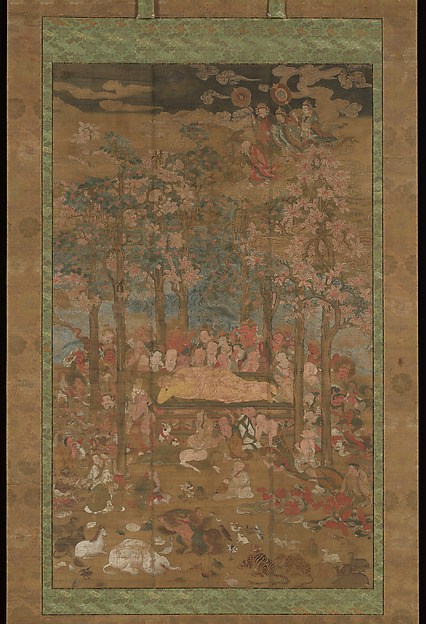
Animals join the mourners in this fifteenth-century Japanese painting, Death of the Historical Buddha.
The Metropolitan Museum of Art, Gift of Susan Dwight Bliss, 1944, 44.35.1. Public domain, Open Access CC0; resized and converted to JPEG. · Image source ↗ · CC0
A proverb and a Zen reading
Hearn’s proverb brings animals into the question of awakening with a single example. Dōgen’s reading goes further, asking how ordinary language about possession shapes the way we understand Buddha-nature. [3][1][4][5]
Read further in the library
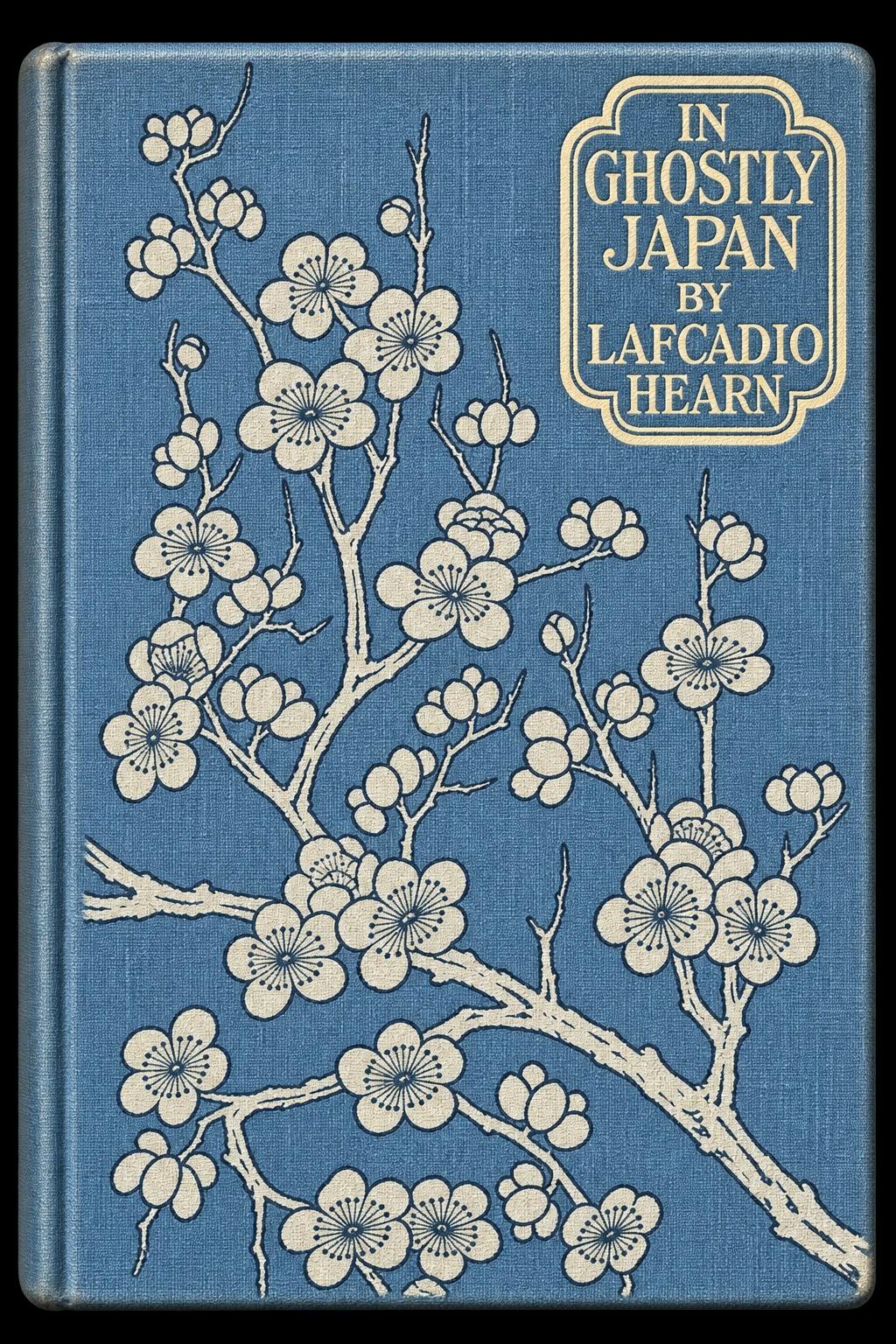
In Ghostly Japan
Reading note
The separately titled account draws on exact passages in the consulted Library edition.
Sources
See references (5)
- Dogen, Shobogenzo: On Buddha Nature, translated by Hubert Nearman, printed pp. 244–246, PDF leaves 1–3 ↗Shasta Abbey’s 2007 translation, chapter 21. Only PDF leaves 1–3, printed pp. 244–246, read and visually checked. The translator’s introduction on p. 244 is distinguished from Dogen’s main text; this is not a claim to have read the whole chapter.Return to text ↑
- Unknown Japanese artist, Death of the Historical Buddha (Nehan-zu), 15th century ↗The Metropolitan Museum of Art, Gift of Susan Dwight Bliss, 1944, 44.35.1. Public domain, Open Access CC0; resized and converted to JPEG.
- In Ghostly Japan, Reader page 179Lafcadio Hearn, In Ghostly Japan, Little, Brown, and Company, Boston, 1899. Exact consulted Library edition IMJ-0654-E001, with title page visually checked. Persistent PageIDs and current Reader positions are verified from the supplied edition. Embedded stories, translations and quotations are attributed to Hearn’s presentation unless an original source has separately been consulted.Read this page in In Ghostly Japan ↗Return to text ↑
- In Ghostly Japan, Reader page 141Lafcadio Hearn, In Ghostly Japan, Little, Brown, and Company, Boston, 1899. Exact consulted Library edition IMJ-0654-E001, with title page visually checked. Persistent PageIDs and current Reader positions are verified from the supplied edition. Embedded stories, translations and quotations are attributed to Hearn’s presentation unless an original source has separately been consulted.Read this page in In Ghostly Japan ↗Return to text ↑
- In Ghostly Japan, Reader page 142Lafcadio Hearn, In Ghostly Japan, Little, Brown, and Company, Boston, 1899. Exact consulted Library edition IMJ-0654-E001, with title page visually checked. Persistent PageIDs and current Reader positions are verified from the supplied edition. Embedded stories, translations and quotations are attributed to Hearn’s presentation unless an original source has separately been consulted.Read this page in In Ghostly Japan ↗Return to text ↑