Babbitt’s Solar Ether Pathway
Figure 153 shows the pathway Edwin D. Babbitt proposed for sunlight and other forces between the Sun and Earth. Read the diagram alongside modern heliophysics.
In this article
How Babbitt thought sunlight reached Earth
A solar ether pathway is a proposed route for carrying light and other forces from the Sun to Earth. Edwin D. Babbitt imagines widely dispersed atoms lining up into channels. Figure 153 makes the idea visible as parallel and intersecting paths. [4][5][6]
The Principles of Light and Color by Edwin D. Babbitt
In The Principles of Light and Color, Edwin D. Babbitt proposes hydrogen as a possible carrier because he thinks it can spread through space. In Figure 153, he draws lines of carrier atoms between the Sun and Earth, along with other layers at an angle to them. [4][5]
The drawing continues below Earth’s surface. Babbitt depicts layers of iron and currents alongside the magnetic poles. His account links the arrival of sunlight to his proposed explanation of terrestrial magnetism. [5][6]
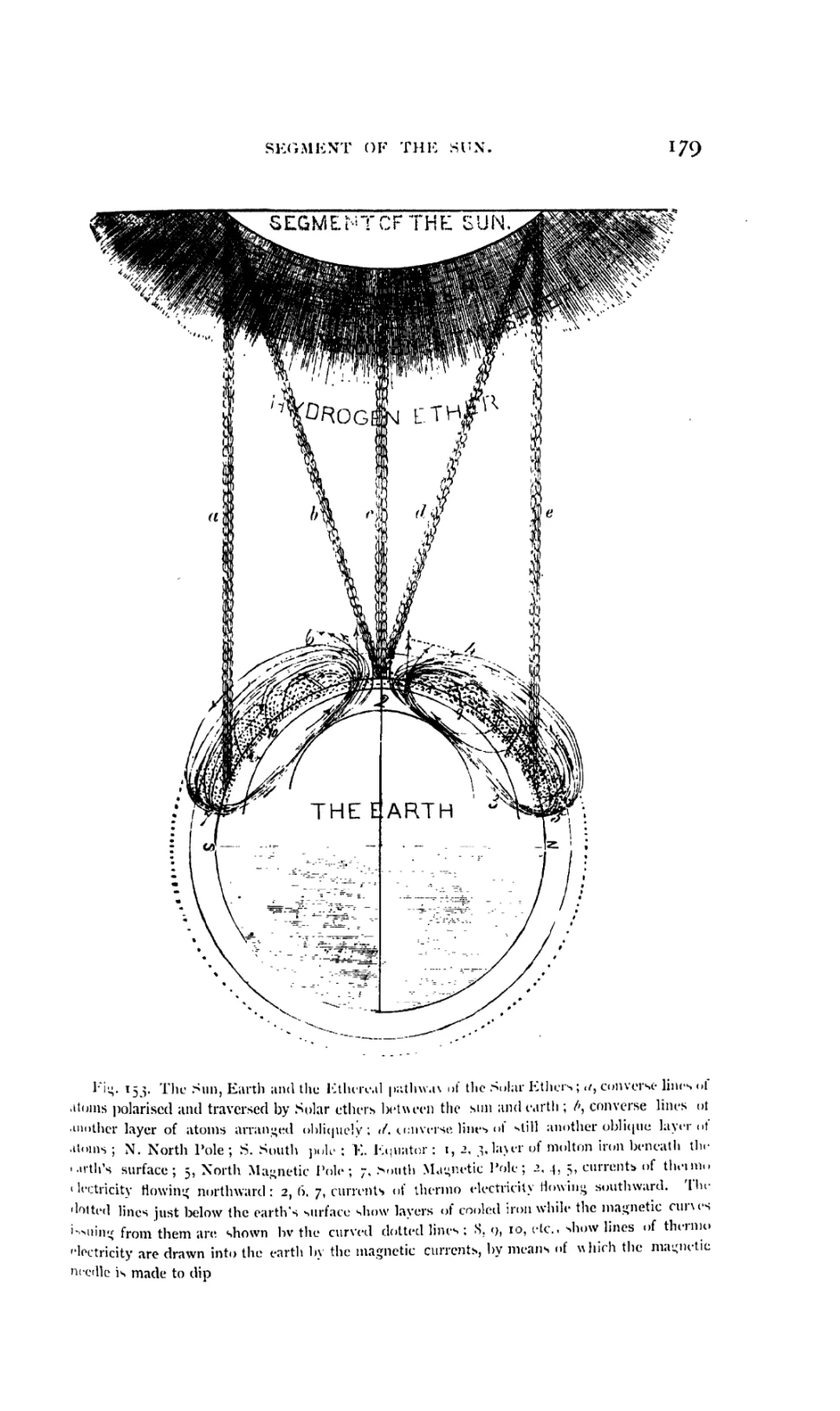
Figure 153 traces Babbitt’s proposed channels from the Sun to the Earth. Other lines cross them, and layers and currents continue below Earth’s surface.
Edwin D. Babbitt, The Principles of Light and Color, second edition, 1896. Lumitheca Library facsimile. · Image source ↗ · Public Domain
Sunlight and the solar wind
Sunlight is electromagnetic radiation that can travel through a vacuum. The solar wind is a stream of charged particles that carries the solar magnetic field outward. Babbitt’s diagram treats light and other forces as currents passing through the same proposed system of material channels. [4][5][2][3]
In the library
The Principles of Light and Color
Reading note
Separately attributed primary Library account, cited on exact verified Reader leaves.
Sources
See references (6)
- Figure 153, Babbitt’s proposed pathway of solar ethers, printed p. 179, Reader page 186Edwin D. Babbitt, The Principles of Light and Color, second edition, 1896. Lumitheca Library facsimile.Read this page in The Principles of Light and Color ↗
- NASA Heliophysics, solar wind ↗NASA Science.
- Basics of Space Flight, chapter 6, Electromagnetic Spectrum ↗NASA Science.
- The Principles of Light and Color, printed p. 176, Reader page 183Edwin D. Babbitt, The Principles of Light and Color, second edition, College of Fine Forces, East Orange, New Jersey, 1896. Lumitheca Library edition IMJ-0607-E001.Read this page in The Principles of Light and Color ↗
- The Principles of Light and Color, printed p. 179, Reader page 186Edwin D. Babbitt, The Principles of Light and Color, second edition, College of Fine Forces, East Orange, New Jersey, 1896. Lumitheca Library edition IMJ-0607-E001.Read this page in The Principles of Light and Color ↗
- The Principles of Light and Color, printed p. 180, Reader page 187Edwin D. Babbitt, The Principles of Light and Color, second edition, College of Fine Forces, East Orange, New Jersey, 1896. Lumitheca Library edition IMJ-0607-E001.Read this page in The Principles of Light and Color ↗