Babbitt’s Grades of Ether
Why did Babbitt propose more than one ether? His grades link heat, electricity and mental action in a hierarchy extending from matter to spirit.
In this article
A hierarchy of subtle media
A grade of ether is a level in Edwin D. Babbitt’s proposed hierarchy of subtle media. Each finer medium can act on a coarser one. The sequence allows him to connect ordinary physical motion with forces he associates with the mind. [5][6][7][8]
The Principles of Light and Color by Edwin D. Babbitt
In The Principles of Light and Color, Edwin D. Babbitt moves from bones to muscles, then to nerves and blood and to the subtler forces he believes act on them. Figure 128 brings the sequence together in a diagram centred on spirit. [5][6]
His atomic theory extends the same pattern. One ether, he proposes, holds ordinary atoms together and sets their spirals vibrating. Finer media act within the channels of those ethers. He assigns heat and electricity different paths through the proposed structure. [7][8][9]
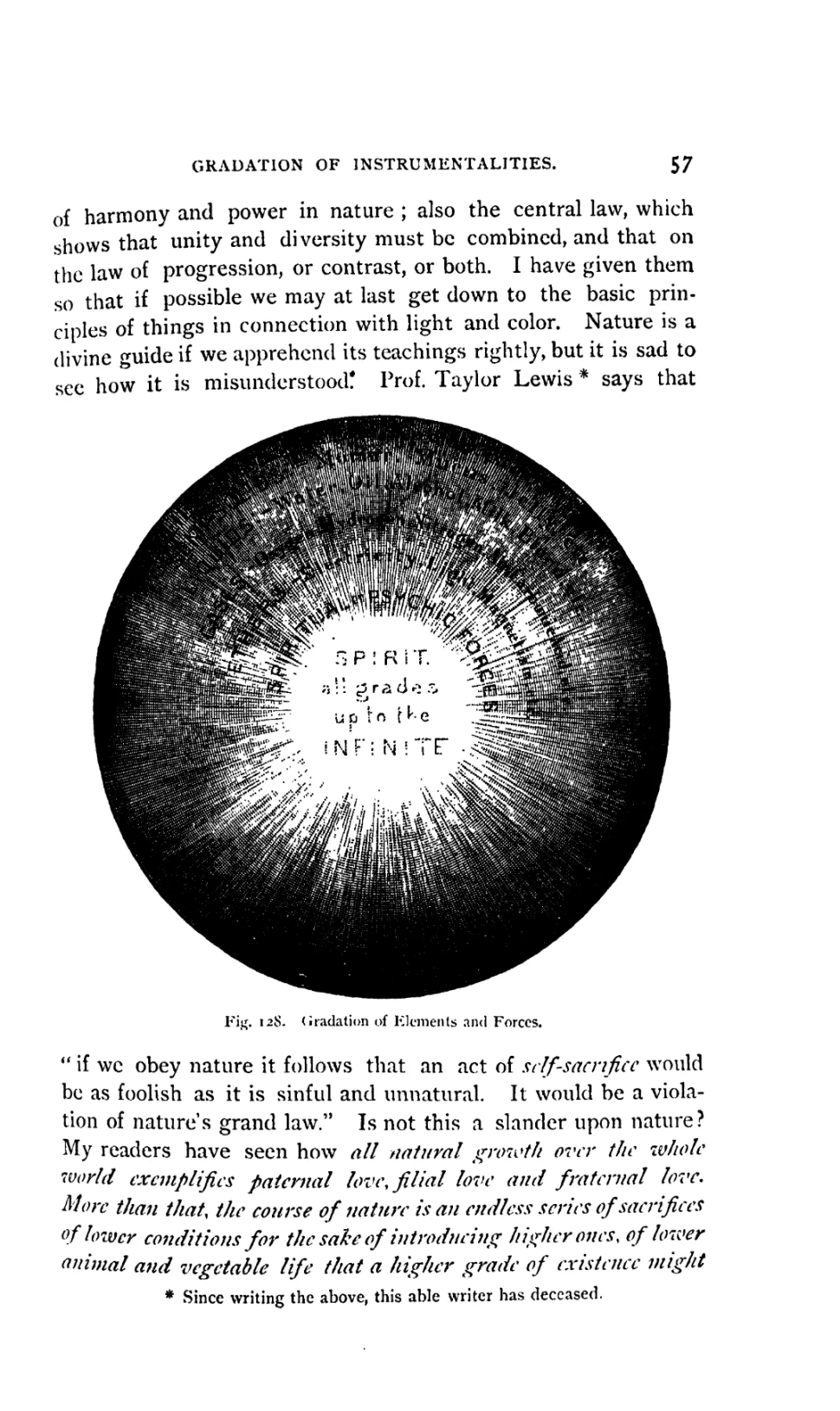
Figure 128 organises the grades of force around spirit at the centre. Babbitt uses the diagram to relate material processes to his proposed finer forces.
Edwin D. Babbitt, The Principles of Light and Color, second edition, 1896. Lumitheca Library facsimile. · Image source ↗ · Public Domain
See references (5)
- The Principles of Light and Color, printed p. 56, Reader page 63
- The Principles of Light and Color, printed p. 57, Reader page 64
- The Principles of Light and Color, printed p. 107, Reader page 114
- The Principles of Light and Color, printed p. 109, Reader page 116
- The Principles of Light and Color, printed p. 113, Reader page 120
The Angels’ Diary and Celestion Study of Man
In the Celestion study attributed to Effie M. Shirey and Charles Samson, spiritual ether carries life from the Creator. The account says contact with material forces modifies that principle before it can take human form. Its origin and capacity to endure remain divine. [2][3][4]
How the two accounts connect spirit and matter
Babbitt uses successive grades to explain how a fine current could affect an atom. The Celestion study follows one divine life-principle as it takes on bodily expression. The first describes how force is transmitted. The second describes what persists through the transition into material life. [5][7][2][3][4]
See references (5)
- The Angels’ Diary and Celestion Study of Man, Reader page 86
- The Angels’ Diary and Celestion Study of Man, printed p. 89, Reader page 87
- The Angels’ Diary and Celestion Study of Man, printed p. 90, Reader page 88
- The Principles of Light and Color, printed p. 56, Reader page 63
- The Principles of Light and Color, printed p. 107, Reader page 114
In the library

The Principles of Light and Color
Reading note
Separately attributed primary Library account, cited on exact verified Reader leaves.
The Angels’ Diary and Celestion Study of Man
Reading note
Separately attributed primary Library account, cited on exact verified Reader leaves.
Sources
See references (9)
- Figure 128, Gradation of Elements and Forces, printed p. 57, Reader page 64Edwin D. Babbitt, The Principles of Light and Color, second edition, 1896. Lumitheca Library facsimile.Read this page in The Principles of Light and Color ↗
- The Angels’ Diary and Celestion Study of Man, Reader page 86Effie M. Shirey and Charles Samson, The Angels’ Diary and Celestion Study of Man (1903), communicated through Elizabeth Maud Weatherhead according to the volume’s acknowledgment. Accounts below refer to the exact retained Library edition IMJ-0055-E001.Read this page in The Angels’ Diary and Celestion Study of Man ↗
- The Angels’ Diary and Celestion Study of Man, printed p. 89, Reader page 87Effie M. Shirey and Charles Samson, The Angels’ Diary and Celestion Study of Man (1903), communicated through Elizabeth Maud Weatherhead according to the volume’s acknowledgment. Accounts below refer to the exact retained Library edition IMJ-0055-E001.Read this page in The Angels’ Diary and Celestion Study of Man ↗
- The Angels’ Diary and Celestion Study of Man, printed p. 90, Reader page 88Effie M. Shirey and Charles Samson, The Angels’ Diary and Celestion Study of Man (1903), communicated through Elizabeth Maud Weatherhead according to the volume’s acknowledgment. Accounts below refer to the exact retained Library edition IMJ-0055-E001.Read this page in The Angels’ Diary and Celestion Study of Man ↗
- The Principles of Light and Color, printed p. 56, Reader page 63Edwin D. Babbitt, The Principles of Light and Color, second edition, College of Fine Forces, East Orange, New Jersey, 1896. Lumitheca Library edition IMJ-0607-E001.Read this page in The Principles of Light and Color ↗
- The Principles of Light and Color, printed p. 57, Reader page 64Edwin D. Babbitt, The Principles of Light and Color, second edition, College of Fine Forces, East Orange, New Jersey, 1896. Lumitheca Library edition IMJ-0607-E001.Read this page in The Principles of Light and Color ↗
- The Principles of Light and Color, printed p. 107, Reader page 114Edwin D. Babbitt, The Principles of Light and Color, second edition, College of Fine Forces, East Orange, New Jersey, 1896. Lumitheca Library edition IMJ-0607-E001.Read this page in The Principles of Light and Color ↗
- The Principles of Light and Color, printed p. 109, Reader page 116Edwin D. Babbitt, The Principles of Light and Color, second edition, College of Fine Forces, East Orange, New Jersey, 1896. Lumitheca Library edition IMJ-0607-E001.Read this page in The Principles of Light and Color ↗
- The Principles of Light and Color, printed p. 113, Reader page 120Edwin D. Babbitt, The Principles of Light and Color, second edition, College of Fine Forces, East Orange, New Jersey, 1896. Lumitheca Library edition IMJ-0607-E001.Read this page in The Principles of Light and Color ↗