Babbitt’s Fluidic Theory of Light
Edwin D. Babbitt tried to reconcile competing theories of light through flows of ether. Compare his theory with the modern wave and photon descriptions.
In this article
Light as a flow
A fluidic theory explains light as the motion of a proposed medium. Edwin D. Babbitt imagined streams of ether flowing through relatively stable structures. He offered the theory during nineteenth-century debates about the reach of wave and particle models. [2][3][4]
The Principles of Light and Color by Edwin D. Babbitt
In The Principles of Light and Color, Edwin D. Babbitt asks whether features of wave and particle theories can be brought together. He argues that material motion must play a role and builds his account around the flow of a medium. [3][5][4]
Babbitt imagines several grades of stationary frameworks and of flowing ether. A coarse framework carries a coarse flow, with progressively finer frameworks carrying finer currents. His later diagrams of atomic coils show the structures he thinks could provide these paths. [4][6][7]
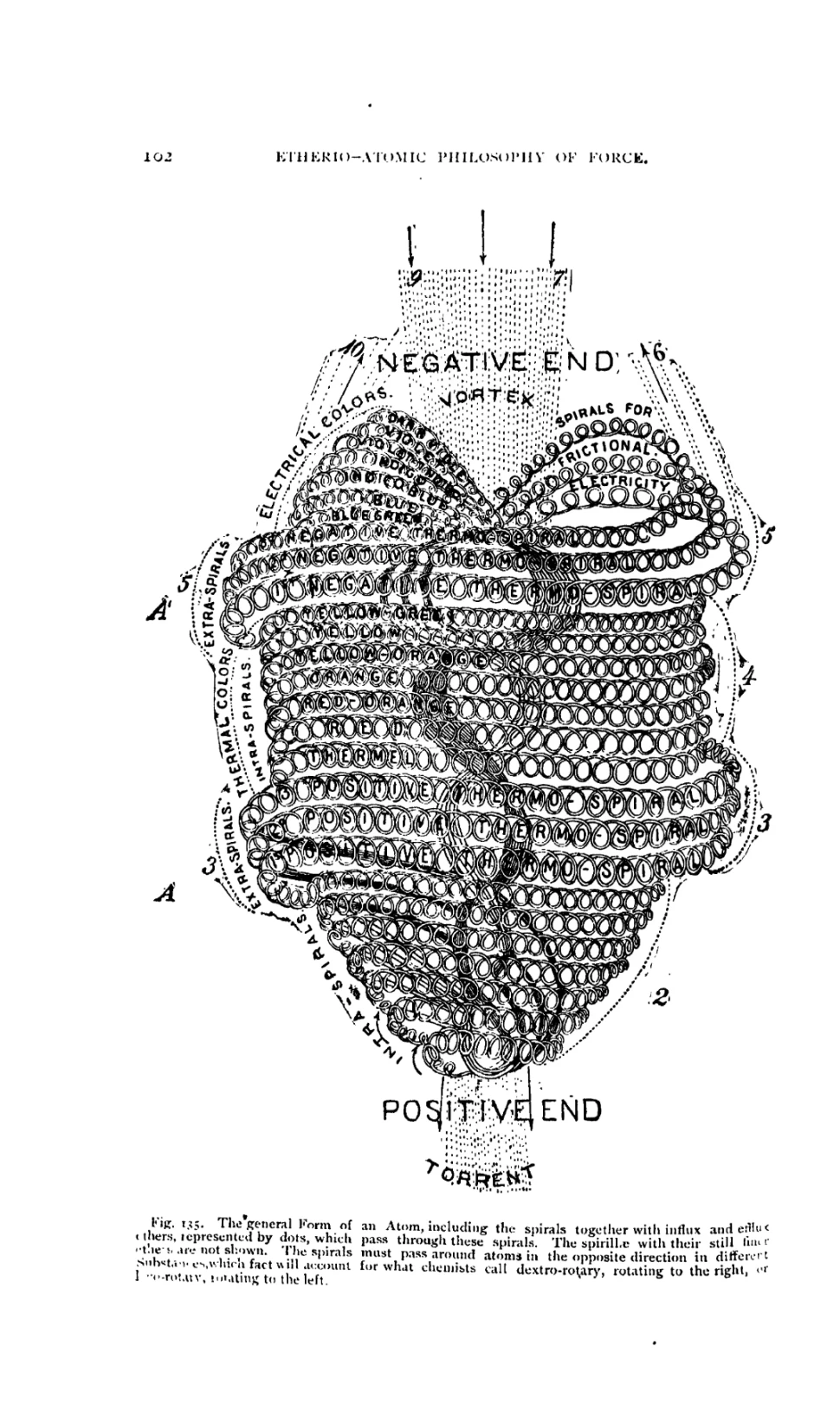
Figure 135 gives Babbitt’s proposed currents a physical path. The coils are his model for the passages through which ether would flow.
Edwin D. Babbitt, The Principles of Light and Color, second edition, 1896. Lumitheca Library facsimile. · Image source ↗ · Public Domain
See references (5)
- The Principles of Light and Color, printed p. 84, Reader page 91
- The Principles of Light and Color, printed p. 93, Reader page 100
- The Principles of Light and Color, printed p. 87, Reader page 94
- The Principles of Light and Color, printed p. 97, Reader page 104
- Figure 135, Babbitt’s spiral atom, printed p. 102, Reader page 109
What a modern optical account uses
Modern optics describes effects such as interference with waves and exchanges of energy in discrete amounts with photons. Babbitt’s proposal makes a different kind of claim by giving light a material current and atomic passages through which to flow. [3][4][1]
In the library
The Principles of Light and Color
Reading note
Separately attributed primary Library account, cited on exact verified Reader leaves.
Sources
See references (7)
- Basics of Space Flight, chapter 6, Electromagnetic Spectrum and Waves or Particles? ↗NASA Science.
- The Principles of Light and Color, printed p. 80, Reader page 87Edwin D. Babbitt, The Principles of Light and Color, second edition, College of Fine Forces, East Orange, New Jersey, 1896. Lumitheca Library edition IMJ-0607-E001.Read this page in The Principles of Light and Color ↗
- The Principles of Light and Color, printed p. 84, Reader page 91Edwin D. Babbitt, The Principles of Light and Color, second edition, College of Fine Forces, East Orange, New Jersey, 1896. Lumitheca Library edition IMJ-0607-E001.Read this page in The Principles of Light and Color ↗
- The Principles of Light and Color, printed p. 93, Reader page 100Edwin D. Babbitt, The Principles of Light and Color, second edition, College of Fine Forces, East Orange, New Jersey, 1896. Lumitheca Library edition IMJ-0607-E001.Read this page in The Principles of Light and Color ↗
- The Principles of Light and Color, printed p. 87, Reader page 94Edwin D. Babbitt, The Principles of Light and Color, second edition, College of Fine Forces, East Orange, New Jersey, 1896. Lumitheca Library edition IMJ-0607-E001.Read this page in The Principles of Light and Color ↗
- The Principles of Light and Color, printed p. 97, Reader page 104Edwin D. Babbitt, The Principles of Light and Color, second edition, College of Fine Forces, East Orange, New Jersey, 1896. Lumitheca Library edition IMJ-0607-E001.Read this page in The Principles of Light and Color ↗
- Figure 135, Babbitt’s spiral atom, printed p. 102, Reader page 109Edwin D. Babbitt, The Principles of Light and Color, second edition, 1896. Lumitheca Library facsimile.Read this page in The Principles of Light and Color ↗