Babbitt’s Chromo-Chemistry
Babbitt used spectroscopy to argue for laws of chromatic attraction and repulsion. Compare his theory of colour change with what spectral lines reveal.
In this article
From spectral lines to a theory of affinity
Chromo-chemistry is Edwin D. Babbitt’s attempt to explain chemical properties through colour. He starts from spectroscopy, where a pattern of lines can help identify a substance. He then claims that colour reveals powers of attraction and repulsion in matter. [4][5][6][7]
The Principles of Light and Color by Edwin D. Babbitt
In The Principles of Light and Color, Edwin D. Babbitt describes a Steinheil spectroscope that puts two spectra one above the other. This lets the viewer check where their lines fall. Sodium’s strong yellow emission is one of his examples. [4][5][8]
Babbitt proposes that like colour principles repel and stimulate one another, while contrasting ones can attract. He gives hydrogen a warm red principle and oxygen a blue electrical one to explain why they combine as water. [9][6][7][10]
Babbitt calls a change of colour in a chemical combination metachromism. He considers the black oxide produced when copper combines with oxygen and proposes that the atoms of one substance can conceal the colour-producing spirals of another. [11][12][13]
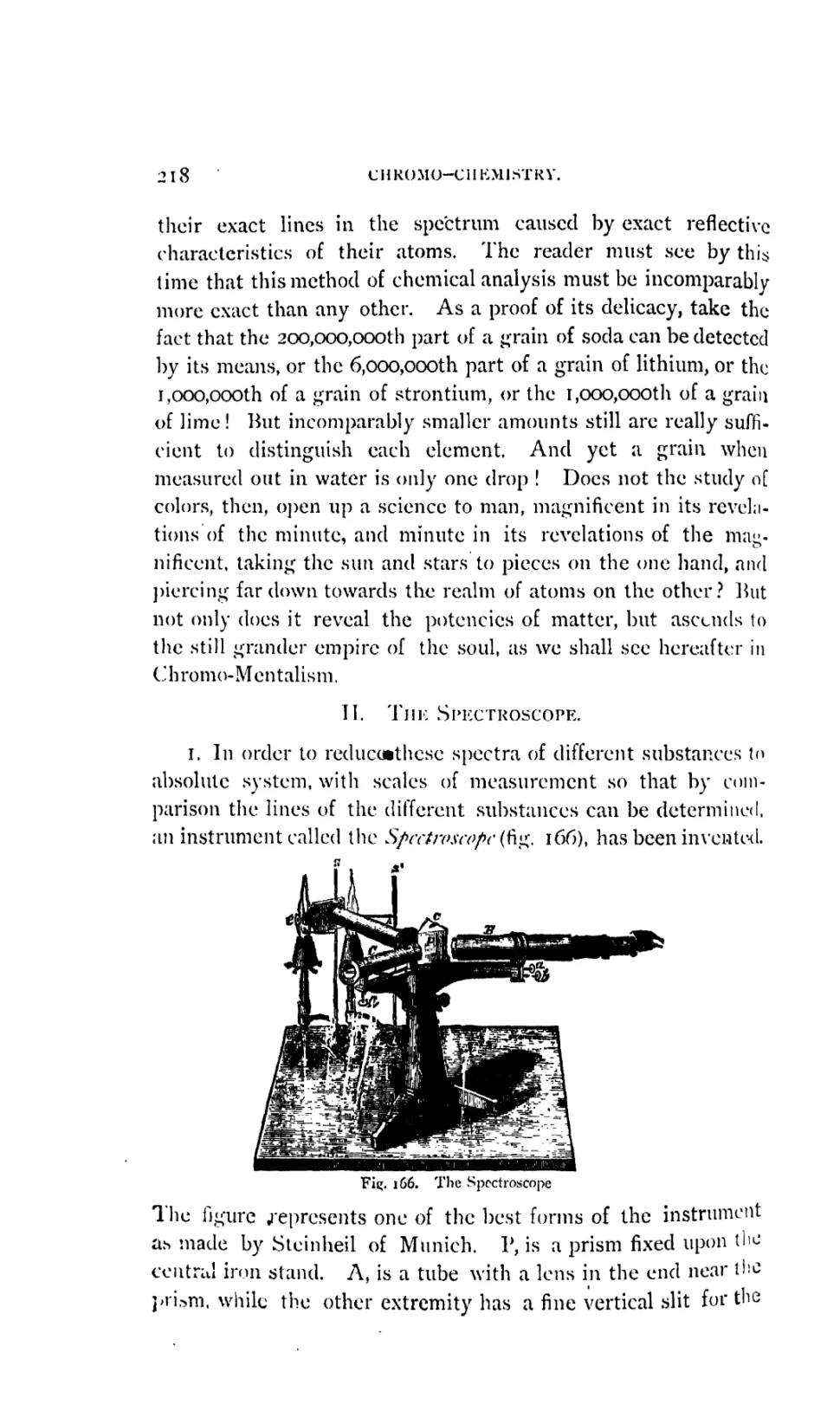
Figure 166 shows the Steinheil spectroscope. It lets the viewer align two spectra and compare where their lines fall.
Edwin D. Babbitt, The Principles of Light and Color, second edition, 1896. Lumitheca Library facsimile. · Image source ↗ · Public Domain
See references (10)
- The Principles of Light and Color, printed p. 216, Reader page 223
- The Principles of Light and Color, printed p. 218, Reader page 225
- The Principles of Light and Color, printed p. 239, Reader page 246
- The Principles of Light and Color, printed p. 244, Reader page 251
- The Principles of Light and Color, printed p. 219, Reader page 226
- The Principles of Light and Color, printed p. 225, Reader page 232
- The Principles of Light and Color, printed p. 247, Reader page 254
- The Principles of Light and Color, printed p. 264, Reader page 271
- The Principles of Light and Color, printed p. 265, Reader page 272
- The Principles of Light and Color, printed p. 266, Reader page 273
Chemical Analysis by Spectrum-Observations by Gustav Kirchhoff and Robert Bunsen
In Chemical Analysis by Spectrum-Observations, Gustav Kirchhoff and Robert Bunsen compare the bright lines produced by substances introduced into a flame. They use the positions of the lines as a way to identify the material in a sample, even in small quantities. [2]
Identification and chemical explanation
Spectral lines reveal which energies atoms or molecules absorb or emit. Their pattern can help identify constituents of a sample. Babbitt uses colour to make a further claim about why elements combine. His atomic spirals are a mechanism he proposed, beyond what the lines can establish. [5][6][7][11][2][3]
See references (6)
- Chemical Analysis by Spectrum-Observations, 1860, pp. 89–95
- Spectroscopy 101: How Absorption and Emission Spectra Work
- The Principles of Light and Color, printed p. 218, Reader page 225
- The Principles of Light and Color, printed p. 239, Reader page 246
- The Principles of Light and Color, printed p. 244, Reader page 251
- The Principles of Light and Color, printed p. 264, Reader page 271
In the library
The Principles of Light and Color
Reading note
Separately attributed primary Library account, cited on exact verified Reader leaves.
Sources
See references (13)
- Figure 166, The Spectroscope, printed p. 218, Reader page 225Edwin D. Babbitt, The Principles of Light and Color, second edition, 1896. Lumitheca Library facsimile.Read this page in The Principles of Light and Color ↗
- Chemical Analysis by Spectrum-Observations, 1860, pp. 89–95 ↗Gustav Kirchhoff and Robert Bunsen, Philosophical Magazine, series 4, volume 20, 1860.
- Spectroscopy 101: How Absorption and Emission Spectra Work ↗NASA Science.
- The Principles of Light and Color, printed p. 216, Reader page 223Edwin D. Babbitt, The Principles of Light and Color, second edition, College of Fine Forces, East Orange, New Jersey, 1896. Lumitheca Library edition IMJ-0607-E001.Read this page in The Principles of Light and Color ↗
- The Principles of Light and Color, printed p. 218, Reader page 225Edwin D. Babbitt, The Principles of Light and Color, second edition, College of Fine Forces, East Orange, New Jersey, 1896. Lumitheca Library edition IMJ-0607-E001.Read this page in The Principles of Light and Color ↗
- The Principles of Light and Color, printed p. 239, Reader page 246Edwin D. Babbitt, The Principles of Light and Color, second edition, College of Fine Forces, East Orange, New Jersey, 1896. Lumitheca Library edition IMJ-0607-E001.Read this page in The Principles of Light and Color ↗
- The Principles of Light and Color, printed p. 244, Reader page 251Edwin D. Babbitt, The Principles of Light and Color, second edition, College of Fine Forces, East Orange, New Jersey, 1896. Lumitheca Library edition IMJ-0607-E001.Read this page in The Principles of Light and Color ↗
- The Principles of Light and Color, printed p. 219, Reader page 226Edwin D. Babbitt, The Principles of Light and Color, second edition, College of Fine Forces, East Orange, New Jersey, 1896. Lumitheca Library edition IMJ-0607-E001.Read this page in The Principles of Light and Color ↗
- The Principles of Light and Color, printed p. 225, Reader page 232Edwin D. Babbitt, The Principles of Light and Color, second edition, College of Fine Forces, East Orange, New Jersey, 1896. Lumitheca Library edition IMJ-0607-E001.Read this page in The Principles of Light and Color ↗
- The Principles of Light and Color, printed p. 247, Reader page 254Edwin D. Babbitt, The Principles of Light and Color, second edition, College of Fine Forces, East Orange, New Jersey, 1896. Lumitheca Library edition IMJ-0607-E001.Read this page in The Principles of Light and Color ↗
- The Principles of Light and Color, printed p. 264, Reader page 271Edwin D. Babbitt, The Principles of Light and Color, second edition, College of Fine Forces, East Orange, New Jersey, 1896. Lumitheca Library edition IMJ-0607-E001.Read this page in The Principles of Light and Color ↗
- The Principles of Light and Color, printed p. 265, Reader page 272Edwin D. Babbitt, The Principles of Light and Color, second edition, College of Fine Forces, East Orange, New Jersey, 1896. Lumitheca Library edition IMJ-0607-E001.Read this page in The Principles of Light and Color ↗
- The Principles of Light and Color, printed p. 266, Reader page 273Edwin D. Babbitt, The Principles of Light and Color, second edition, College of Fine Forces, East Orange, New Jersey, 1896. Lumitheca Library edition IMJ-0607-E001.Read this page in The Principles of Light and Color ↗