Babbitt’s Chromatic Greys
What are chromatic greys, and why can identical greys look different? Compare Babbitt’s colour plates with Chevreul’s experiments in simultaneous contrast.
In this article
When grey looks coloured
A chromatic grey has a hue of its own, such as a blue or red cast. A neutral grey can also look tinted because of a neighbouring colour. The two effects are easy to separate in Edwin D. Babbitt’s plates. One changes the grey itself, and the other changes what surrounds it. [5][6][4]
The Principles of Light and Color by Edwin D. Babbitt
In The Principles of Light and Color, Edwin D. Babbitt divides tinted greys into two families. Red-grey, yellow-grey and blue-grey form the first. Orange-grey, green-grey and purple-grey form the second. Plate I displays different strengths of tint so the hue can be followed through lighter and darker grades. [5][7][8][4]
The hexagon in Plate II puts identical grey centres in differently coloured rings. Babbitt reports that the red ring makes its centre look greenish and the purple ring gives its centre a yellow cast. Here the ink at the centres stays the same. [6]
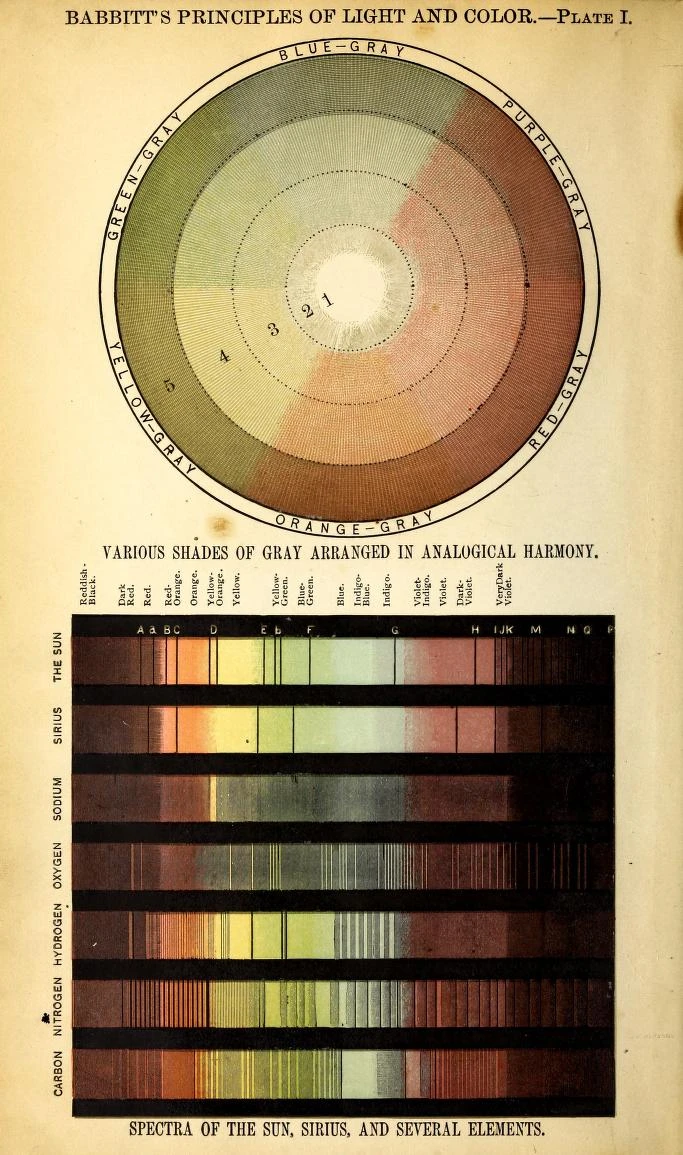
Plate I groups greys by hue and strength of tint in concentric bands.
Edwin D. Babbitt, The Principles of Light and Color, first edition (1878), Plate I. Smithsonian Libraries and Archives. · Image source ↗ · CC0
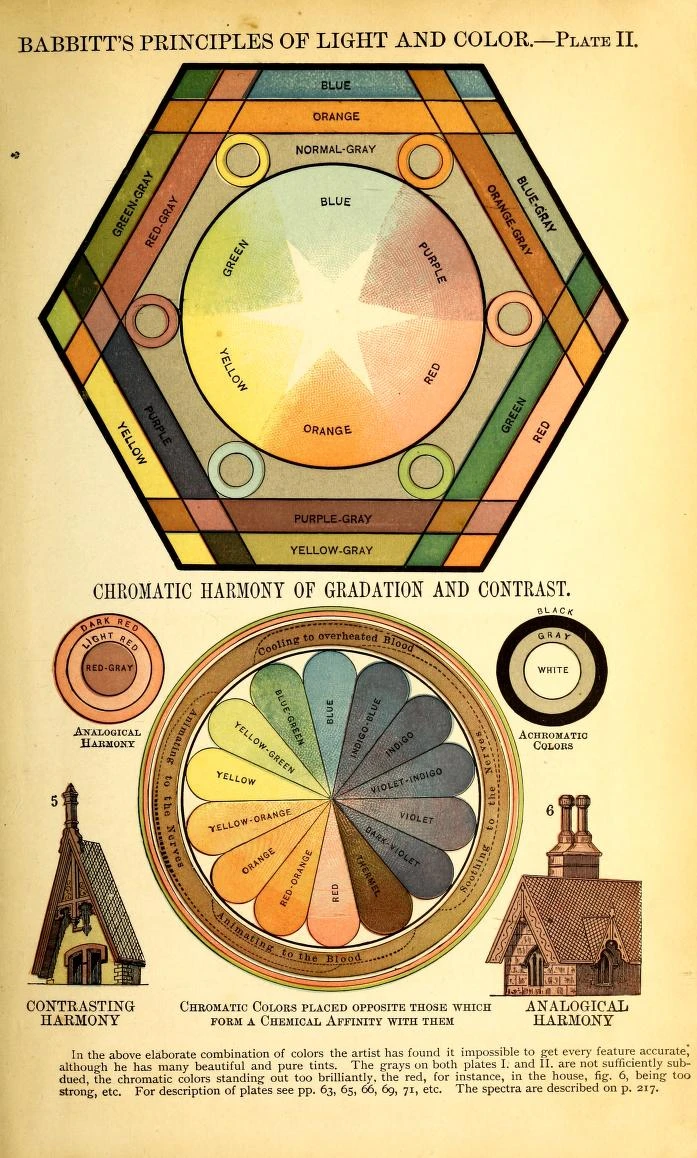
Plate II places matching grey centres within the six coloured rings inside the hexagon. Compare two centres across the diagram.
Edwin D. Babbitt, The Principles of Light and Color, first edition (1878), Plate II. Smithsonian Libraries and Archives. · Image source ↗ · CC0
See references (5)
- The Principles of Light and Color, first edition, Plate I
- The Principles of Light and Color, printed p. 62, Reader page 69
- The Principles of Light and Color, printed p. 70, Reader page 77
- The Principles of Light and Color, printed p. 63, Reader page 70
- The Principles of Light and Color, printed p. 66, Reader page 73
The Principles of Harmony and Contrast of Colours by Michel Eugène Chevreul
Michel Eugène Chevreul places violet beside a sample of grey that is as neutral as he can make it. In The Principles of Harmony and Contrast of Colours, he describes the grey appearing yellowish and the violet looking purer. Yellow is violet’s complementary colour in his scheme. [3]
Two ways to produce a tint
Chevreul isolates one pairing to show how neighbours affect apparent colour. Babbitt’s hexagon lets the eye compare several pairings at once. His catalogue of tinted greys answers a separate question about how hue can be built into the sample. [5][6][3]
In the library
The Principles of Light and Color
Reading note
The separately titled account draws on exact passages in the consulted Library edition.
Sources
See references (8)
- The Principles of Light and Color, 1878, Plate I ↗Edwin D. Babbitt, The Principles of Light and Color, first edition (1878), Plate I. Smithsonian Libraries and Archives.
- The Principles of Light and Color, 1878, Plate II ↗Edwin D. Babbitt, The Principles of Light and Color, first edition (1878), Plate II. Smithsonian Libraries and Archives.
- The Principles of Harmony and Contrast of Colours, p. 26, §70 ↗Michel Eugène Chevreul, translated by Charles Martel, The Principles of Harmony and Contrast of Colours, London, 1854.
- The Principles of Light and Color, first edition, Plate I ↗Edwin D. Babbitt, 1878. Smithsonian Libraries and Archives.
- The Principles of Light and Color, printed p. 62, Reader page 69Edwin D. Babbitt, The Principles of Light and Color, second edition, College of Fine Forces, East Orange, New Jersey, 1896. Lumitheca Library edition IMJ-0607-E001.Read this page in The Principles of Light and Color ↗
- The Principles of Light and Color, printed p. 70, Reader page 77Edwin D. Babbitt, The Principles of Light and Color, second edition, College of Fine Forces, East Orange, New Jersey, 1896. Lumitheca Library edition IMJ-0607-E001.Read this page in The Principles of Light and Color ↗
- The Principles of Light and Color, printed p. 63, Reader page 70Edwin D. Babbitt, The Principles of Light and Color, second edition, College of Fine Forces, East Orange, New Jersey, 1896. Lumitheca Library edition IMJ-0607-E001.Read this page in The Principles of Light and Color ↗
- The Principles of Light and Color, printed p. 66, Reader page 73Edwin D. Babbitt, The Principles of Light and Color, second edition, College of Fine Forces, East Orange, New Jersey, 1896. Lumitheca Library edition IMJ-0607-E001.Read this page in The Principles of Light and Color ↗