Unity and Diversity in Babbitt’s Theory of Harmony
Edwin D. Babbitt describes harmony as a balance of unity and diversity. His examples range from leaf patterns and crystals to light and shade in painting.
In this article
What makes varied parts hang together?
Unity makes distinct parts read as a whole. Diversity gives those parts a character of their own. Edwin D. Babbitt argues that harmony needs both. Branches can radiate from a trunk and share a visible pattern even when each branch grows at a different angle. [3][4][5]
The Principles of Light and Color by Edwin D. Babbitt
In The Principles of Light and Color, Edwin D. Babbitt looks for patterns that hold a design together. A regular figure may have one centre. A plant can have several local centres of growth. The foliage drawings he borrows from John Ruskin give him examples of order with variation. [3][4][6]
Babbitt applies the idea to chiaroscuro. He reports a rule attributed to Joshua Reynolds that favours light over shadow, then argues for a more even balance on average. In his later summary of harmonic laws, he gives unity and diversity a theological meaning, treating their interplay as part of divine order. [7][8][5]
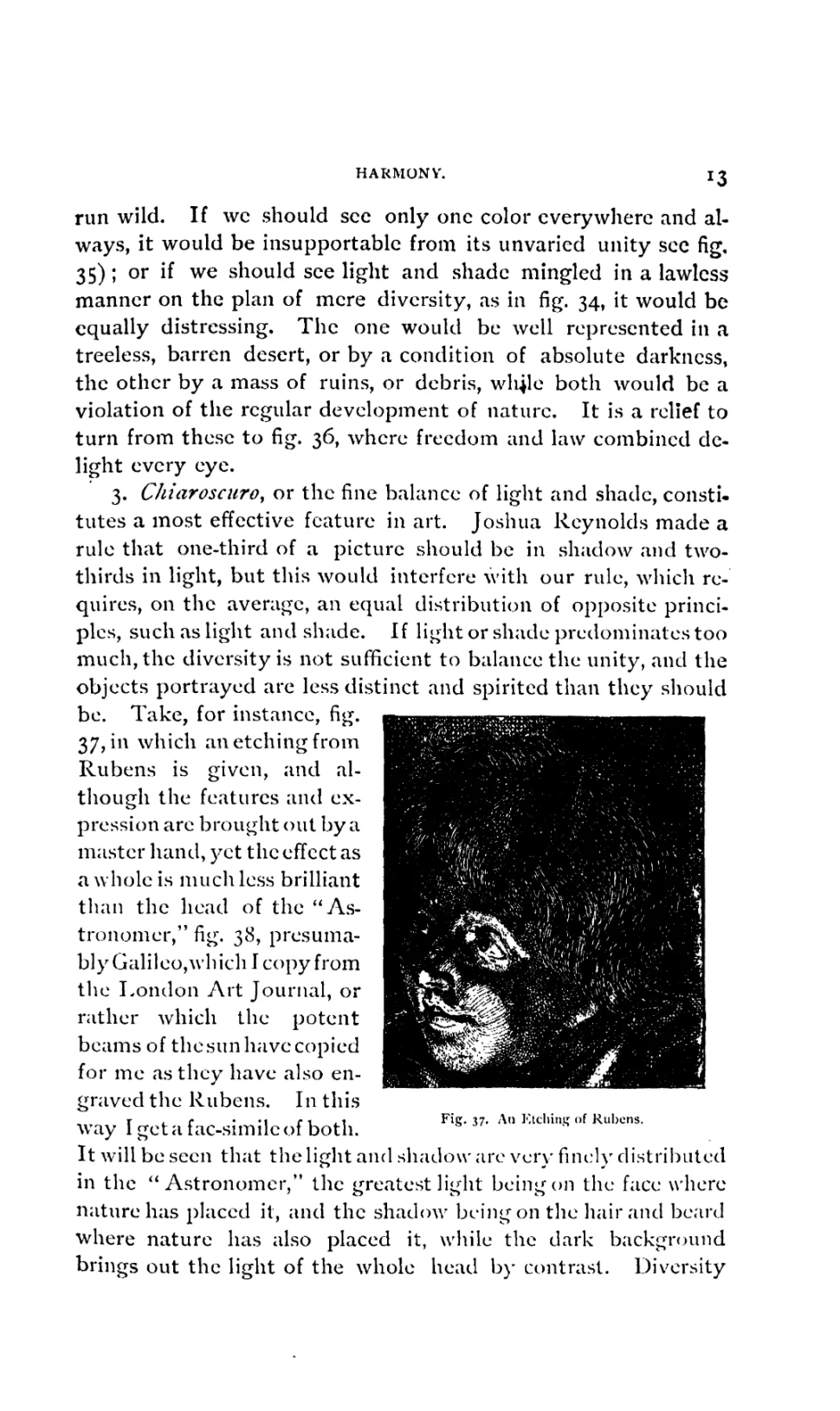
Figure 37 puts the face, bright area and shadow into one composition. Babbitt uses it in his discussion of how light and shade can balance.
Edwin D. Babbitt, The Principles of Light and Color, second edition, 1896. Lumitheca Library facsimile. · Image source ↗ · Public Domain
See references (6)
- The Principles of Light and Color, printed p. 3, Reader page 10
- The Principles of Light and Color, printed p. 5, Reader page 12
- The Principles of Light and Color, printed p. 76, Reader page 83
- The Principles of Light and Color, printed p. 7, Reader page 14
- The Principles of Light and Color, printed p. 13, Reader page 20
- The Principles of Light and Color, printed p. 15, Reader page 22
The Elements of Drawing by John Ruskin
In The Elements of Drawing, John Ruskin compares the lines of a leaf with the branches of a tree. Both spread from centres, but a tree’s branches can turn in more directions. Ruskin uses the difference to show students how to recognise a pattern without flattening the variety they see. [2]
From drawing to a law of nature
Ruskin’s purpose is to train the eye. Babbitt takes the same foliage figures as evidence of a principle he also applies to physical forces, social order and divine organisation. [4][5][2]
In the library
The Principles of Light and Color
Reading note
Separately attributed primary Library account, cited on exact verified Reader leaves.
Sources
See references (8)
- Figure 37, an etching reproduced in Babbitt’s discussion of chiaroscuro, printed p. 13, Reader page 20Edwin D. Babbitt, The Principles of Light and Color, second edition, 1896. Lumitheca Library facsimile.Read this page in The Principles of Light and Color ↗
- The Elements of Drawing, Letter III, The Law of Radiation ↗John Ruskin, The Elements of Drawing, Letter III. Project Gutenberg transcription.
- The Principles of Light and Color, printed p. 3, Reader page 10Edwin D. Babbitt, The Principles of Light and Color, second edition, College of Fine Forces, East Orange, New Jersey, 1896. Lumitheca Library edition IMJ-0607-E001.Read this page in The Principles of Light and Color ↗
- The Principles of Light and Color, printed p. 5, Reader page 12Edwin D. Babbitt, The Principles of Light and Color, second edition, College of Fine Forces, East Orange, New Jersey, 1896. Lumitheca Library edition IMJ-0607-E001.Read this page in The Principles of Light and Color ↗
- The Principles of Light and Color, printed p. 76, Reader page 83Edwin D. Babbitt, The Principles of Light and Color, second edition, College of Fine Forces, East Orange, New Jersey, 1896. Lumitheca Library edition IMJ-0607-E001.Read this page in The Principles of Light and Color ↗
- The Principles of Light and Color, printed p. 7, Reader page 14Edwin D. Babbitt, The Principles of Light and Color, second edition, College of Fine Forces, East Orange, New Jersey, 1896. Lumitheca Library edition IMJ-0607-E001.Read this page in The Principles of Light and Color ↗
- The Principles of Light and Color, printed p. 13, Reader page 20Edwin D. Babbitt, The Principles of Light and Color, second edition, College of Fine Forces, East Orange, New Jersey, 1896. Lumitheca Library edition IMJ-0607-E001.Read this page in The Principles of Light and Color ↗
- The Principles of Light and Color, printed p. 15, Reader page 22Edwin D. Babbitt, The Principles of Light and Color, second edition, College of Fine Forces, East Orange, New Jersey, 1896. Lumitheca Library edition IMJ-0607-E001.Read this page in The Principles of Light and Color ↗