The Awabi Spirit
Richard Gordon Smith’s awabi tales connect abalone with prayer, burials, and the fortunes of Japanese fishing communities.
In this article
What is the awabi spirit?
Awabi is the Japanese name for abalone. In one tale recorded by Richard Gordon Smith, the spirit of an abalone asks a priest for prayers. In another, divers find abalone while looking for an explanation for a poor catch. Both stories connect a shellfish with the origin of a local observance. [1][2][3]
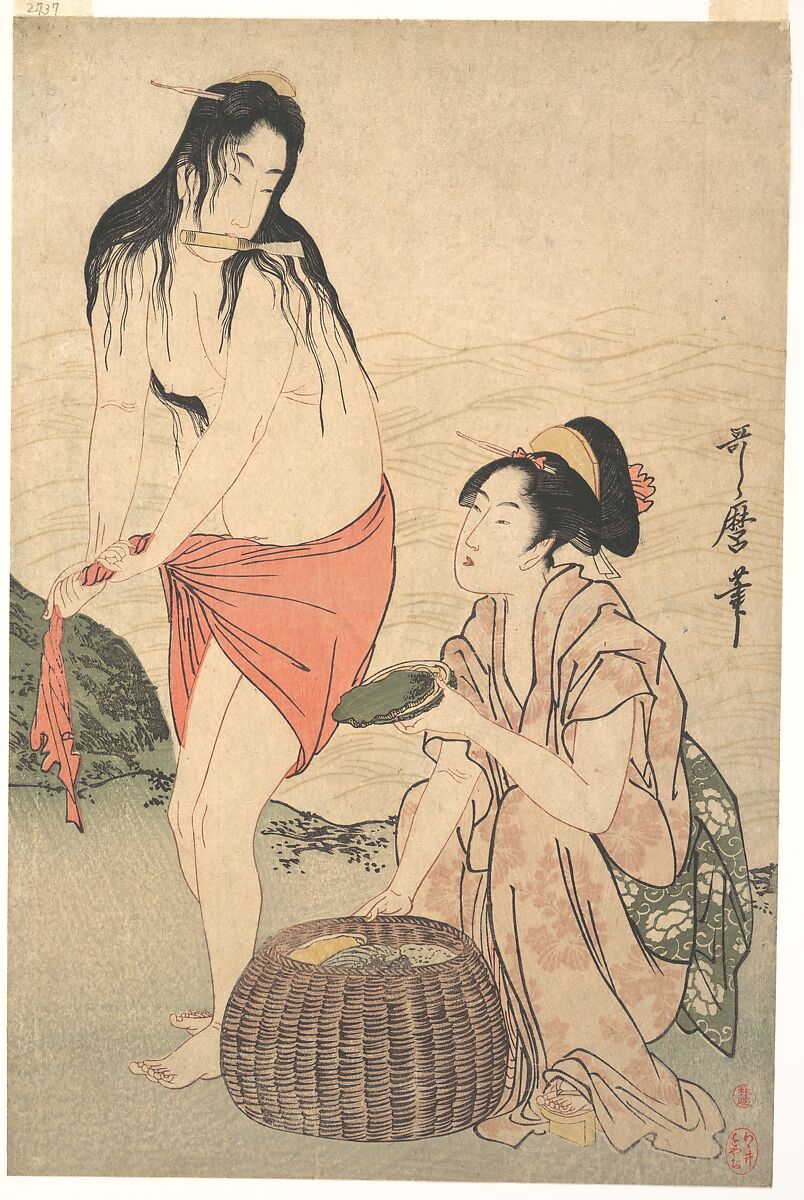
Kitagawa Utamaro’s print gives a view of abalone gathering, the kind of work that underlies the coastal stories in Smith’s book.
Kitagawa Utamaro, Abalone Divers, 1788. The Metropolitan Museum of Art. Public domain. · Image source ↗ · Public Domain
In Ancient Tales and Folk-lore of Japan
In The Temple of the Awabi, Smith sends Matakichi and a priest to pray after Matakichi’s father disappears. An abalone spirit comes to the priest, admits what happened and explains how it intends to atone. The encounter ends with separate burials and a shrine on the island. [1][2][3][4]
In A Festival of the Awabi Fish, fishermen near Manazuru suspect that a body lost at sea is keeping the fish away. A light appears during rites at Kibune shrine. The dive reveals a rock covered in abalone, and Smith’s tale links their removal to the return of the fish and the festival. [5][6][7]
See references (7)
- Ancient Tales and Folklore of Japan, printed p. 278, Reader page 384
- Ancient Tales and Folklore of Japan, printed p. 279, Reader page 385
- Ancient Tales and Folklore of Japan, printed p. 280, Reader page 386
- Ancient Tales and Folklore of Japan, printed p. 281, Reader page 387
- Ancient Tales and Folklore of Japan, printed p. 343, Reader page 471
- Ancient Tales and Folklore of Japan, printed p. 344, Reader page 472
- Ancient Tales and Folklore of Japan, printed p. 345, Reader page 473
Two explanations for trouble at sea
One story lets the creature explain itself. The other leaves the cause of the trouble for divers to discover. In both, what begins in uncertainty at sea is remembered through a shrine or an observance on land. [1][2][4][5][6][7]
See references (6)
- Ancient Tales and Folklore of Japan, printed p. 278, Reader page 384
- Ancient Tales and Folklore of Japan, printed p. 279, Reader page 385
- Ancient Tales and Folklore of Japan, printed p. 281, Reader page 387
- Ancient Tales and Folklore of Japan, printed p. 343, Reader page 471
- Ancient Tales and Folklore of Japan, printed p. 344, Reader page 472
- Ancient Tales and Folklore of Japan, printed p. 345, Reader page 473
In the library
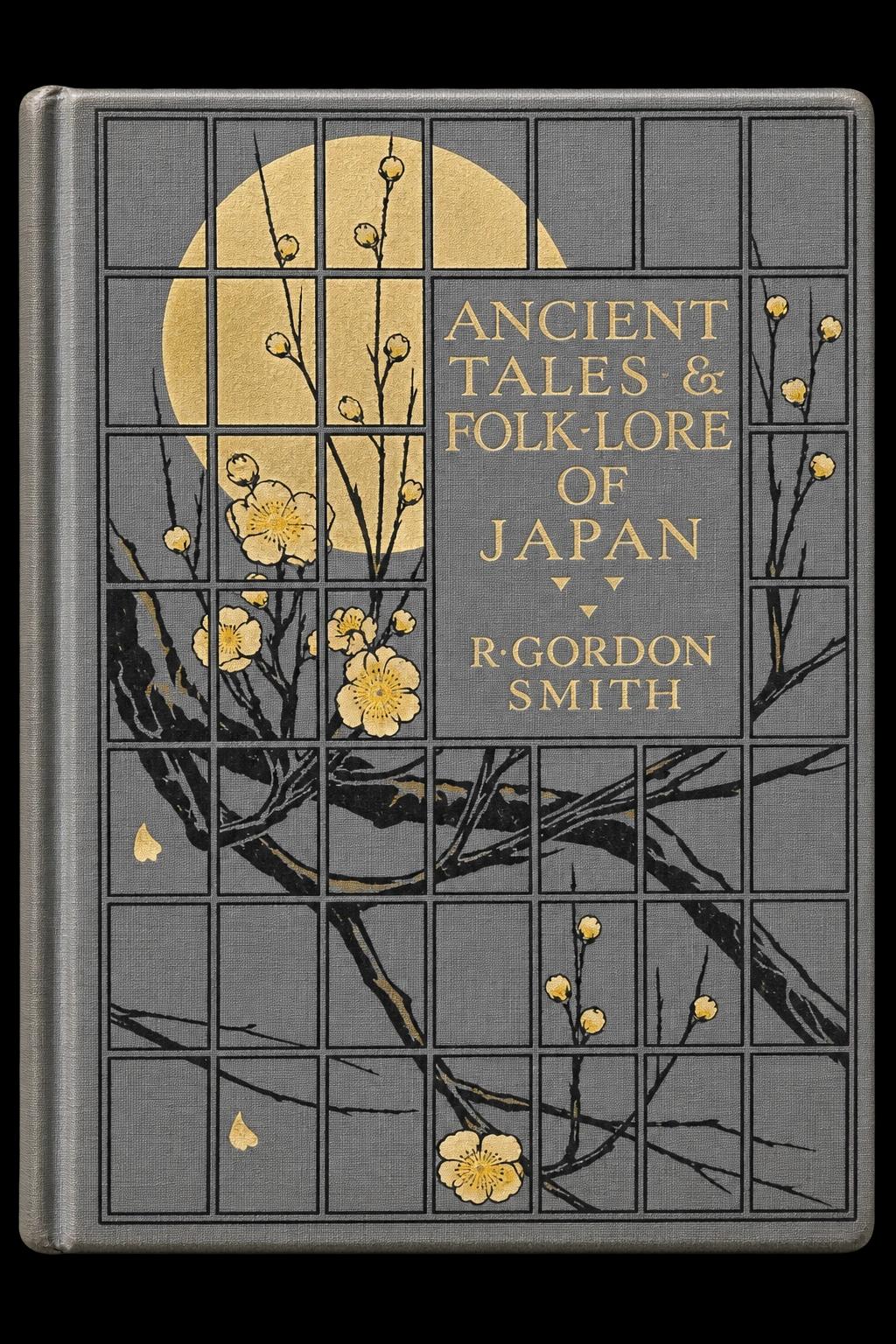
Ancient Tales and Folk-lore of Japan
Reading note
Read Richard Gordon Smith’s account in the verified 1908 Library edition.
Sources
See references (8)
- Ancient Tales and Folklore of Japan, printed p. 278, Reader page 384Richard Gordon Smith, Ancient Tales and Folklore of Japan. A. & C. Black, London, 1908. Lumitheca Library edition IMJ-0588-E001.Read this page in Ancient Tales and Folk-lore of Japan ↗
- Ancient Tales and Folklore of Japan, printed p. 279, Reader page 385Richard Gordon Smith, Ancient Tales and Folklore of Japan. A. & C. Black, London, 1908. Lumitheca Library edition IMJ-0588-E001.Read this page in Ancient Tales and Folk-lore of Japan ↗
- Ancient Tales and Folklore of Japan, printed p. 280, Reader page 386Richard Gordon Smith, Ancient Tales and Folklore of Japan. A. & C. Black, London, 1908. Lumitheca Library edition IMJ-0588-E001.Read this page in Ancient Tales and Folk-lore of Japan ↗
- Ancient Tales and Folklore of Japan, printed p. 281, Reader page 387Richard Gordon Smith, Ancient Tales and Folklore of Japan. A. & C. Black, London, 1908. Lumitheca Library edition IMJ-0588-E001.Read this page in Ancient Tales and Folk-lore of Japan ↗
- Ancient Tales and Folklore of Japan, printed p. 343, Reader page 471Richard Gordon Smith, Ancient Tales and Folklore of Japan. A. & C. Black, London, 1908. Lumitheca Library edition IMJ-0588-E001.Read this page in Ancient Tales and Folk-lore of Japan ↗
- Ancient Tales and Folklore of Japan, printed p. 344, Reader page 472Richard Gordon Smith, Ancient Tales and Folklore of Japan. A. & C. Black, London, 1908. Lumitheca Library edition IMJ-0588-E001.Read this page in Ancient Tales and Folk-lore of Japan ↗
- Ancient Tales and Folklore of Japan, printed p. 345, Reader page 473Richard Gordon Smith, Ancient Tales and Folklore of Japan. A. & C. Black, London, 1908. Lumitheca Library edition IMJ-0588-E001.Read this page in Ancient Tales and Folk-lore of Japan ↗
- Abalone Divers ↗Kitagawa Utamaro, Abalone Divers, 1788. The Metropolitan Museum of Art. Public domain.