Act of Truth in Thelema
Crowley’s Act of Truth and a Buddhist truth-act both link action to truth. Compare Magick Without Tears with Aṅgulimāla’s truthful declaration in MN 86.
In this article
What makes it an act of truth?
An act of truth is an act whose efficacy a text associates with truth. In a Buddhist truth-act, a speaker appeals to the truth of a declaration. Aleister Crowley uses the name for acting with confidence that a need will be met when the action itself supplies no ordinary means to the result. [1][2][3][4][5][6]
Aṅgulimāla Sutta, Majjhima Nikāya 86
In Bhikkhu Sujato’s translation of the Aṅgulimāla Sutta, the Buddha asks Aṅgulimāla to make a declaration for a woman in difficult labour. Aṅgulimāla objects that he has killed and the statement would be false. The Buddha gives him words about his conduct since his “noble birth,” his entry into monastic life. The discourse says he invokes the truth of those words for the well-being of mother and child. [1][10]
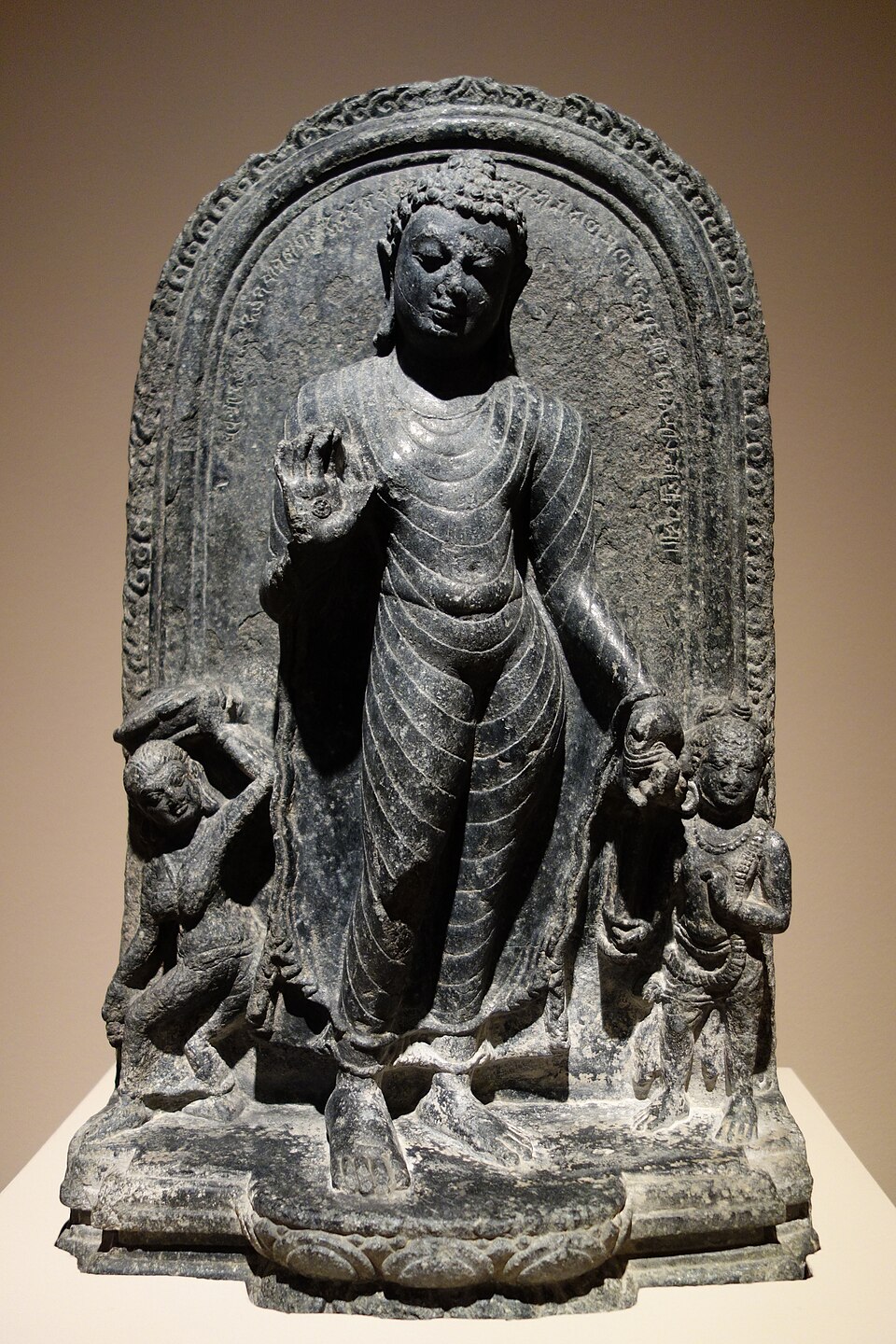
The Story of the Buddha and Aṅgulimāla, a mid-ninth-century basalt relief from India in the Chazen Museum of Art.
Chazen Museum of Art. Photograph by Daderot, via Wikimedia Commons, CC0. · Image source ↗ · CC0
Magick Without Tears by Aleister Crowley
In Magick Without Tears, Crowley imagines someone behaving as if a needed result were already secure. The act expresses confidence despite the absence of an ordinary means to bring the result about. In a postscript, he admits his own attempts made it seem harder than he had suggested. [2][3][4]
In later letters Crowley considers the point where someone has done what planning allows but remains unsure of the outcome. The Act of Truth is an exceptional response in his account, beyond carrying out the steps a person can reasonably plan. [7][8][9][5][6]
See references (8)
A statement about the past and confidence in an outcome
Aṅgulimāla names a fact about his conduct since ordination. Crowley’s examples concern how someone acts in the face of an uncertain future. Comparing the two shows precisely what each source asks the practitioner to stand behind. [1][2][3][4][5]
Read further in the library
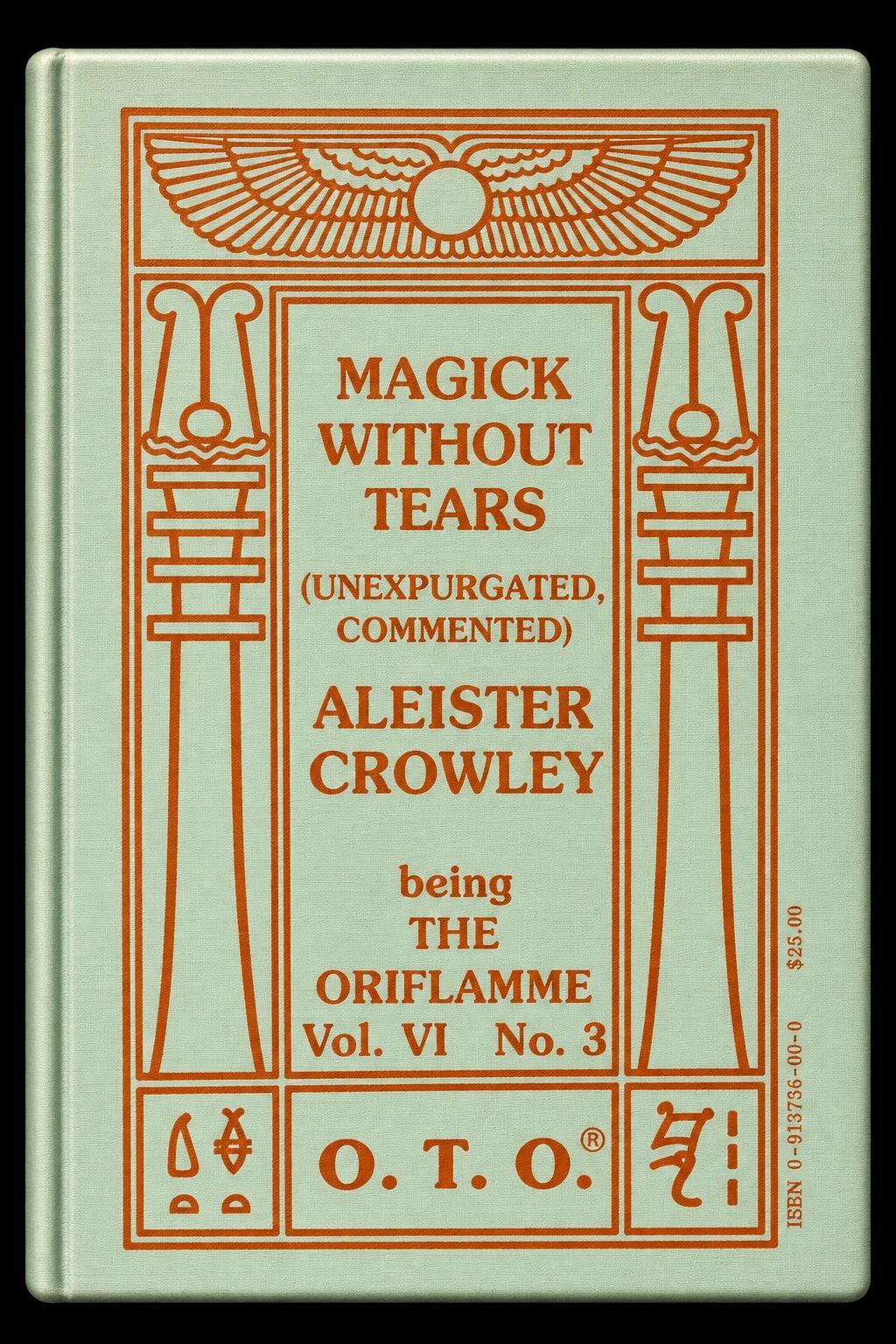
Magick Without Tears
Reading note
The separately titled account draws on exact passages in the consulted Library edition.
Sources
See references (10)
- Aṅgulimāla Sutta, Majjhima Nikāya 86, the encounter with the woman in labour ↗Majjhima Nikāya 86, translated by Bhikkhu Sujato, SuttaCentral.Return to text ↑
- Magick Without Tears, Reader page 99Aleister Crowley, Magick Without Tears, undated digital Library edition IMJ-0641-E001. Links use the current Library Reader sequence.Read this page in Magick Without Tears ↗Return to text ↑
- Magick Without Tears, Reader page 100Aleister Crowley, Magick Without Tears, undated digital Library edition IMJ-0641-E001. Links use the current Library Reader sequence.Read this page in Magick Without Tears ↗Return to text ↑
- Magick Without Tears, Reader page 101Aleister Crowley, Magick Without Tears, undated digital Library edition IMJ-0641-E001. Links use the current Library Reader sequence.Read this page in Magick Without Tears ↗Return to text ↑
- Magick Without Tears, Reader page 326Aleister Crowley, Magick Without Tears, undated digital Library edition IMJ-0641-E001. Links use the current Library Reader sequence.Read this page in Magick Without Tears ↗Return to text ↑
- Magick Without Tears, Reader page 327Aleister Crowley, Magick Without Tears, undated digital Library edition IMJ-0641-E001. Links use the current Library Reader sequence.Read this page in Magick Without Tears ↗Return to text ↑
- Magick Without Tears, Reader page 193Aleister Crowley, Magick Without Tears, undated digital Library edition IMJ-0641-E001. Links use the current Library Reader sequence.Read this page in Magick Without Tears ↗Return to text ↑
- Magick Without Tears, Reader page 194Aleister Crowley, Magick Without Tears, undated digital Library edition IMJ-0641-E001. Links use the current Library Reader sequence.Read this page in Magick Without Tears ↗Return to text ↑
- Magick Without Tears, Reader page 195Aleister Crowley, Magick Without Tears, undated digital Library edition IMJ-0641-E001. Links use the current Library Reader sequence.Read this page in Magick Without Tears ↗Return to text ↑
- The Story of the Buddha and Aṅgulimāla, Chazen Museum of Art ↗Chazen Museum of Art. Photograph by Daderot, via Wikimedia Commons, CC0.Return to text ↑