A scientific career and a life in Japan
James Seguin de Benneville was born in Philadelphia on 12 April 1867. Princeton’s 1913 record of the class of 1888 identifies his education and subsequent profession as an analytical chemist. It lists papers in chemical and metallurgical journals alongside his books on Japanese subjects, bringing two strands of his work into the same contemporary account.
The record gives his address in Yokohama and states that he married Masa Inami there in 1901. More Japonico, published in Yokohama in 1908, belongs to his writing on Japanese society. These records establish more of his life than the brief name on a translation suggests; the sources checked here do not securely establish his death date. His position as an American resident interpreting Japan remains part of the context of his books.
O’Iwa through retelling and local inquiry
The 1917 Yotsuya Kwaidan describes itself as retold from Japanese originals. Modern editor Saitō Takashi identifies a published 1896 version of Shunkintei Ryūō’s rakugo narrative as its principal source, supplemented by de Benneville’s explanations and other traditions. This English book therefore represents one branch of the story’s transmission.
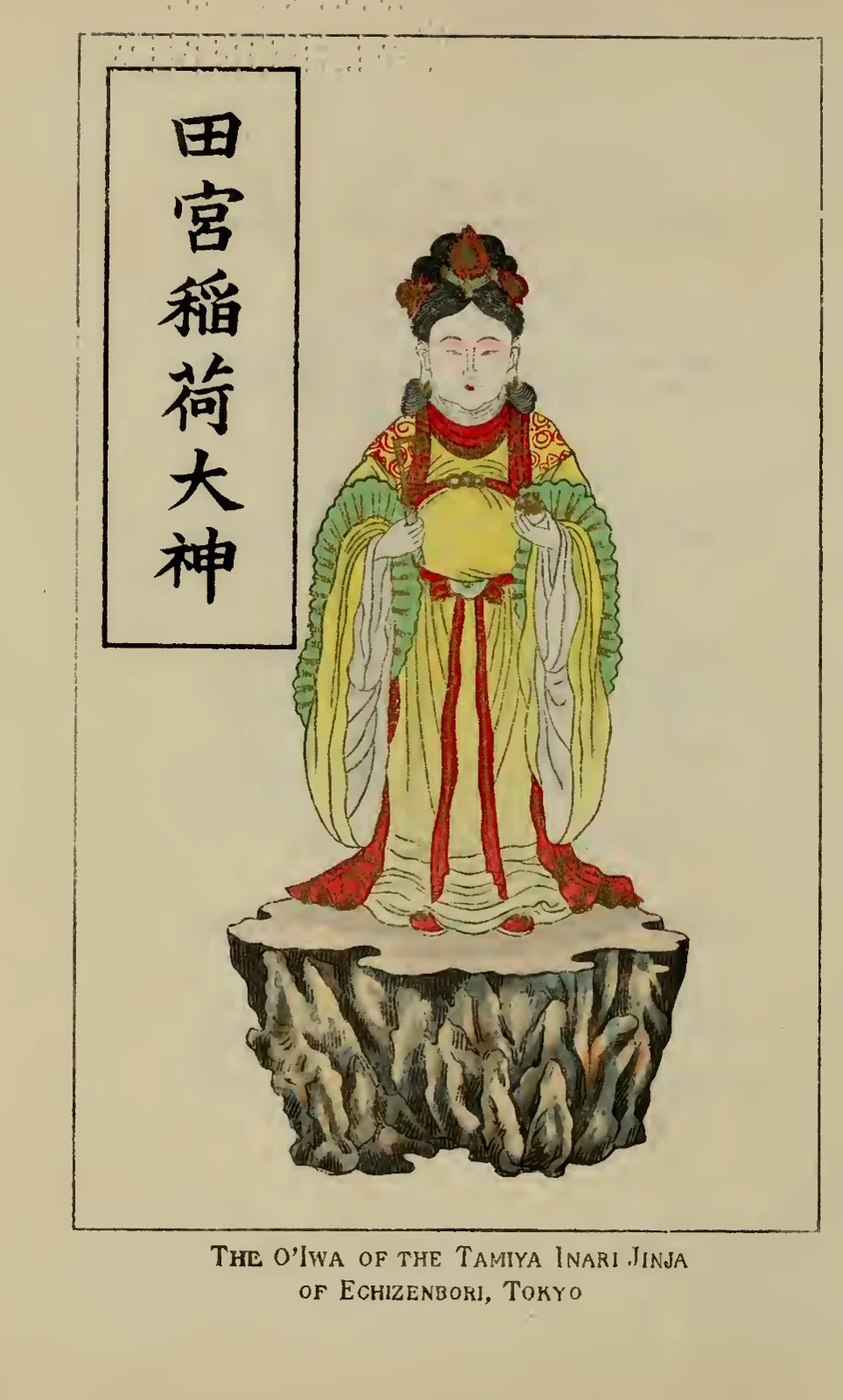
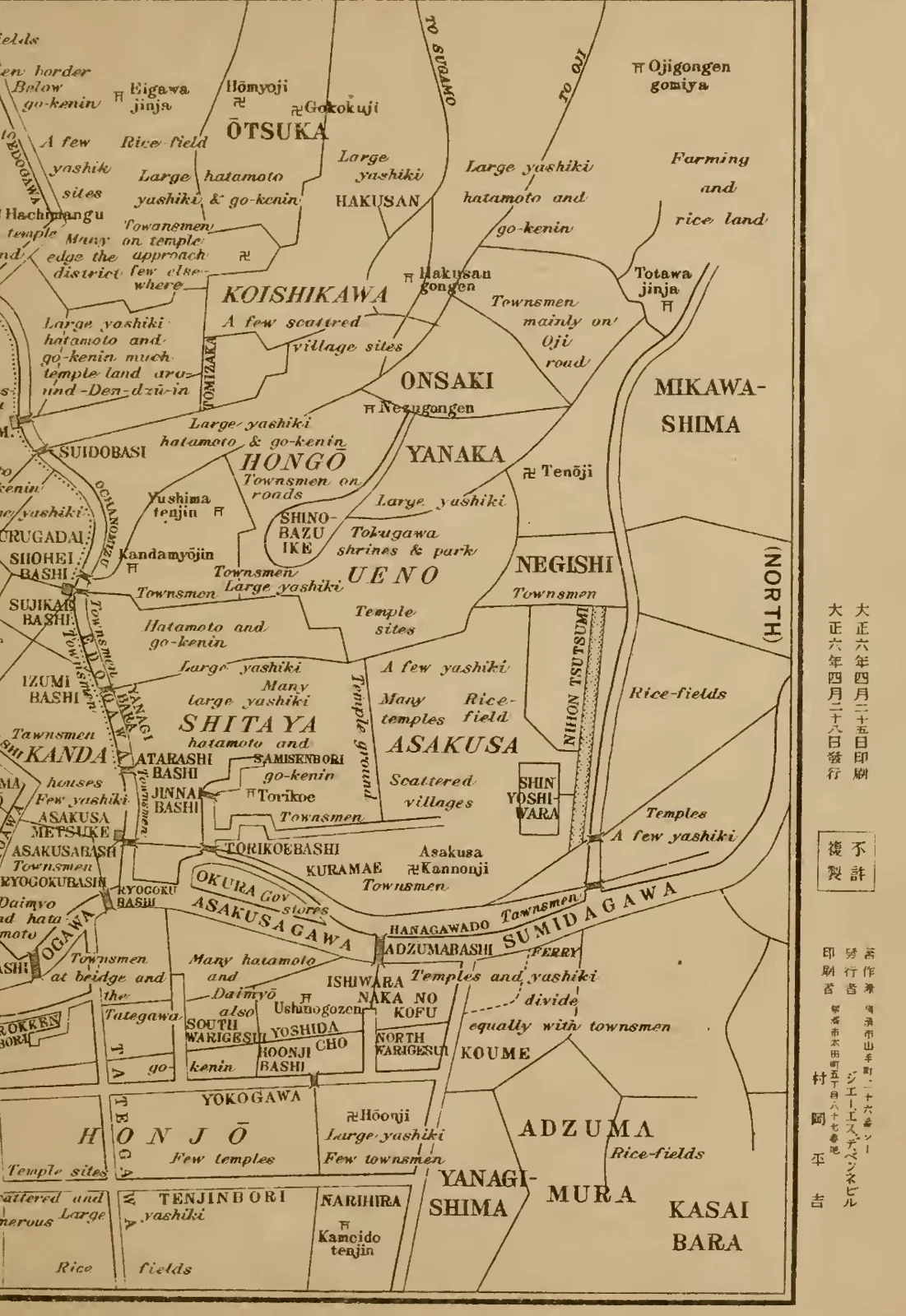
De Benneville’s preface describes searching for O’Iwa’s shrine and connects the haunting with historical places. A shrine, a remembered person and a surviving story offer different kinds of evidence from proof of a ghost. Within the narrative, domestic loyalties, reputation and betrayal give the haunting its force. The maps and shrine image make the city part of the story’s reception as well as its setting.