Welsh Death Omens in British Goblins
In Wirt Sikes’s British Goblins, a death can be foretold by a light moving through the dark, a cry whose maker never comes into view, or a figure one both sees and hears. The legend of Maelgwn Gwynedd gives the collection a fourth kind of encounter.
Four accounts and what signals death
Wirt Sikes collected reports involving a moving light, a disembodied cry, a winged figure and a monster at a church door. Comparing what each witness sees or hears makes it easier to tell the traditions apart.
Cannwyll corff
A corpse candle appears as a light. In accounts preserved by the National Library of Wales, its route can anticipate the course of a funeral procession.
Open Sikes on the corpse candleCyhyraeth
The Cyhyraeth is heard as a groaning or crying sound. Sikes describes accounts on land and at sea and says the source of the voice is unseen.
Open Sikes on the CyhyraethGwrach y Rhibyn
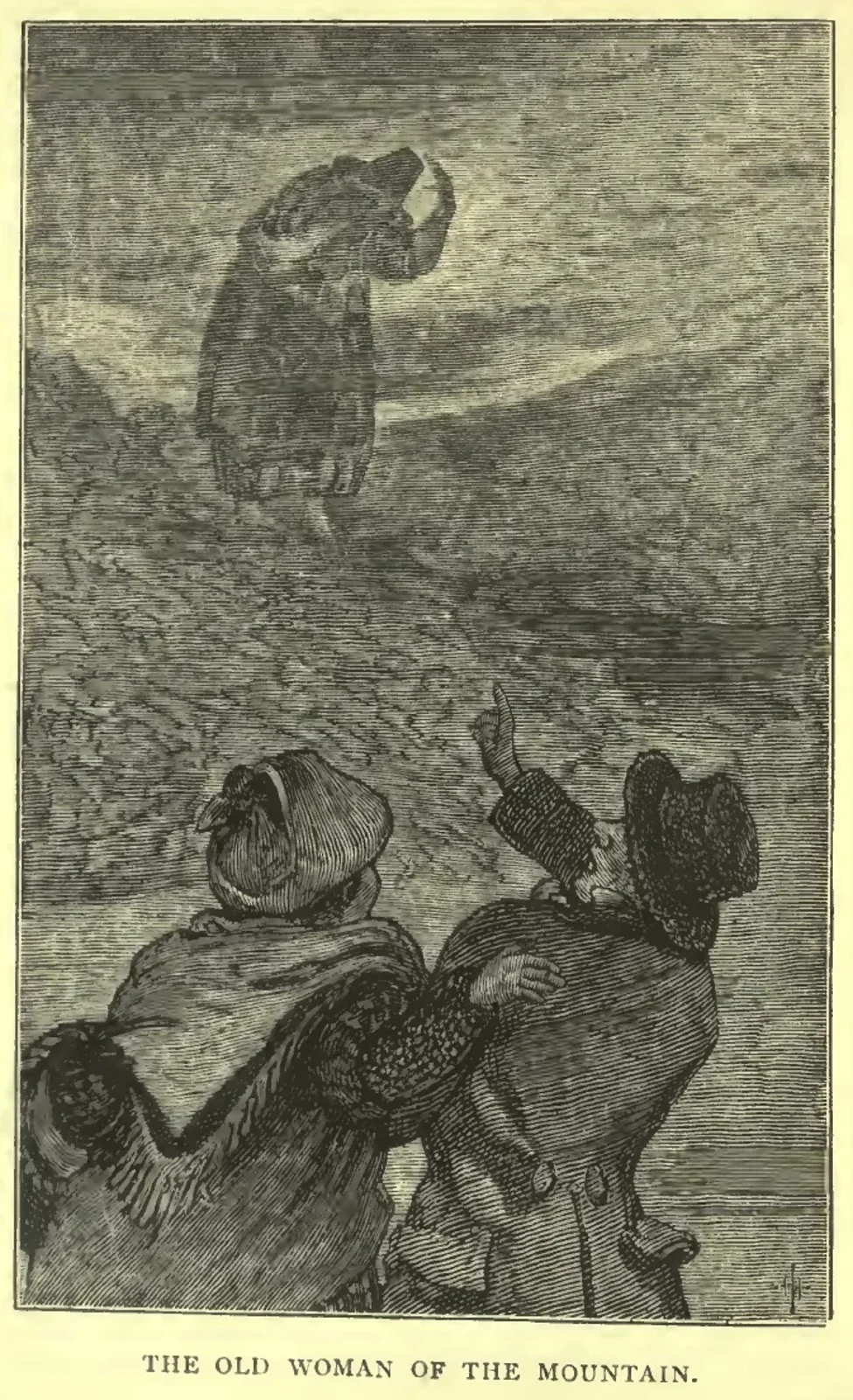
Sikes describes the Gwrach y Rhibyn as a frightening figure whose wings and cry are part of the encounter. In the account he quotes, she calls the name of the person expected to die.
Open Sikes on the Gwrach y RhibynFad Felen
In the legend of Maelgwn Gwynedd, the Fad Felen appears through a church keyhole with gold-like features. Sikes associates the story with the yellow plague.
Open the Maelgwn account
What each witness can see or hear
The corpse candle turns ordinary geography into a clue. The light can follow a course through a familiar place, and the course takes on significance if a funeral later goes the same way. Some accounts in the National Library of Wales record a procession’s route and others describe an isolated light. That variety is part of the tradition. No single route is needed for the story to work.
The Cyhyraeth puts the emphasis on a sound whose source remains hidden. Sikes records it in settings on land and at sea. The Gwrach y Rhibyn can be both visible and audible, and an account in which she calls a person’s name gives the warning a particular recipient. The cry is a common feature. The presence or absence of a visible figure changes how the witness understands what happened.
What the Fad Felen does in the Maelgwn legend
Maelgwn takes refuge in a church. The door offers a definite boundary, and the keyhole offers a way for him to look beyond it. It is at that boundary that he sees the figure Sikes describes with gold-like features. The witness learns what he is facing in a single encounter, at the boundary where he expects to be safe.
Sikes connects the figure with the yellow plague. That is the collector’s account of what the legend might preserve. The story itself has its own details about curiosity, shelter and the limits of the barrier. Reading the passage closely lets both strands remain visible, including the different kinds of language used for the appearance and for the proposed historical explanation.
How to read the nineteenth-century collection
British Goblins brings together retold narratives, older written accounts and commentary by Sikes. A passage headed with the name of an omen can contain material from more than one locality. Pay attention to whenever Sikes names a correspondent or locates a story. Those details help show whose version has survived and why two accounts with similar features can have different names.
In a story recorded by David Samuel and preserved by the National Library of Wales, two women from Llanbadarn Fawr are walking home from chapel on a winter night. Mari Pentre’r Odyn sees a light coming towards them along the main road. The named witness and familiar route give this particular account its shape. Other corpse-candle accounts locate the sign on a funeral route or inside a house, so the place of the encounter varies.