Paradise Lost Characters in Order of Appearance
John Milton’s Paradise Lost brings together Satan and the fallen angels, the heavenly figures who answer their rebellion, and Adam and Eve. The poem opens after the angels’ defeat. Raphael recounts the earlier events much later, in Eden. Use the first chart to find when each character enters the story and the second to open their key passages in the Reader.
Main characters in order of appearance
These are the books in which the selected characters enter the story, in the order Milton tells it. Several meet the reader before their major speech or action.
- Book I
The defeated angels in Hell
Satan, Beelzebub, Moloch, Belial, Mammon, Mulciber
Satan speaks to Beelzebub. Moloch and Belial are named in the catalogue, Mammon leads the mining and Mulciber is named as the architect. Their council speeches come in Book II.
Read Book I in the 1674 text - Book II
The gates of Hell and the abyss
Sin, Death, Chaos, Night
Sin and Death confront Satan at the gate. He later addresses Chaos and Night in the abyss. Chaos answers him and gives directions.
Read Book II in the 1674 text - Book III
Heaven and the sun
The Father, the Son, Uriel
The Father watches Satan’s flight and the Son volunteers to answer for humanity. Satan, disguised as a young cherub, later asks Uriel how to reach Earth.
Read Book III in the 1674 text - Book IV
Eden and its guards
Adam, Eve, Gabriel, Ithuriel, Zephon
Satan sees Adam and Eve in the garden. Uriel warns Gabriel, who sends Ithuriel and Zephon to find the intruder.
Read Book IV in the 1674 text - Book V
A heavenly visitor and the rebellion recalled
Raphael, Abdiel
Raphael visits Adam and Eve. In his account of the past, Abdiel answers Satan before the war in Heaven begins.
Read Book V in the 1674 text - Book VI
The war in Heaven
Michael in battle
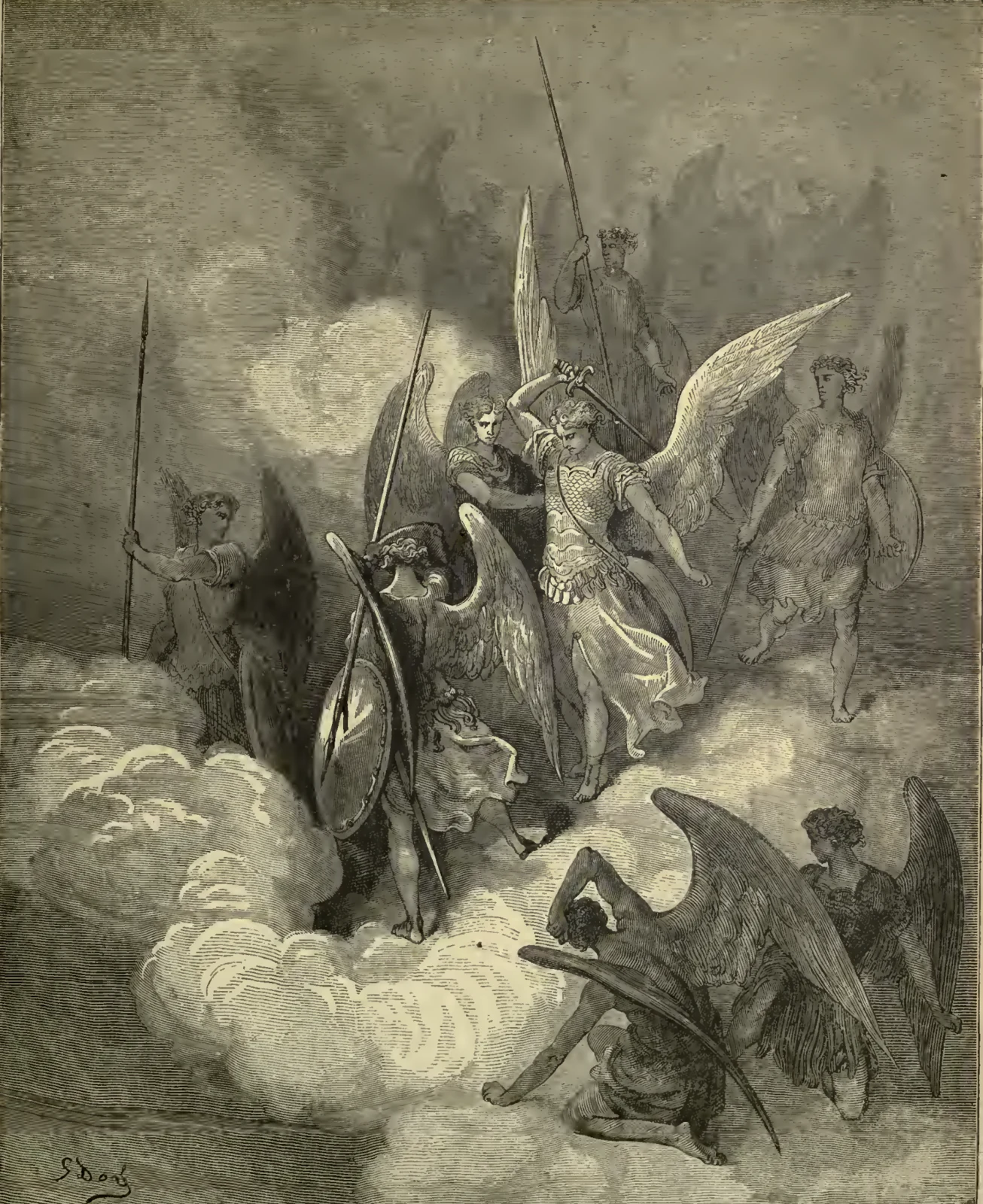
In Raphael’s continuing account, Michael leads forces with Gabriel and wounds Satan in single combat. Michael later returns in Books XI–XII as Adam’s guide.
Read Book VI in the 1674 text
Key character scenes in the Reader
| Character | Book | What happens | In the Reader |
|---|---|---|---|
| Satan | I | Rallies the fallen angels after their defeat and leads the attack on the new world. | Read passage ↗ |
| Beelzebub | II | Satan’s closest ally proposes turning the rebels’ efforts towards the newly created world. | Read passage ↗ |
| Moloch | II | Calls for renewed open war in the council of the fallen angels. | Read passage ↗ |
| Belial | II | Counsels against another attack and makes a case for enduring their present condition. | Read passage ↗ |
| Mammon | II | Proposes making a realm of their own in Hell. | Read passage ↗ |
| Mulciber | I | Builds the meeting place of the fallen angels, Pandemonium. | Read passage ↗ |
| Sin | II | Guards the gates of Hell and tells Satan how she and Death came to be there. | Read passage ↗ |
| Death | II | Confronts Satan at the gate before Sin intervenes and explains their relationship. | Read passage ↗ |
| Chaos | II | Rules the unformed abyss and gives Satan directions towards the new world. | Read passage ↗ |
| Night | II | Sits with Chaos in the abyss when Satan asks the way to the new world. | Read passage ↗ |
| Abdiel | V | Openly rejects Satan’s argument and leaves the rebellious company. | Read passage ↗ |
| Michael | VI | Meets Satan in battle during Raphael’s account of the war in Heaven. | Read passage ↗ |
| Raphael | V | Visits Adam and Eve to warn them, then recounts the war and the creation. | Read passage ↗ |
| Uriel | III | Shows the disguised Satan the way to Earth. Uriel later warns Gabriel of the intruder. | Read passage ↗ |
| Gabriel | IV | Commands the heavenly guards of Eden and sets a search in motion when Uriel reports the intrusion. | Read passage ↗ |
| Ithuriel | IV | Surprises Satan near Eve. His spear exposes the intruder’s disguise. | Read passage ↗ |
| Zephon | IV | Answers Satan’s contempt after he and Ithuriel uncover him in Eden. | Read passage ↗ |
| Adam | V | Welcomes Raphael and asks about the origin of the rebellion. In Book IX he follows Eve in eating the fruit. | Read passage ↗ |
| Eve | V | Receives Raphael in Eden. In Book IX she listens to the serpent’s argument and brings the fruit to Adam. | Read passage ↗ |
How to tell a first mention from a first scene
Milton gives Beelzebub an entrance before a name. Satan addresses the angel lying beside him, and the narrator identifies the companion. In the same book the rebel catalogue introduces several figures who do far more in the council scene. Look for Moloch in Book I to see how the catalogue describes him, then in Book II to hear his argument for another war.
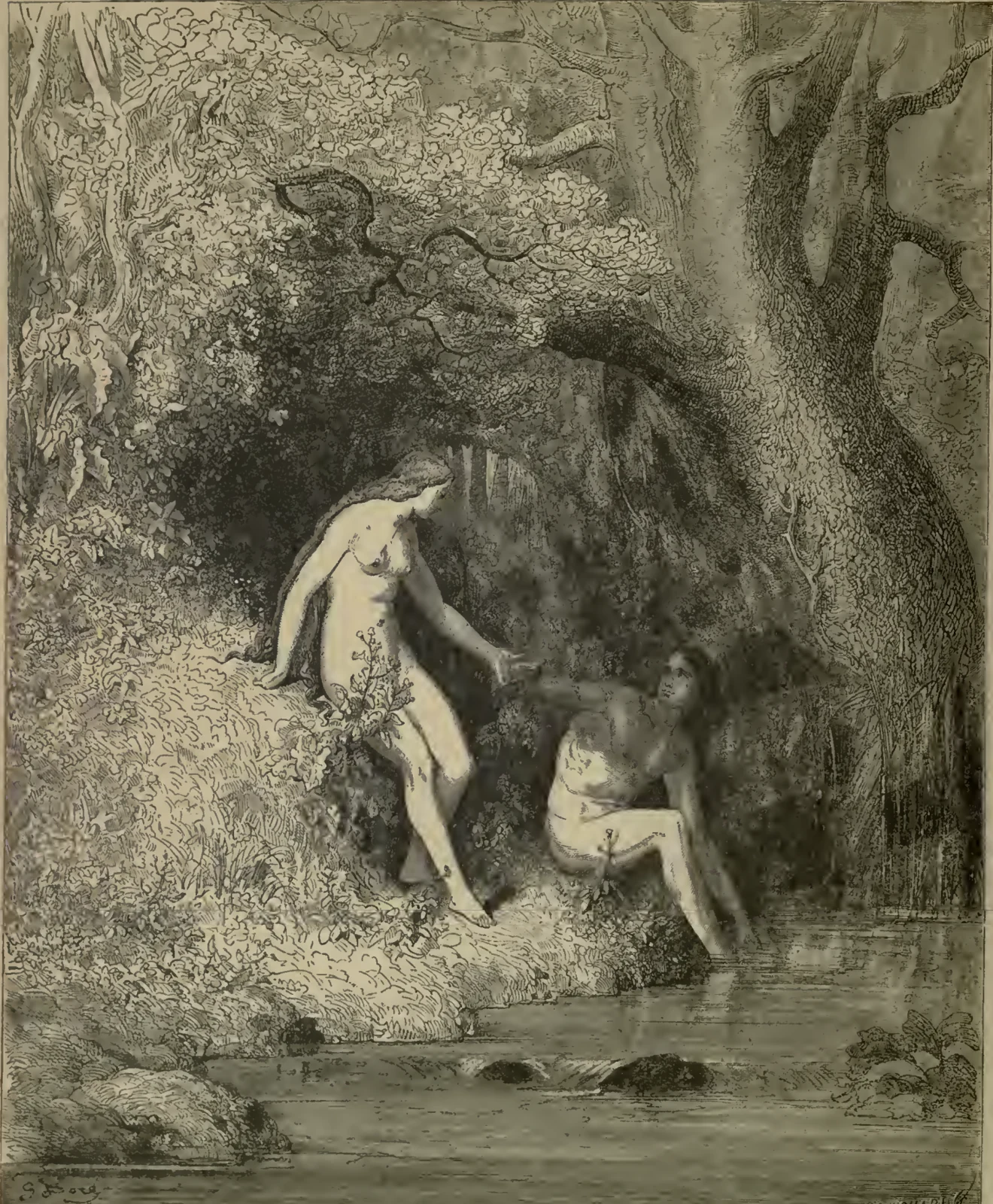
Adam and Eve are first seen together in Book IV. By Book V they are receiving a guest, and their conversations have become the frame for Raphael’s account of the rebellion. The key-scenes table points to those later Reader passages because they give the figures something specific to do. Use the appearance chart to locate their first substantial scene.
Milton can also leave an event unspoken until a character narrates it. The opening invocation names human disobedience as the subject, and the angels’ defeat is already over when Book I begins. When Raphael speaks in Eden, the first scenes a reader saw become the consequences of what he is now describing.
Whom to follow after the temptation
Book IX brings Eve, Adam and Satan together through the serpent. Book X shifts the question to what follows their choice. The Son judges the transgression. Sin and Death cross towards the new world, and the bridge is a permanent feature of a route Satan previously travelled with difficulty. Their second appearance gives the gate scene from Book II consequences beyond Hell.
In the final two books Michael becomes the person to follow. He shows Adam future events in a vision, then continues with a spoken account in Book XII. Raphael’s earlier history looks back from Eden towards the creation. Michael’s account looks out from its ending. Reading those two long visits together shows what Adam learns at each stage and what the reader is allowed to see.
The council tests Satan’s leadership
Milton introduces Satan among the defeated angels before assigning the council a seat in Pandemonium. Beelzebub is the first companion Satan addresses in Book I. He also becomes the speaker who proposes looking for the newly created world in Book II. The two scenes establish how closely he works with Satan, while the debate gives the proposal the appearance of arising from the council.
Moloch, Belial and Mammon define the alternatives. Moloch would risk another war, Belial argues for endurance, and Mammon sees an opportunity to build an empire in Hell. Mulciber’s work changes things before the debate has begun. The capital that contains the assembly is already an example of the resourcefulness Mammon wants to put to use. Read the building scene and the debate together to see how the characters’ roles connect.
Satan in Paradise Lost
The rebel whose outward journey cannot free him from the Hell he carries within.
Beelzebub in Paradise Lost
The senior fallen counsellor who presents the scheme against the human world.
Moloch in Paradise Lost
The fierce counsellor who argues for immediate open war.
Belial in Paradise Lost
The persuasive speaker whose graceful counsel disguises indolence.
Mammon in Paradise Lost
The fallen spirit who values heavenly gold and proposes building an empire below.
Mulciber in Paradise Lost
The skilled builder whose art cannot prevent his fall but constructs the infernal capital.
Why Raphael tells the story of the rebellion
Raphael arrives in Eden in Book V. Adam and Eve receive him as a guest, then Adam asks to hear about the enemy of whom Raphael has warned him. That request takes the narrative back to the rebellion. The same angel can therefore appear as a visitor in the present story and as a participant in the events he recounts.
Abdiel is the angel who rejects Satan’s argument while still surrounded by rebels. His departure gives readers a contrast to the collective enthusiasm Satan commands elsewhere. Michael meets Satan in battle in Book VI. The two figures let Milton show resistance in different circumstances, first in the exchange of arguments and then in the fighting that follows. The later narration explains what the opening book already takes for granted.
Who crosses from Hell to Eden?
In Book II, Sin and Death stand at the threshold of Hell. Sin explains a family history that Satan has failed to recognise, then opens the way for him. Chaos occupies the turbulent region beyond the gate and tells him in which direction to travel. That scene gives Satan help, though Chaos has interests of his own. The new creation has taken up space in the region he would like to recover.
People often look for Adam and Eve at the beginning because their actions give the poem its stated subject. Milton brings them into view in Eden in Book IV, after Satan has crossed the intervening regions. Their conversations, work and recollections give the reader a sense of the household before the temptation in Book IX. The appearance of a character and the event for which that character is remembered may be several books apart.
Chaos in Paradise Lost
The ruler of the unformed abyss who welcomes ruin as a recovery of lost territory.
Uriel in Paradise Lost
The regent of the sun whose uprightness initially allows Satan’s disguise to pass.
Gabriel in Paradise Lost
The guardian who organises the night watch around Eden.
Adam in Paradise Lost
The human host and questioner whose garden life receives angelic instruction.
Eve in Paradise Lost
The garden’s human companion and host, whom Raphael greets as mother of mankind.
The Father and Son in the poem’s account of choice
Book III changes the place from which Satan’s voyage is seen. The Father sees him travelling towards Earth, anticipates the temptation and speaks about human choice. The Son offers himself on behalf of humanity. The exchange gives a second view of what is at stake while Satan is still trying to find his way.
The Son also has a role in Raphael’s account of the war. In Book VI he drives the rebel angels from Heaven. That action lies before the opening scene in Hell, and readers encounter it later through Raphael’s account. Put the intervention beside the offer in Book III to see why a single point in the narrative can give an incomplete picture of a major character.