Chaos in Paradise Lost
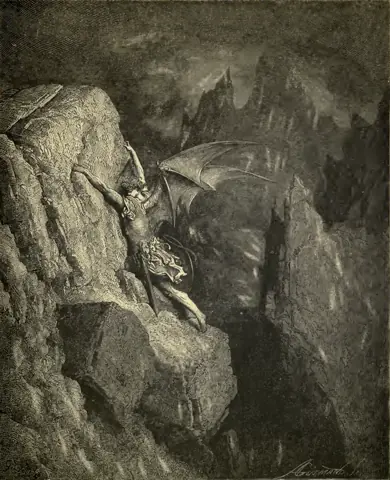
The ruler of the unformed abyss who welcomes ruin as a recovery of lost territory.
John Milton, Paradise LostBrowse by subject
The ruler of the unformed abyss who welcomes ruin as a recovery of lost territory.
John Milton, Paradise Lost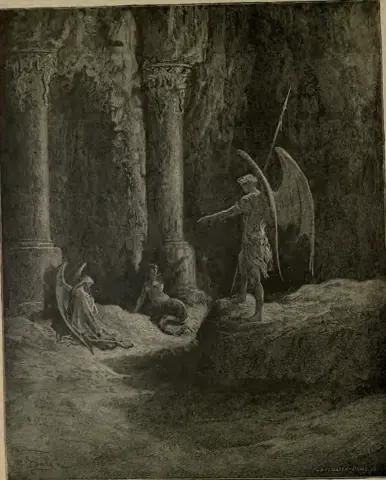
The crowned shadow guarding Hell, whose appetite turns towards the human world.
John Milton, Paradise Lost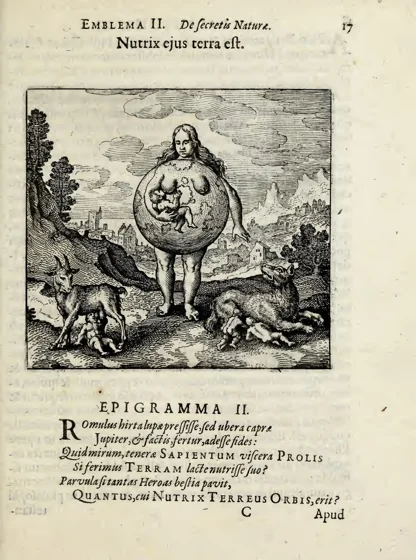
The globe-bodied nursing figure in Maier’s second emblem personifies earth as a source of nourishment.
Michael Maier’s Atalanta Fugiens (1618)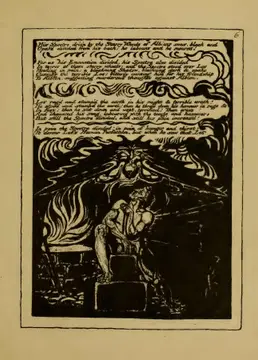
A furnace worker who confronts his divided Spectre and compels it to join the labour of creation.
William Blake, Jerusalem: The Emanation of the Giant Albion; retained monochrome facsimile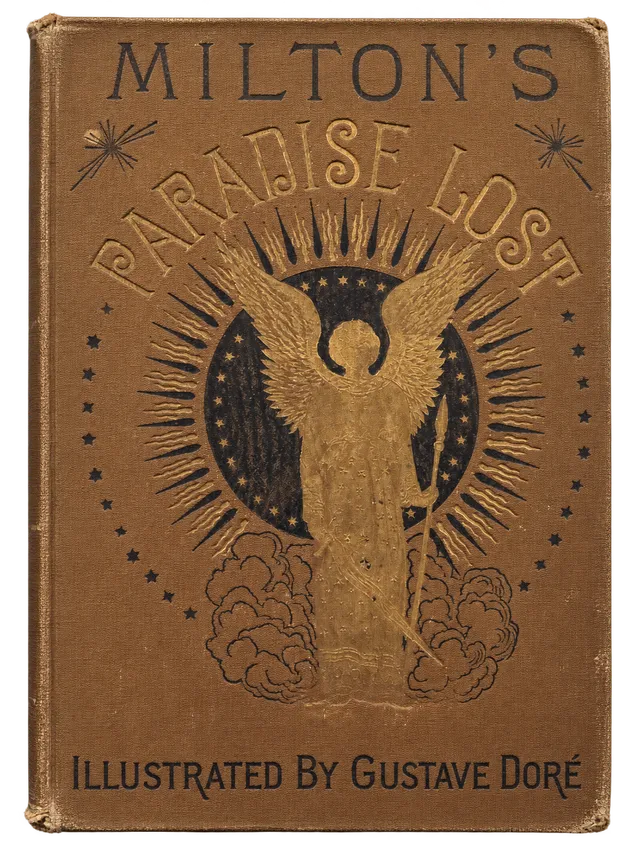 Source
The ancient consort of Chaos, seated in the court of the unformed deep.
John Milton, Paradise Lost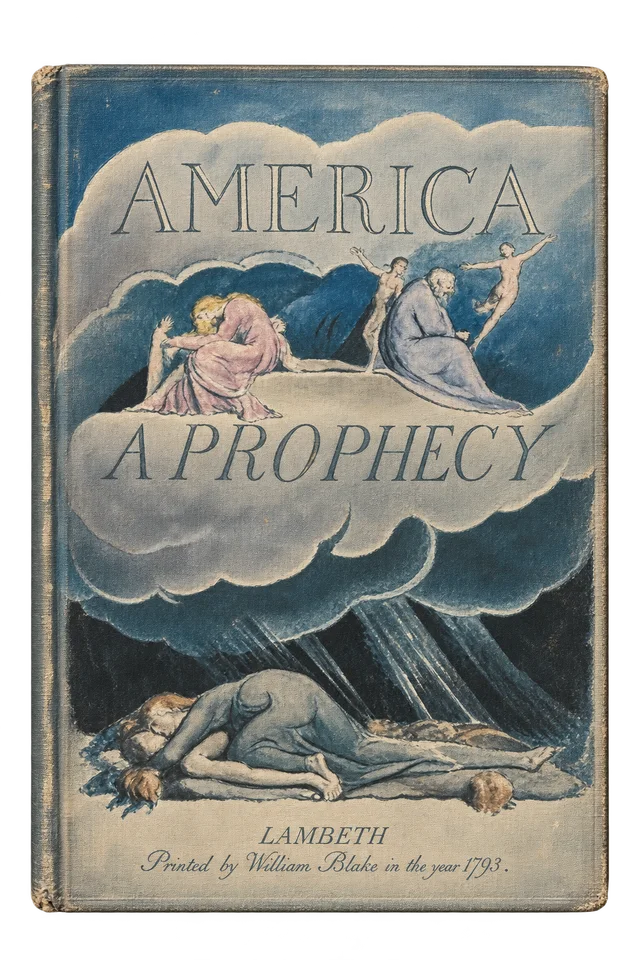 Source
Blake’s chained, transforming youth becomes the fiery power confronted by Albion’s Angel in the revolutionary poem.
William Blake’s illuminated mythology in America: A Prophecy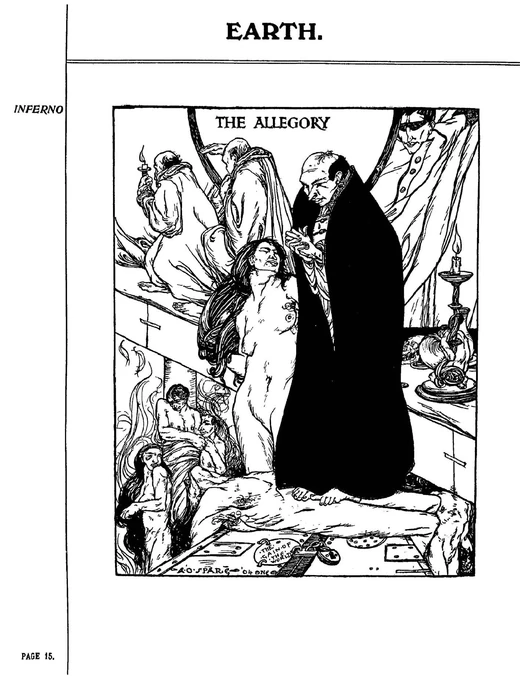
The black-draped figure whom Spare names Life’s Knowledge and, with a name, the Agnostic Priest.
Austin Osman Spare’s allegorical drawings and verse in Earth Inferno (1905)The half-human, half-serpentine gatekeeper who recognises Satan as her originator.
John Milton, Paradise Lost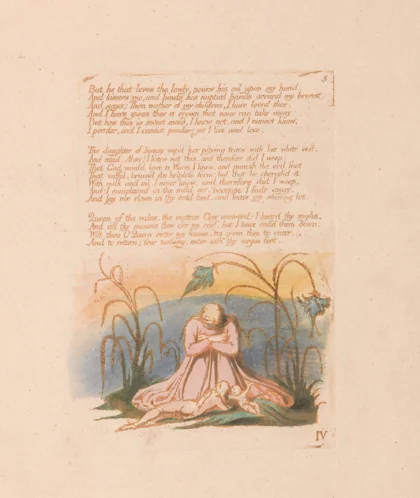
The nurturing earth that tends the Worm and invites Thel into its house without compelling her to remain.
William Blake’s illuminated poetry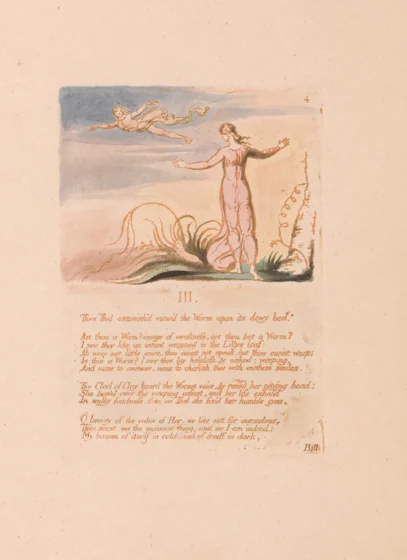
The passing Cloud that describes disappearance as renewal through dew, flowers and a returning life.
William Blake’s illuminated poetry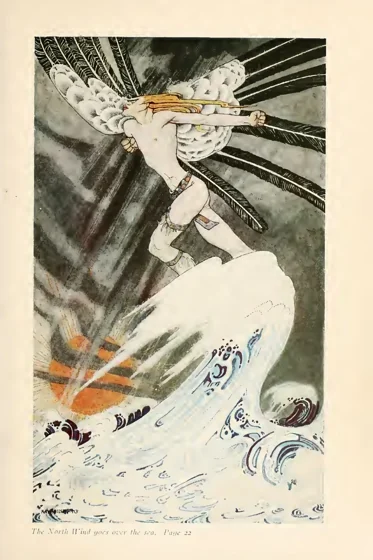
The East, West, South and North Winds who carry the girl towards the castle beyond ordinary reach.
Norwegian fairy tales: Old Tales from the North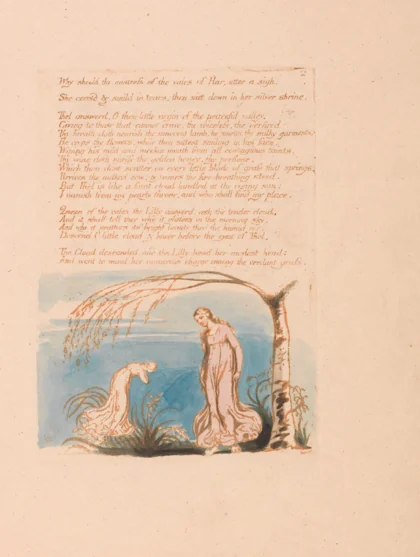
The small flower that answers Thel’s fear of extinction by describing care received and nourishment given.
William Blake’s illuminated poetryThe helpless, infant-like creature whose vulnerability draws the Clod of Clay’s care.
William Blake’s illuminated poetry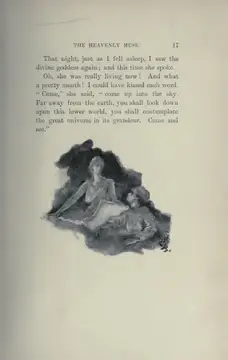
The Muse of astronomy as a statue, object of youthful fascination and dream guide in Camille Flammarion’s Urania.
Camille Flammarion, Urania; translated by Augusta Rice Stetson, undated Boston illustrated edition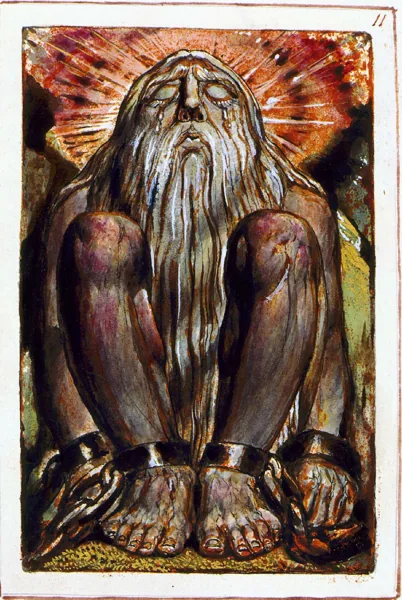
The secluded power whose divided world is narrated and pictured in Blake's illuminated Book of Urizen.
William Blake's mythologyShowing 15 of 15 entries