An architect with a continuing imaginative practice
Born at Ashington in Northumberland in 1892, Timlin showed ability in drawing at Morpeth Grammar School and received a scholarship to Armstrong College of Art in Newcastle. He later joined his parents in South Africa and continued his training in art and architecture. Accounts disagree about the exact year of that move. Kimberley became his long-term home and professional base.
Work with the architectural practice of D. W. Greatbatch developed into partnership and independent responsibility. Public buildings and theatre interiors accompanied paintings, etchings, illustrations and commissioned lettering. He also wrote stories and composed music. The Ship That Sailed to Mars appeared through Harrap in 1923, bringing his narrative and visual invention together. He continued working in Kimberley until his death in 1943, leaving further fantasy designs, including an unpublished project called The Building of a Fairy City.
A vessel built through words and images
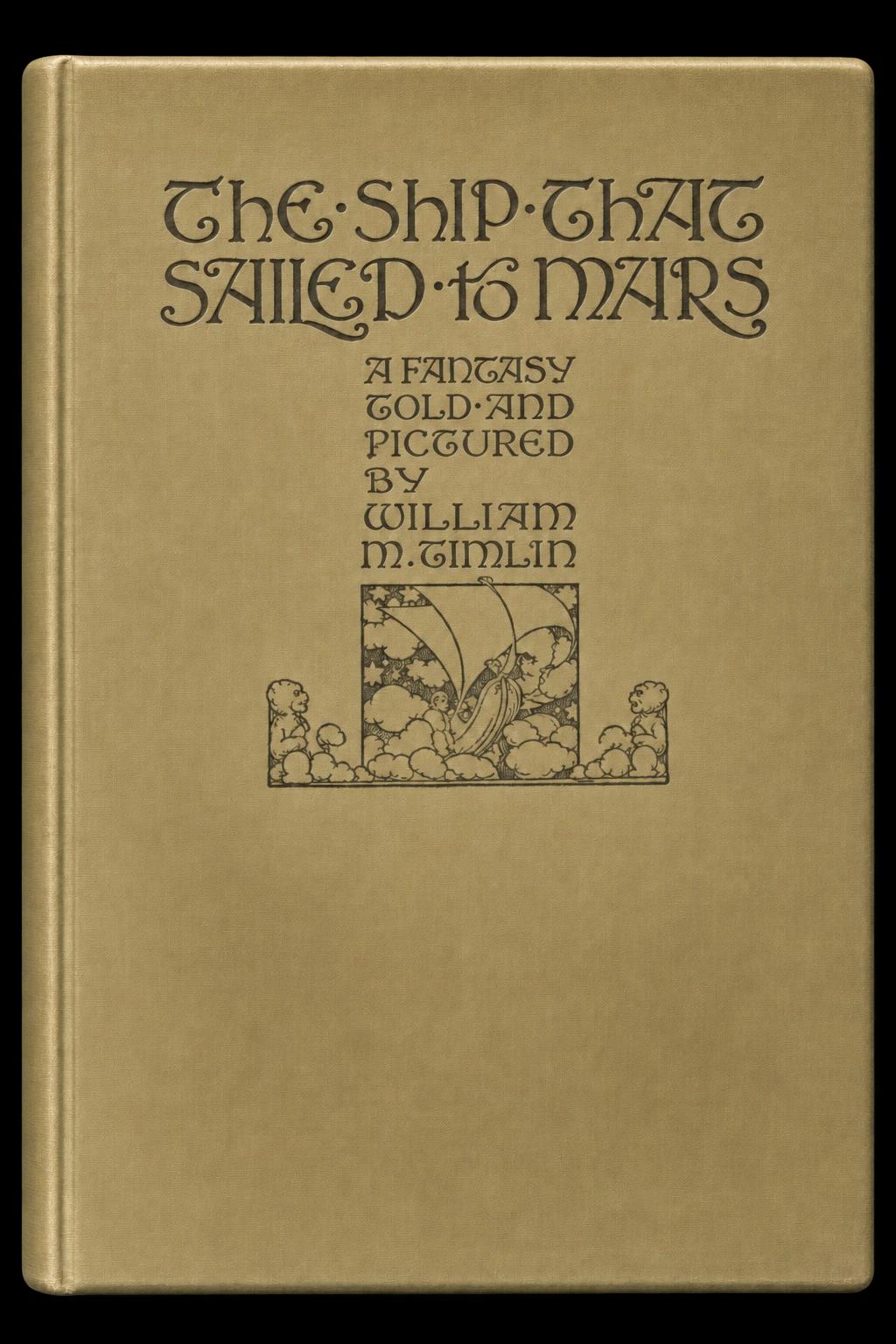
The Ship That Sailed to Mars calls itself a fantasy told and pictured by Timlin. Its calligraphic text alternates with colour pictures, giving the sequence of the book a deliberate rhythm. The opening places doubting scientists and astronomers alongside fairy agency, before the contents lead through planning, construction, crew and launch.
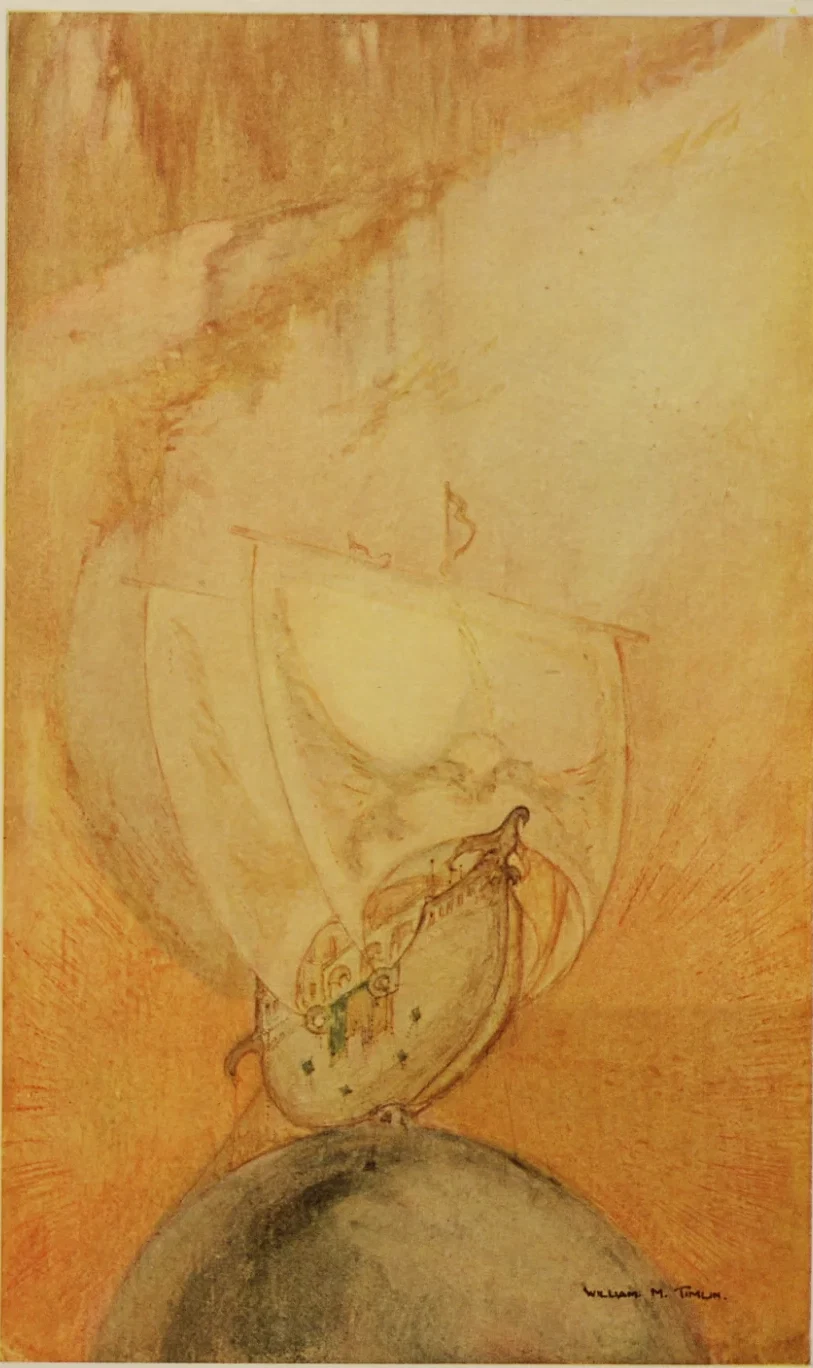
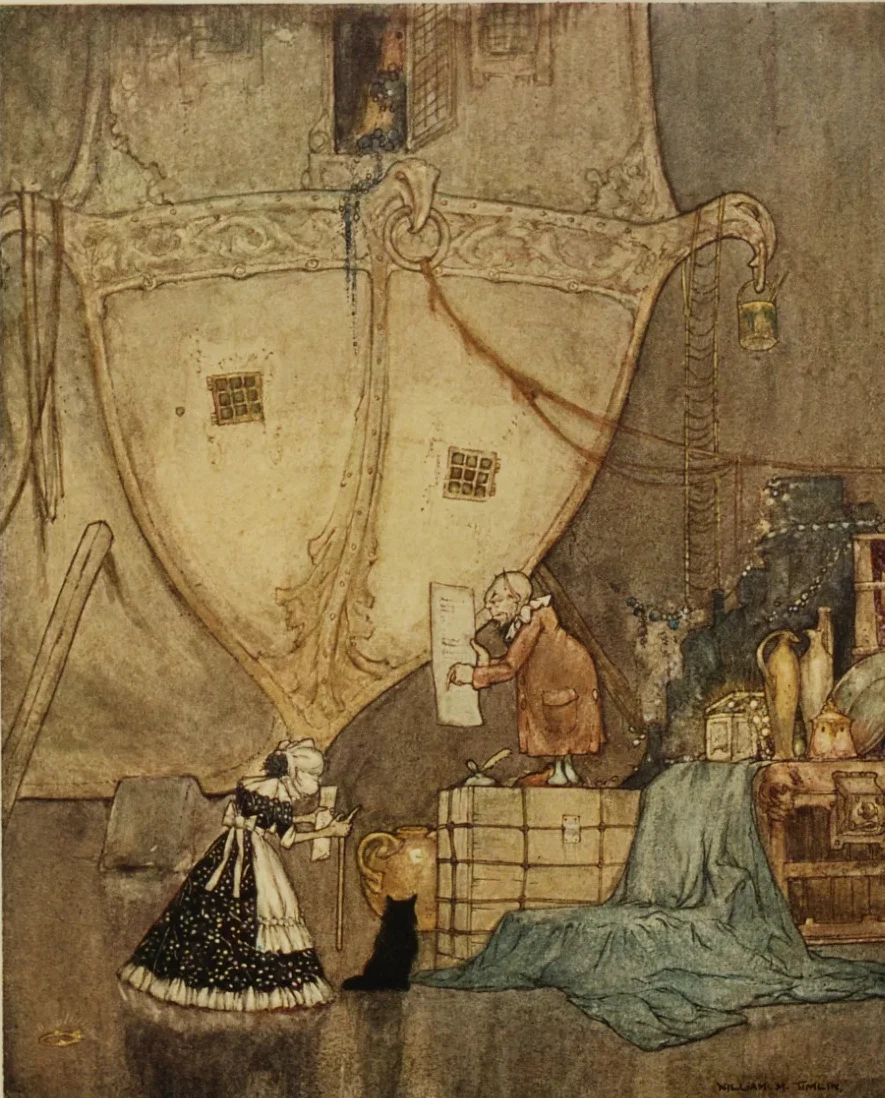
Practical attention to building makes the impossible journey feel carefully prepared. Elaborate vessels, luminous skies and structures that dwarf their inhabitants extend that principle into the pictures. The ship can suggest a dwelling or palace as well as transport. Lettering and ornament guide the eye between scenes, so the experience depends on turning through the book as much as lingering over an individual painting. Timlin’s roles as storyteller and illustrator remain inseparable within that designed whole.