A poet trained as an engraver
William Blake was born in London in 1757 and trained as an engraver. He made a living through commissioned illustration while developing poems and images of his own. In 1782 he married Catherine Boucher, who became his partner in the work of producing his books.
His relief-etching method allowed words and pictures to share a raised printing surface. Rather than handing a finished poem to an independent illustrator, Blake could develop text and image together on the copperplate, then print and colour the sheets. The resulting illuminated books make the shape of a body, the turn of a branch and the placement of a line of verse part of the same reading experience.
William and Catherine at work
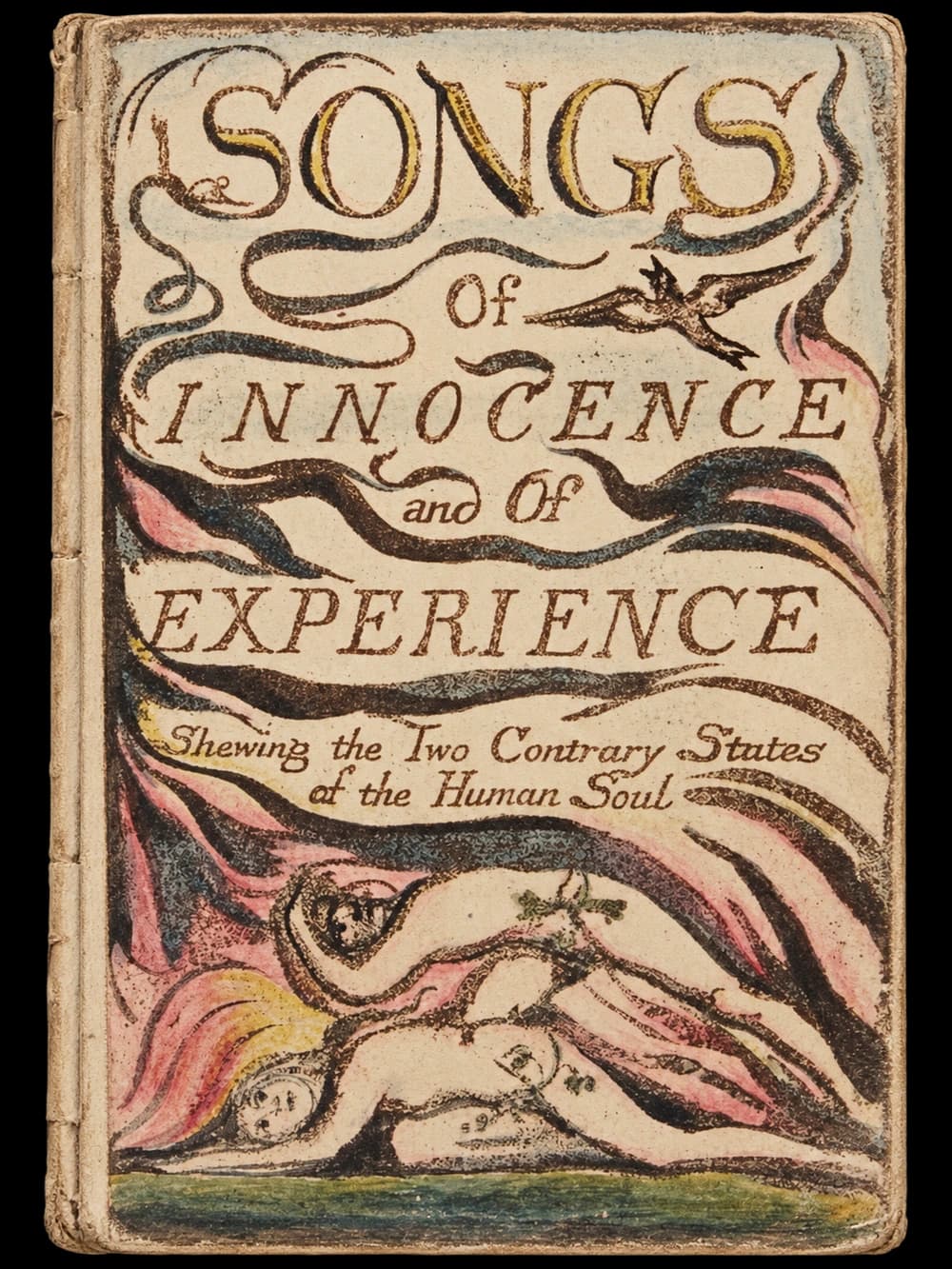
Songs of Innocence shows what that partnership involved. William etched words and images together, and the sheets were printed and coloured by hand. The New York Public Library’s catalogue credits Catherine Blake as colourist on its Songs of Innocence material. The finished page passed through more than the poet’s hands: colour was part of the making of the book, alongside verse and drawing.
The University of Virginia’s edition of Songs of Innocence and of Experience describes the small editions printed on a press at Blake’s home and painted by William and Catherine. This helps explain why a printed Blake page can have the character of a painting. When looking at the Songs, attend to the colour around a word or figure as closely as to the line that encloses it.
Reading the illuminated books
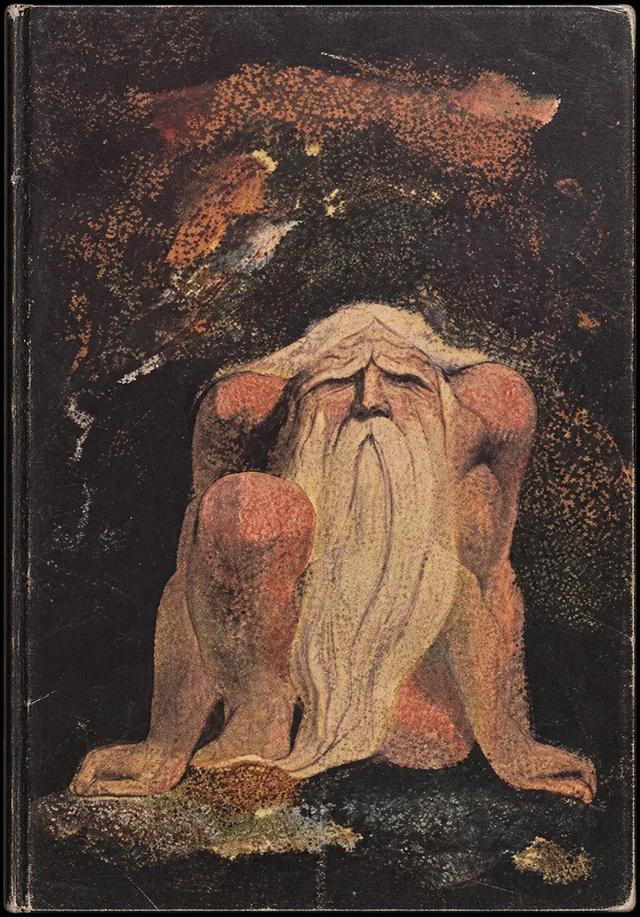
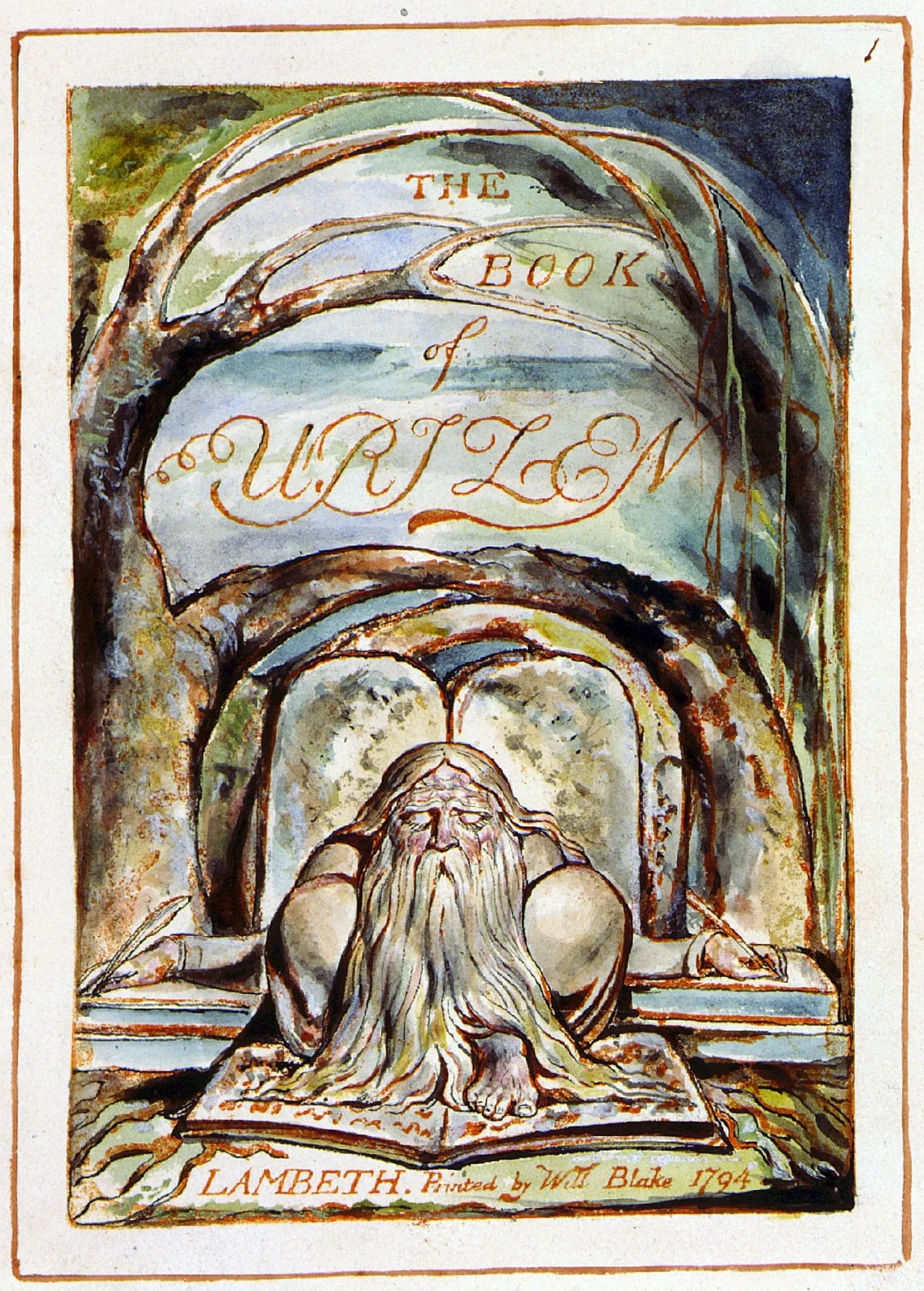
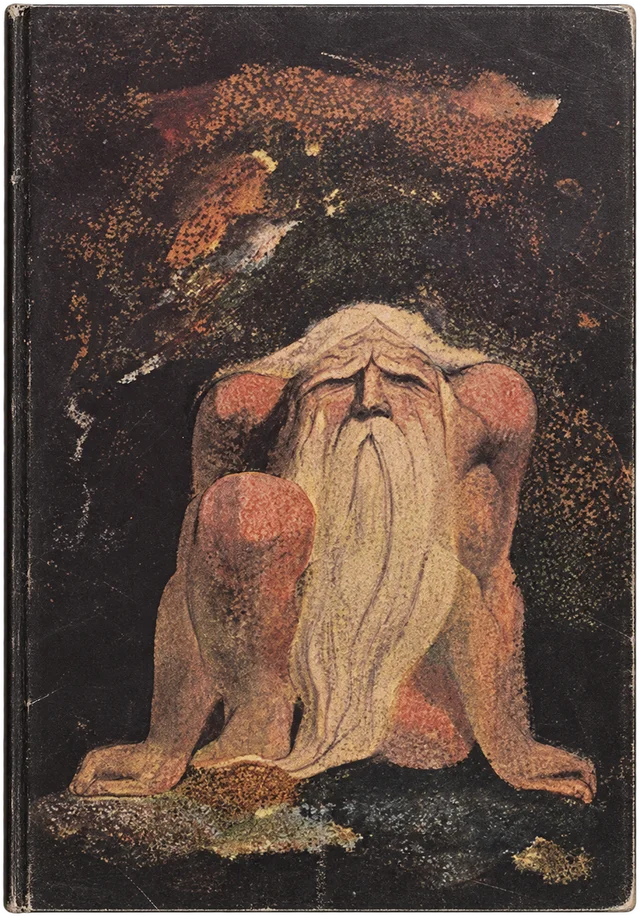
On the title page of The Book of Urizen, branches arch over the lettering and a bearded figure crouches above an open book. Read the words first, then look at the curve of his back. Blake gives the body and the branches much the same shape. The gallery journey follows all 27 illustrated leaves in the order of this source copy.
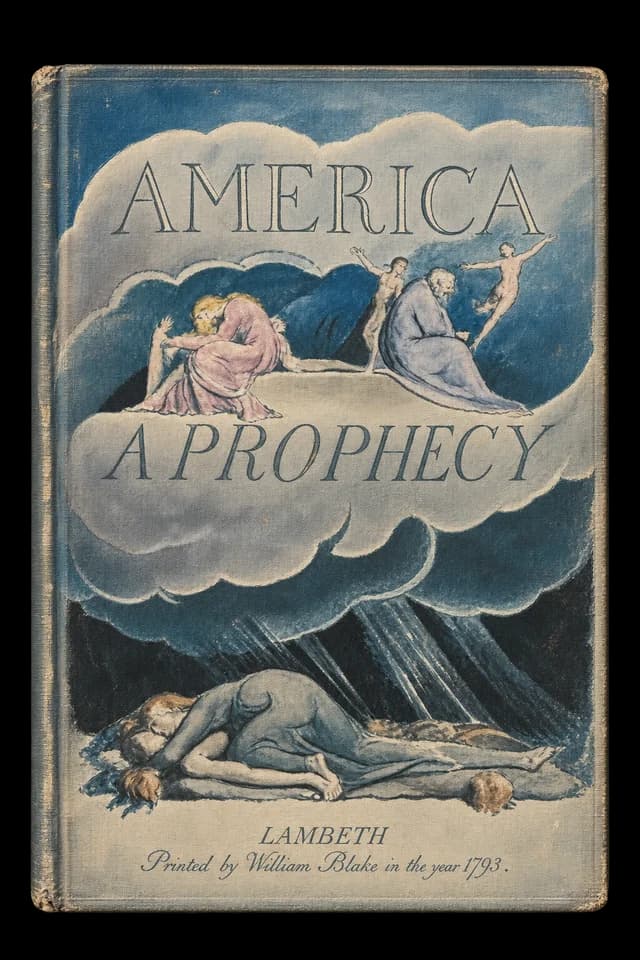
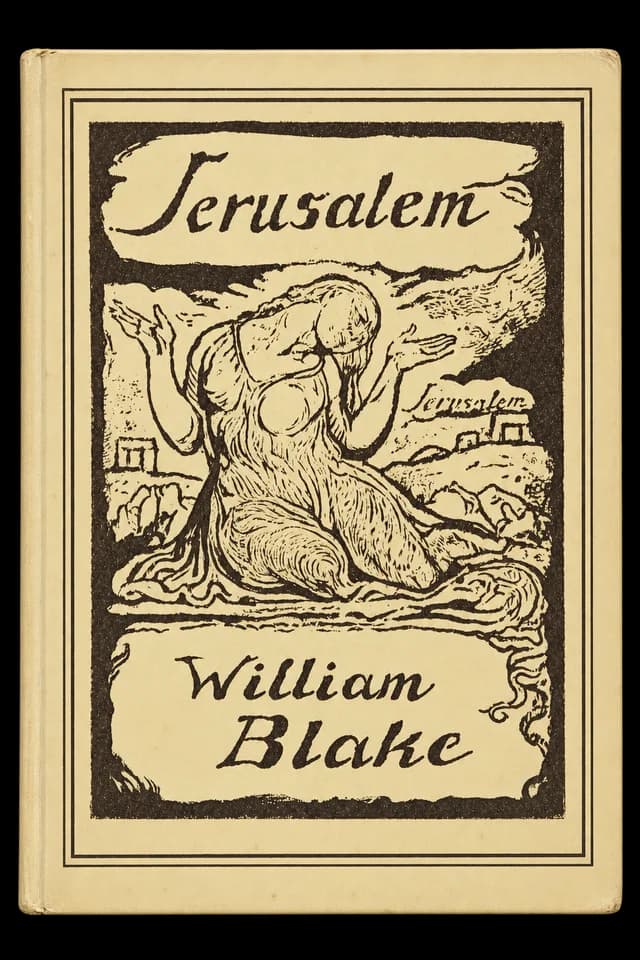
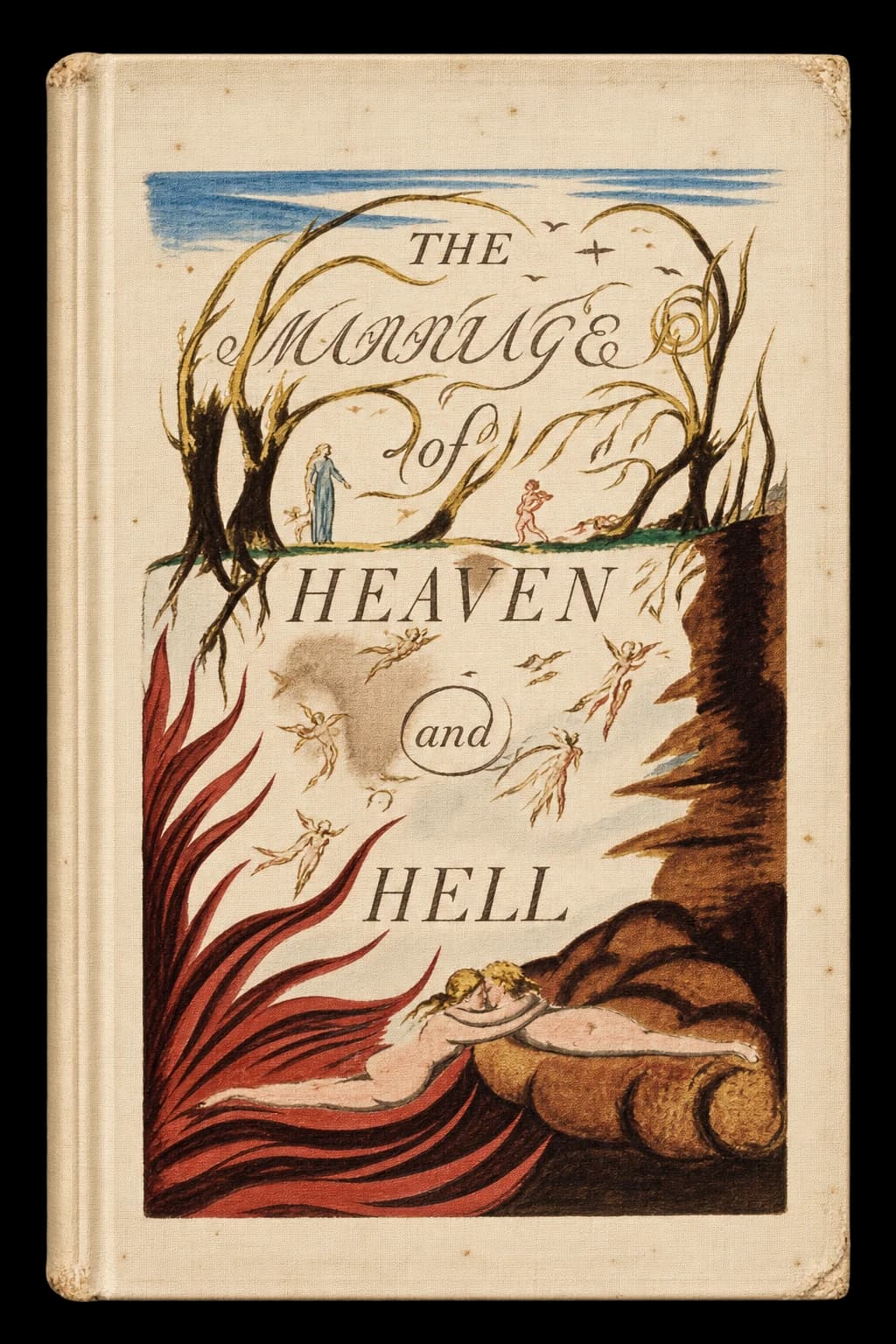
America: A Prophecy and Europe: A Prophecy extend the catalogue towards Blake’s prophetic writing. The Marriage of Heaven and Hell brings a different mixture of argument, imaginative encounter and visual invention. Jerusalem: The Emanation of the Giant Albion is a more extended work whose figures and recurring names reward comparison across pages. These are invitations to read the actual editions, rather than a fixed key that reduces every image to one meaning.
Authorship, illustration and edition
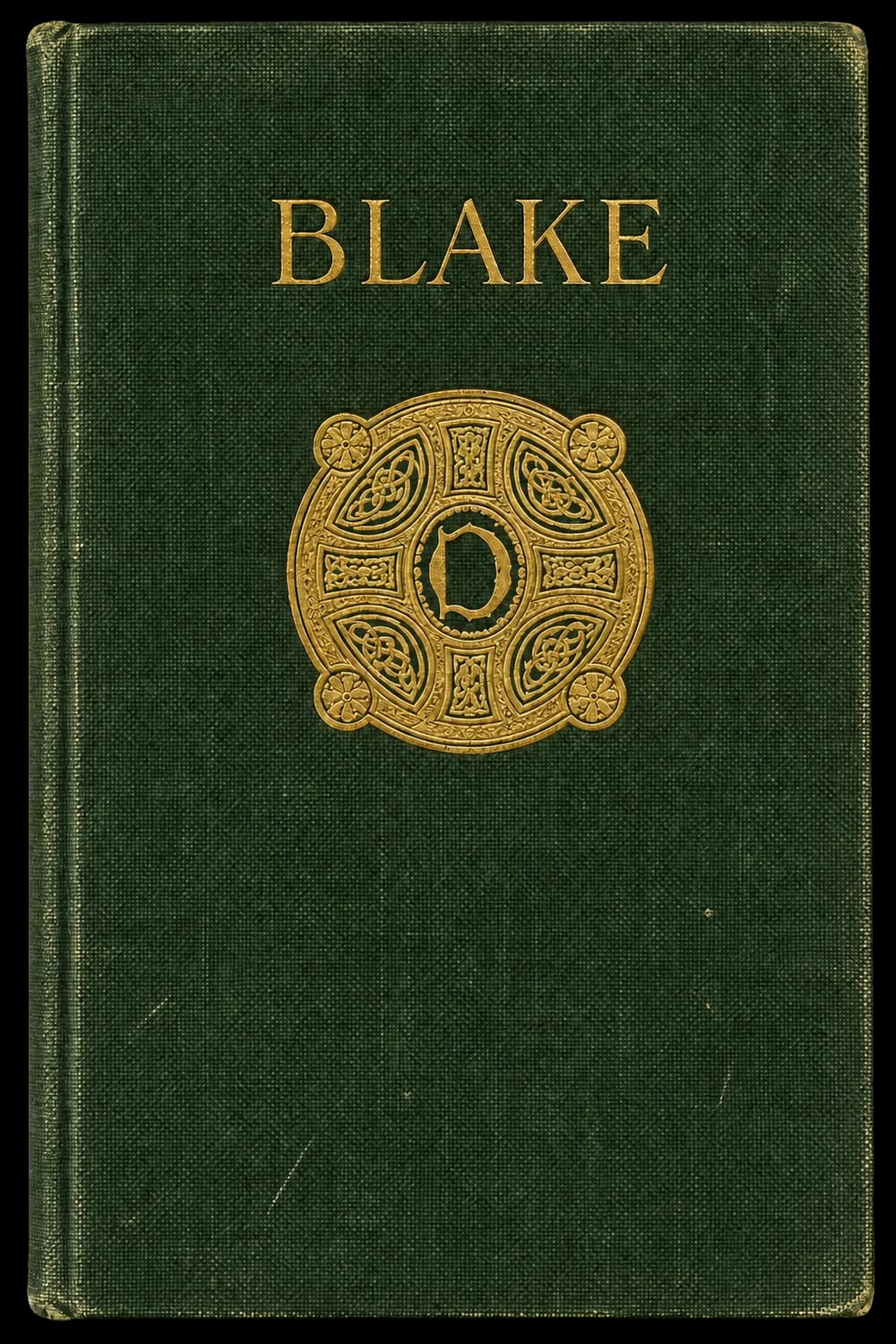
A book containing Blake’s poems is not necessarily a reproduction of his own illuminated design. Lumitheca also holds Songs of Innocence and Other Poems in an edition illustrated by Charles Robinson and Mary H. Robinson. Distinguishing the author of the words from the artist of a particular edition helps readers compare interpretations without confusing their makers. The current catalogue below includes that illustrated edition alongside Blake’s own works.