Writing and drawing across different markets
Smith lived from 1888 to 1937 and worked across reporting, illustration and fiction before turning to Hollywood screenwriting. His association with Ben Hecht connected these activities to Chicago’s literary world. He supplied pictures for Hecht’s Fantazius Mallare and The Florentine Dagger, and drew small illustrations for the Chicago Literary Times under the name Vulgus.
The visual work extended to books by Benjamin De Casseres, Maxwell Bodenheim and Arthur Machen. Oregon Sketches, preserved by the Huntington, records another part of his range. Fantazius Mallare brought an obscenity prosecution in which Smith and Hecht were each fined a thousand dollars. Later novels and screenplays occupied much of Smith’s working life. The accessible record is richer in publications and professional connections than in the details of his early education and private life.
A line that refuses to stay within one body
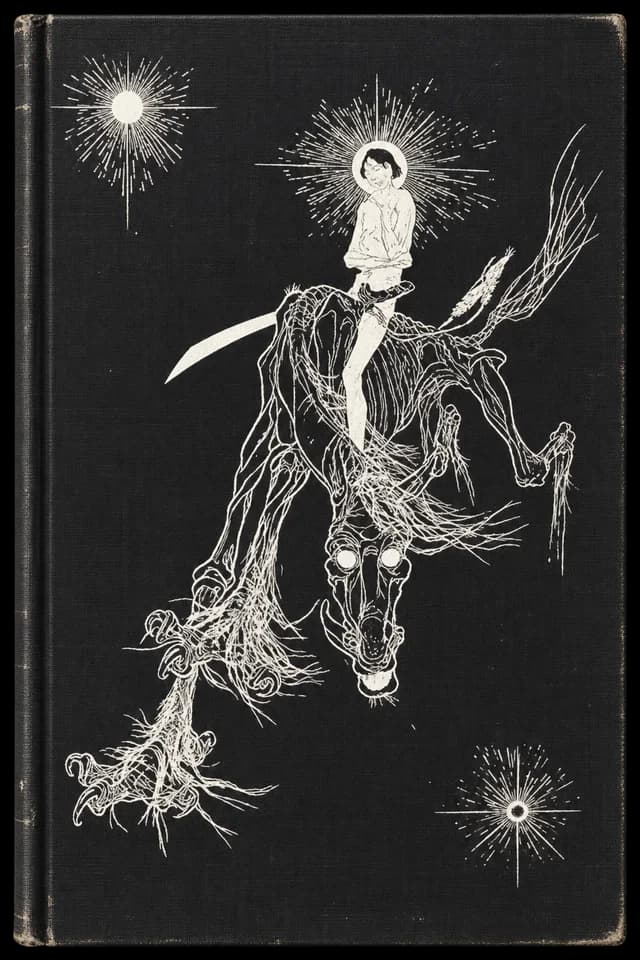
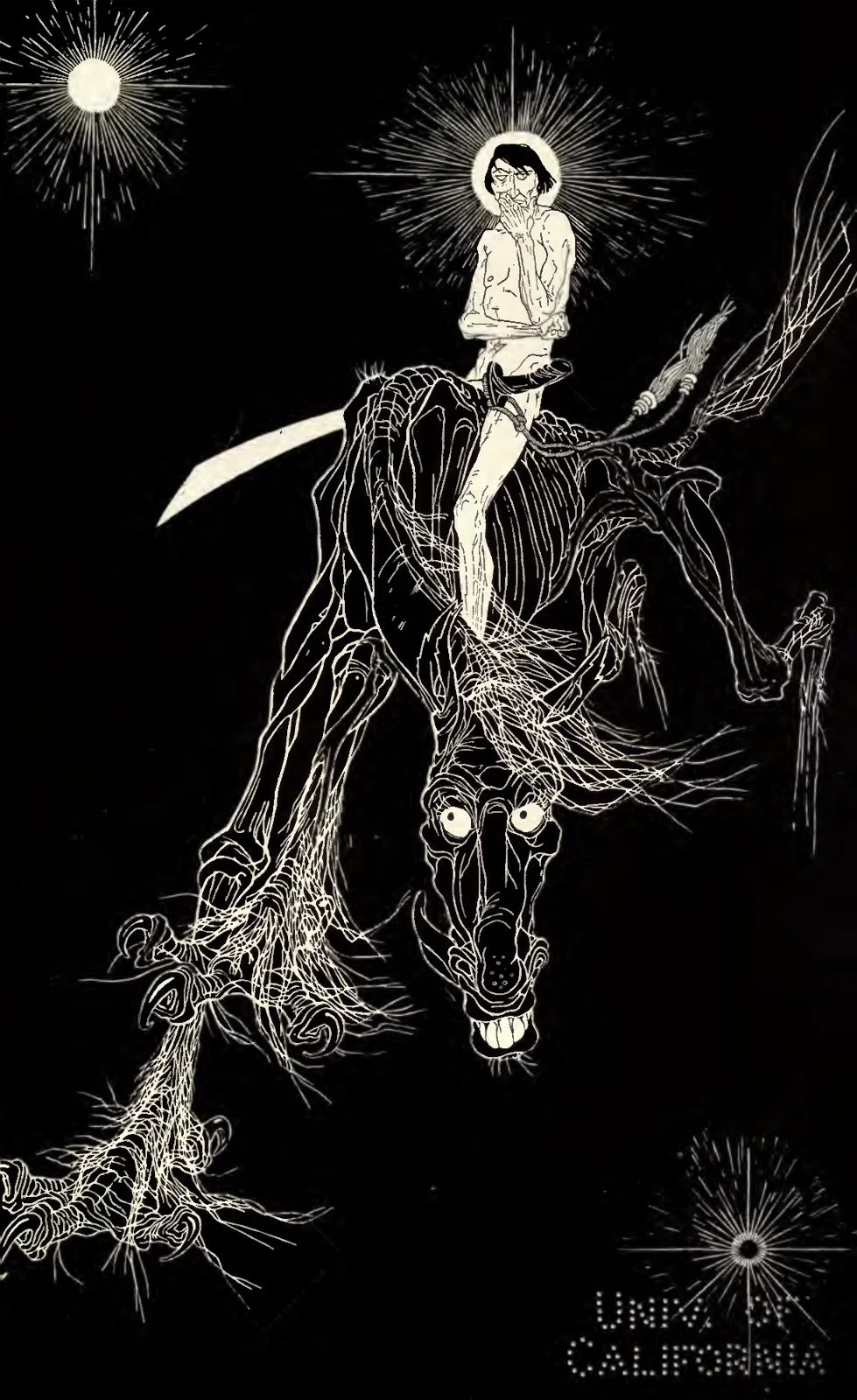
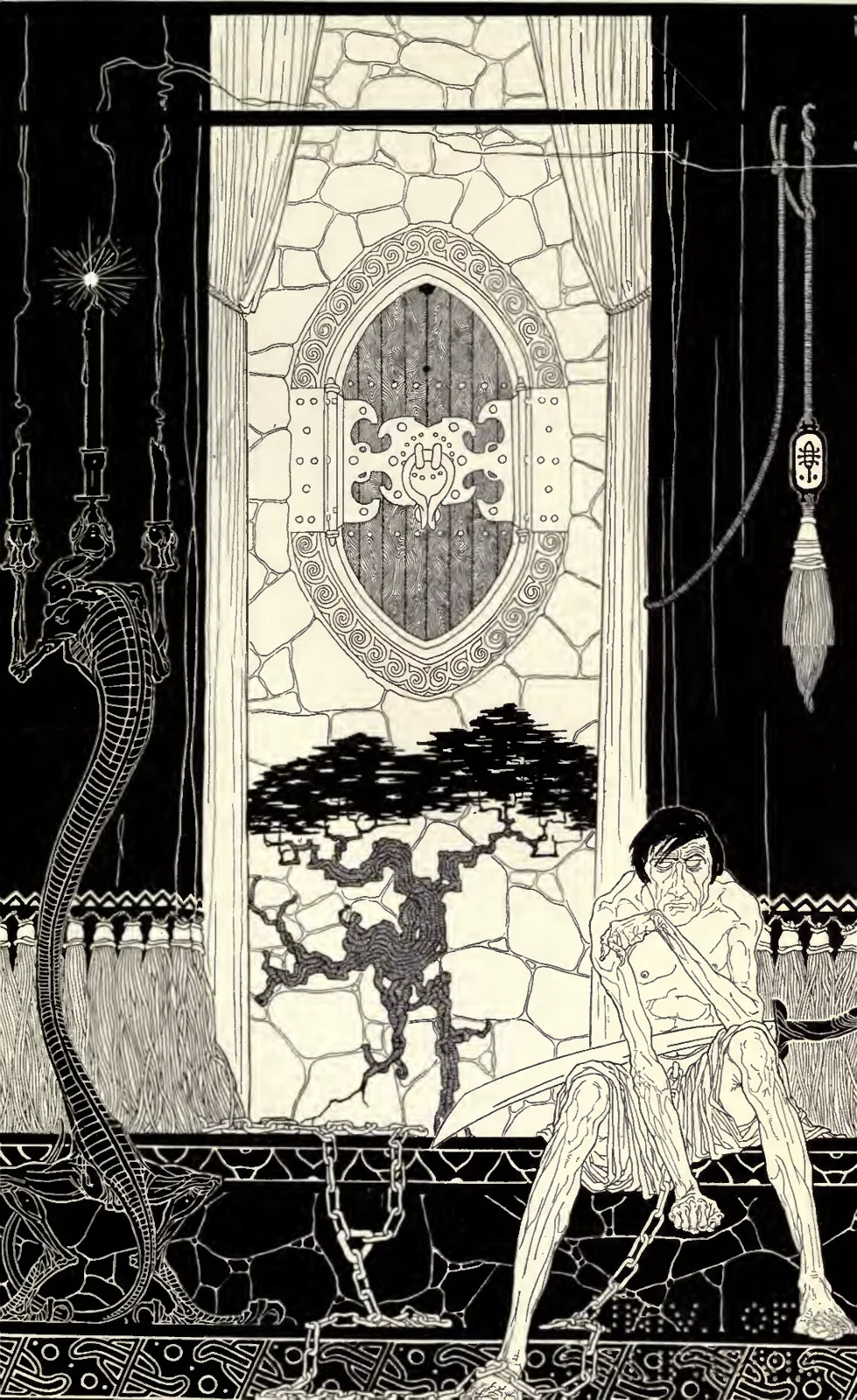
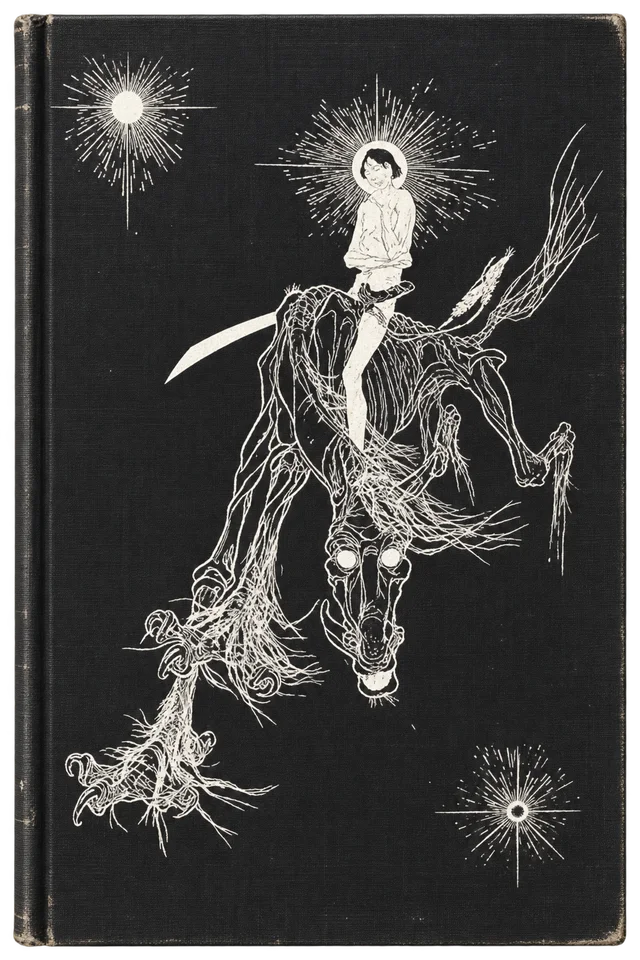
The held Fantazius Mallare identifies Hecht as writer and Smith as illustrator. Its publication statement dates the limited edition to September 1922, and its illustration list numbers ten drawings. In one, a haloed rider sits above an elongated fantastic mount whose fine trailing forms make its outline difficult to contain. In another, a figure below a large window is surrounded by darkness and slender descending lines.
Strong areas of black establish the first visual impression; intricate contours then complicate it. Hecht’s own description of Mallare’s manuscript as a black-and-white decoration, with letters recalling serpents and vegetation, offers a revealing point of contact. Smith’s pictures bring a related instability to bodies and spaces. Their detail supports prolonged looking while their overall arrangement gives each page a forceful, immediately legible shape.