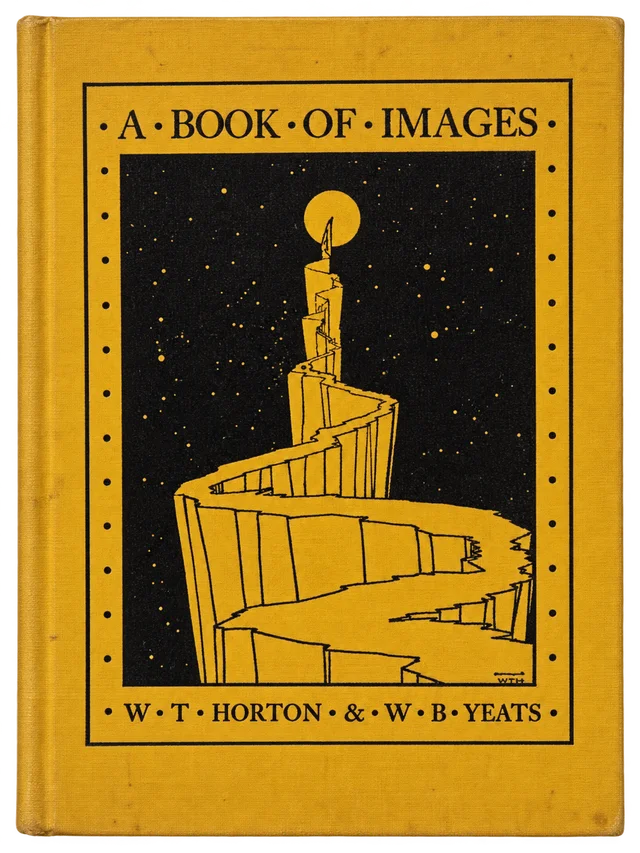
From architecture to visionary drawing
William Thomas Horton was born in Brussels to English parents in 1864. He trained in architecture before concentrating on art and illustration. His work appeared in the literary world of The Savoy and later The Green Sheaf, where the small scale of a magazine page could accommodate intensely concentrated designs.
His friendship with Yeats connected his drawings with debates about symbolism. Much of the surviving account of his life comes from their correspondence and the biographical sketch written by his friend Roger Ingpen after his death in 1919. Horton’s own books combine spiritual interests with a draughtsman’s attention to buildings, contours and the movement of a line.
The drawings and the people around them
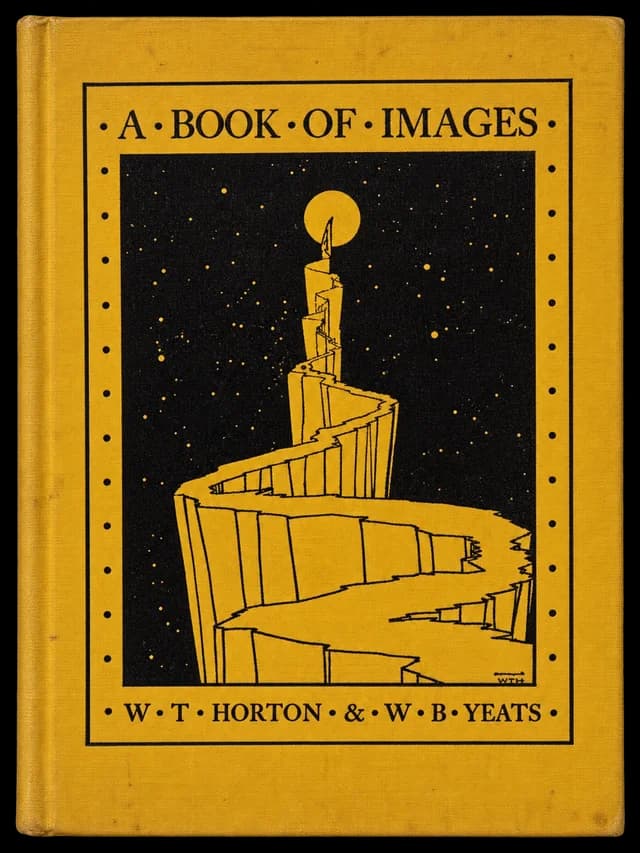
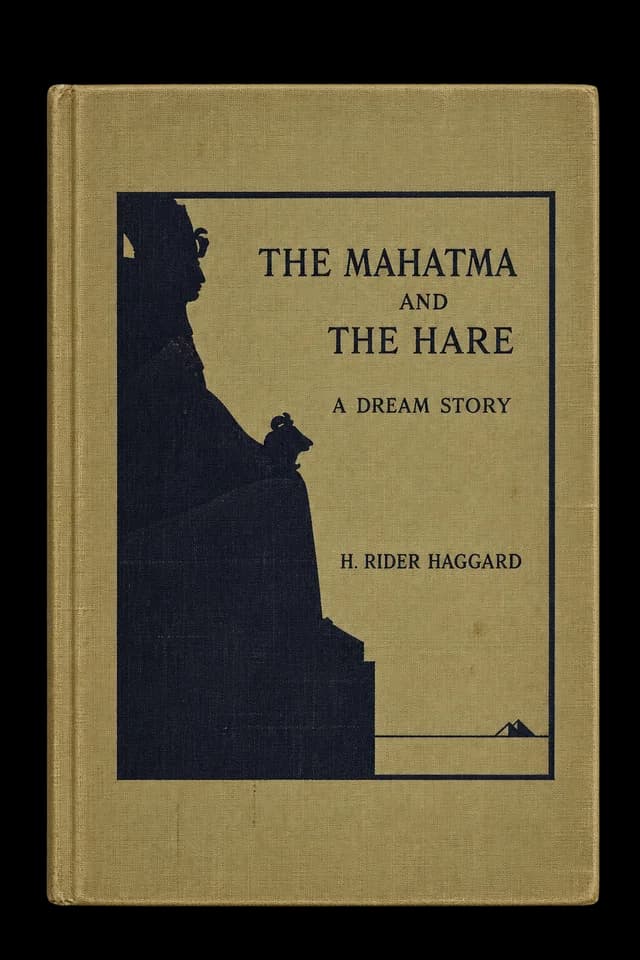
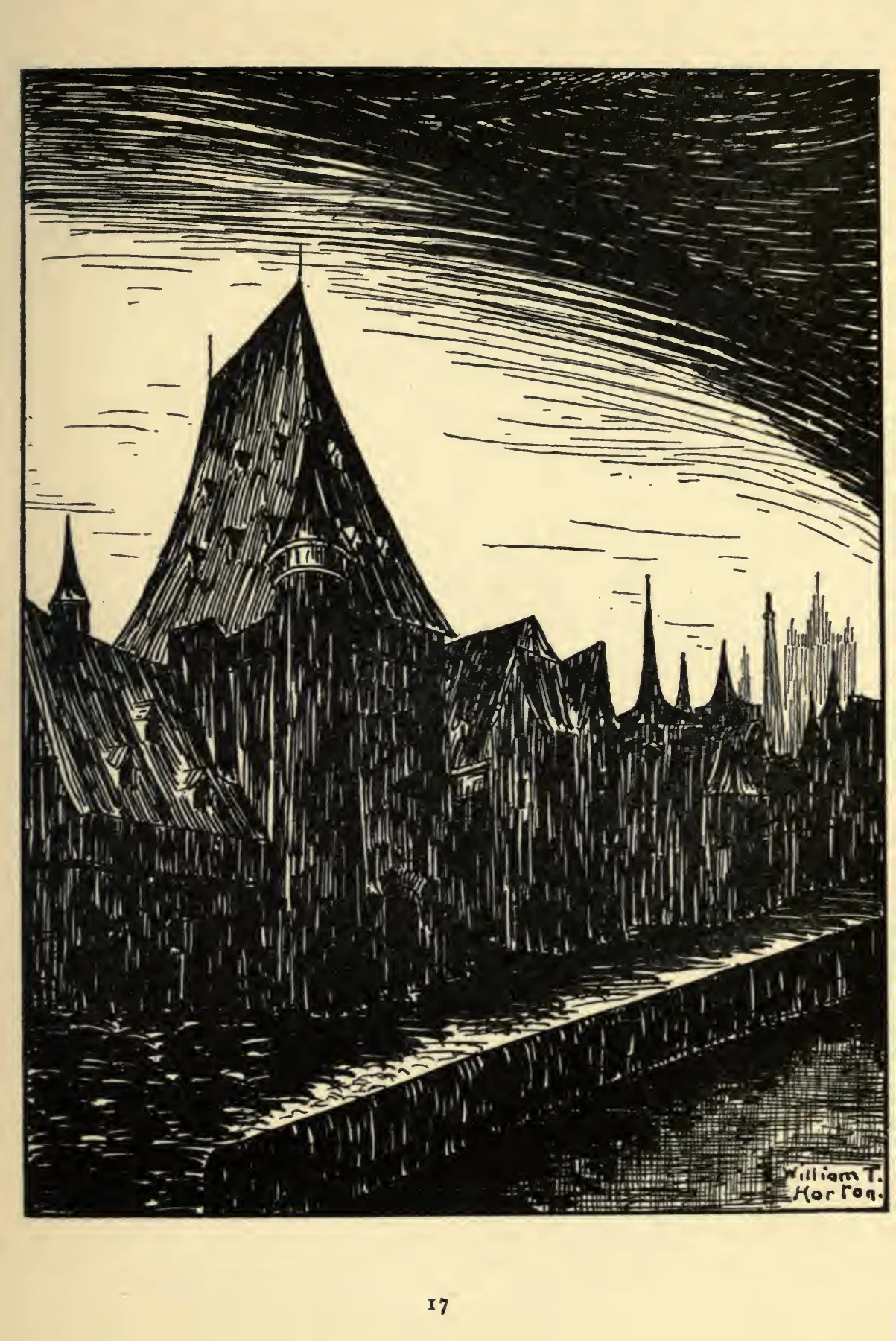
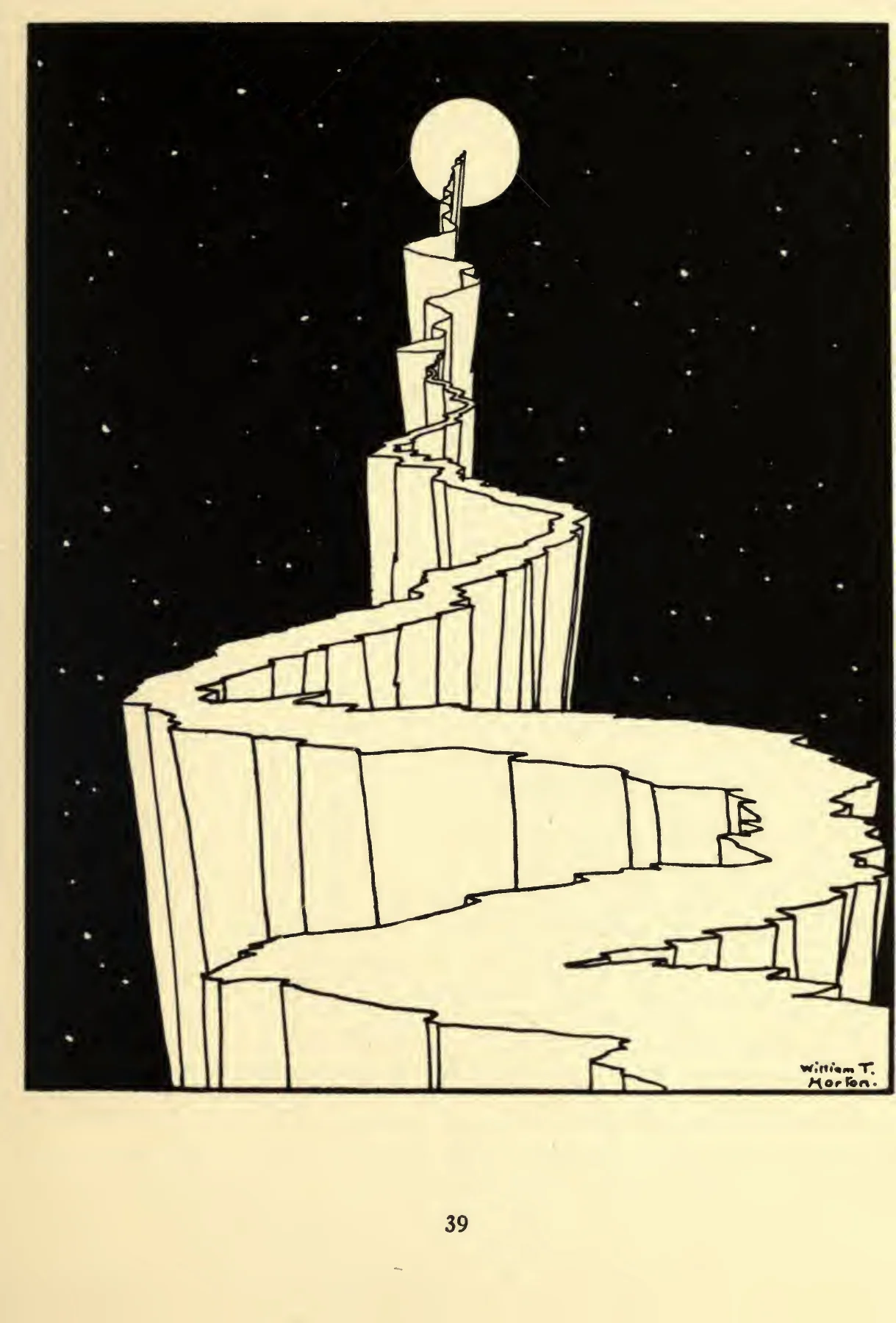
A Book of Images appeared at the Unicorn Press in 1898. Yeats’s introduction describes Horton’s visionary experience and considers the difference between symbolism and allegory. The drawings leave space for the reader’s own response. By the Canal compresses buildings and water into a dark city, while The Path to the Moon opens a pale route through the night. In H. Rider Haggard’s The Mahatma and the Hare, Horton worked as an illustrator alongside H. M. Brock. Its title page gives them a shared credit for twelve pictures.