A writer within the London Lodge
William Scott-Elliot lived from 1849 to 1919. His best-documented activity belongs to the Theosophical movement rather than to a substantial surviving personal biography. Gregory Tillett places him in the special London Lodge study group formed in 1892 alongside figures including A. P. Sinnett and Charles Webster Leadbeater. These relationships provided the setting for his writing on humanity’s supposed spiritual history.
A contemporary letter by Sinnett confirms that Scott-Elliot presented The Evolution of Humanity to the lodge in February 1893. The resulting debate concerned differences within Theosophical teaching, including accounts of planetary evolution. The Story of Atlantis followed in 1896, with Sinnett’s preface; The Lost Lemuria developed another part of the imagined prehistory. These publications preserve a clearer record of his intellectual circle and commitments than the available evidence supplies for his education or everyday working life.
A mapped past and its claimed authority
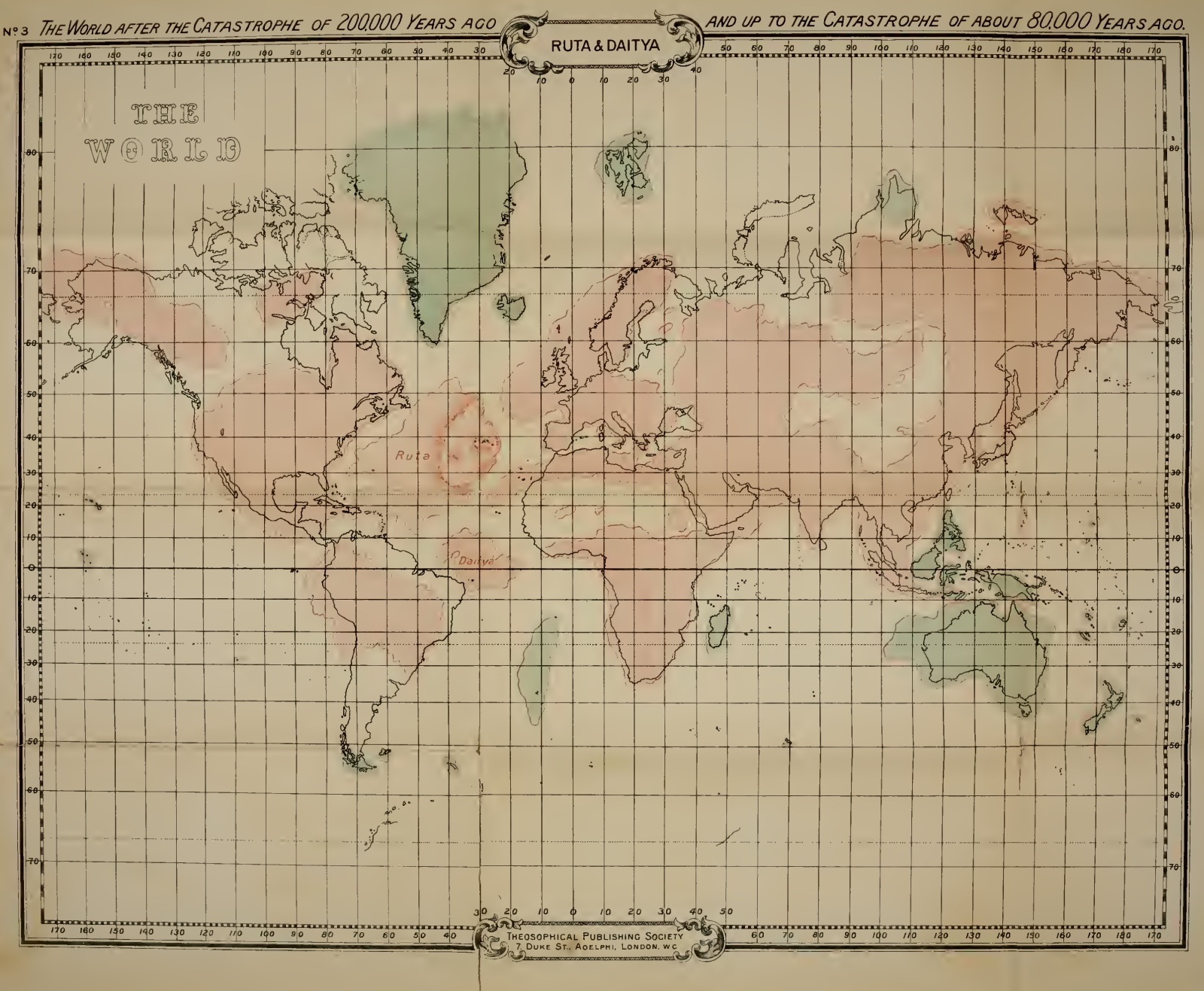
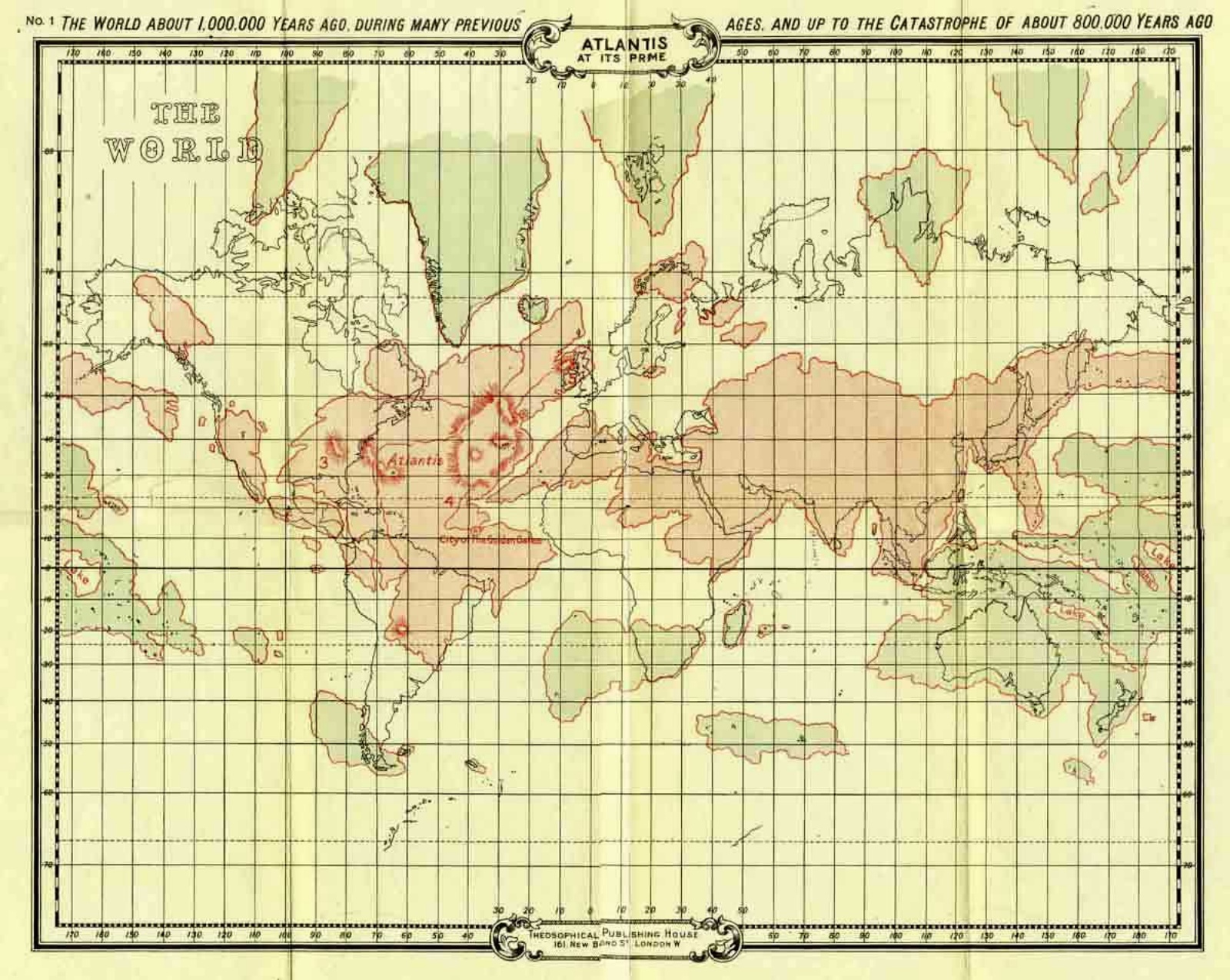
The source set here brings Atlantis and Lemuria together. The Atlantis component retains the 1896 Theosophical Publishing Society title, advertising four maps of the world at different periods. Sinnett’s preface explains that the narrative depends on faculties he describes as clairvoyant, placing its claimed knowledge outside ordinary historical documentation.
The maps turn changing coastlines into a sequence of catastrophe, migration and spiritual development. Their precision makes the narrative easy to visualise, while the evidential basis remains the occult claim announced in the preface. The books’ hierarchical racial categories also belong to that doctrine. Comparing a map with the account of its period shows how landforms and classifications support one another within Scott-Elliot’s system, and how a persuasive visual scheme can give form to an asserted history.