A print designer during rapid cultural change
Born into a merchant family in 1839, Yoshitoshi trained under Utagawa Kuniyoshi and published his first print at fourteen. Warrior subjects and historical painting helped shape his early work. He witnessed the conflict surrounding the end of shogunal rule and the changes that followed the Meiji Restoration. Early designs often brought violence sharply into view.
Illness and scarce commissions marked the early 1870s. Newspaper illustration supplied another field of work, and his later compositions increasingly concentrated on the psychological moment around an event. Successful series followed in the 1880s, including One Hundred Aspects of the Moon and Thirty-two Aspects of Behaviors. He also joined efforts to preserve older cultural traditions amid technological and social change. He died in 1892, leaving designs whose production depended on publishers, carvers and printers as well as the artist.
One moon, many ways of looking
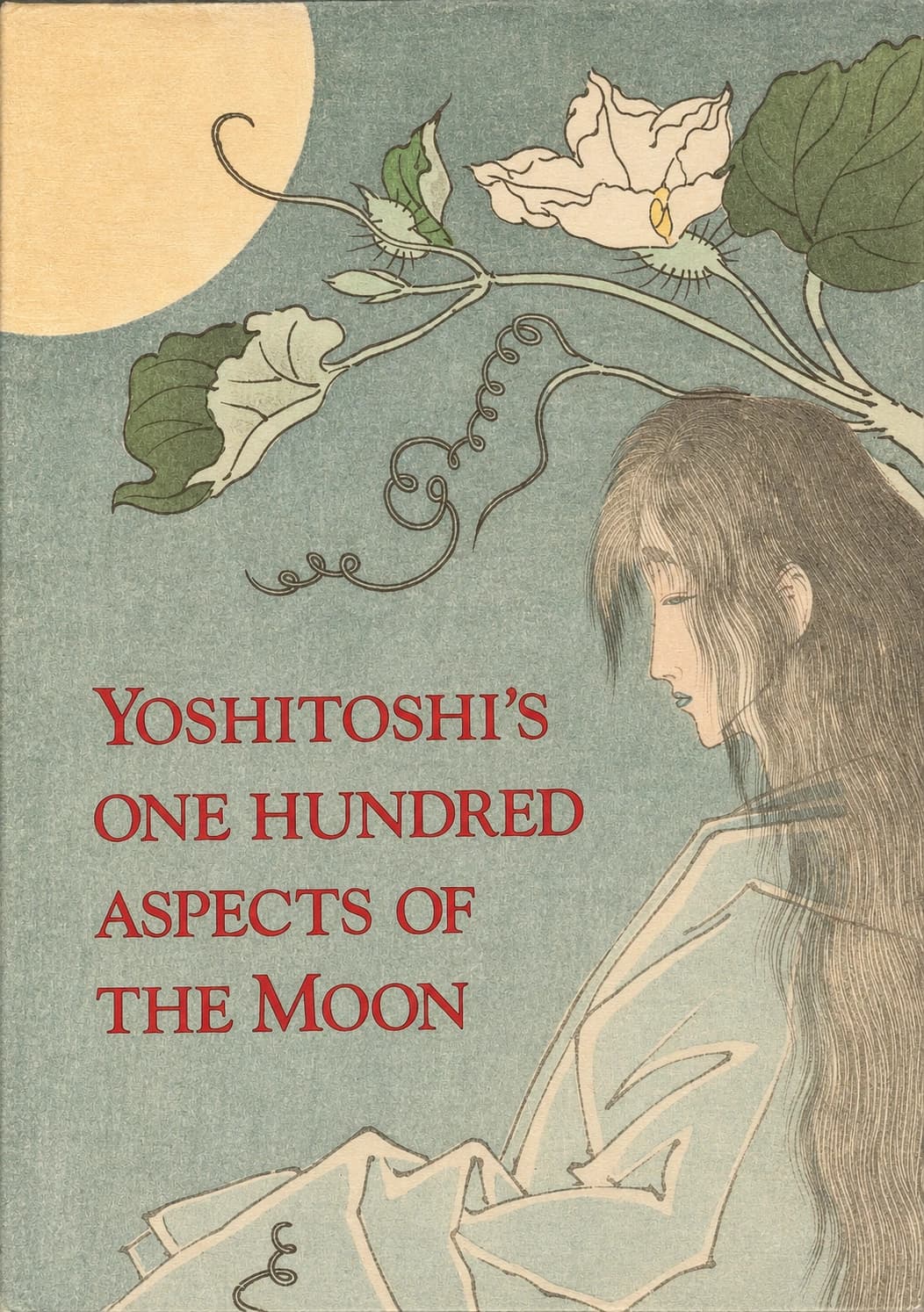
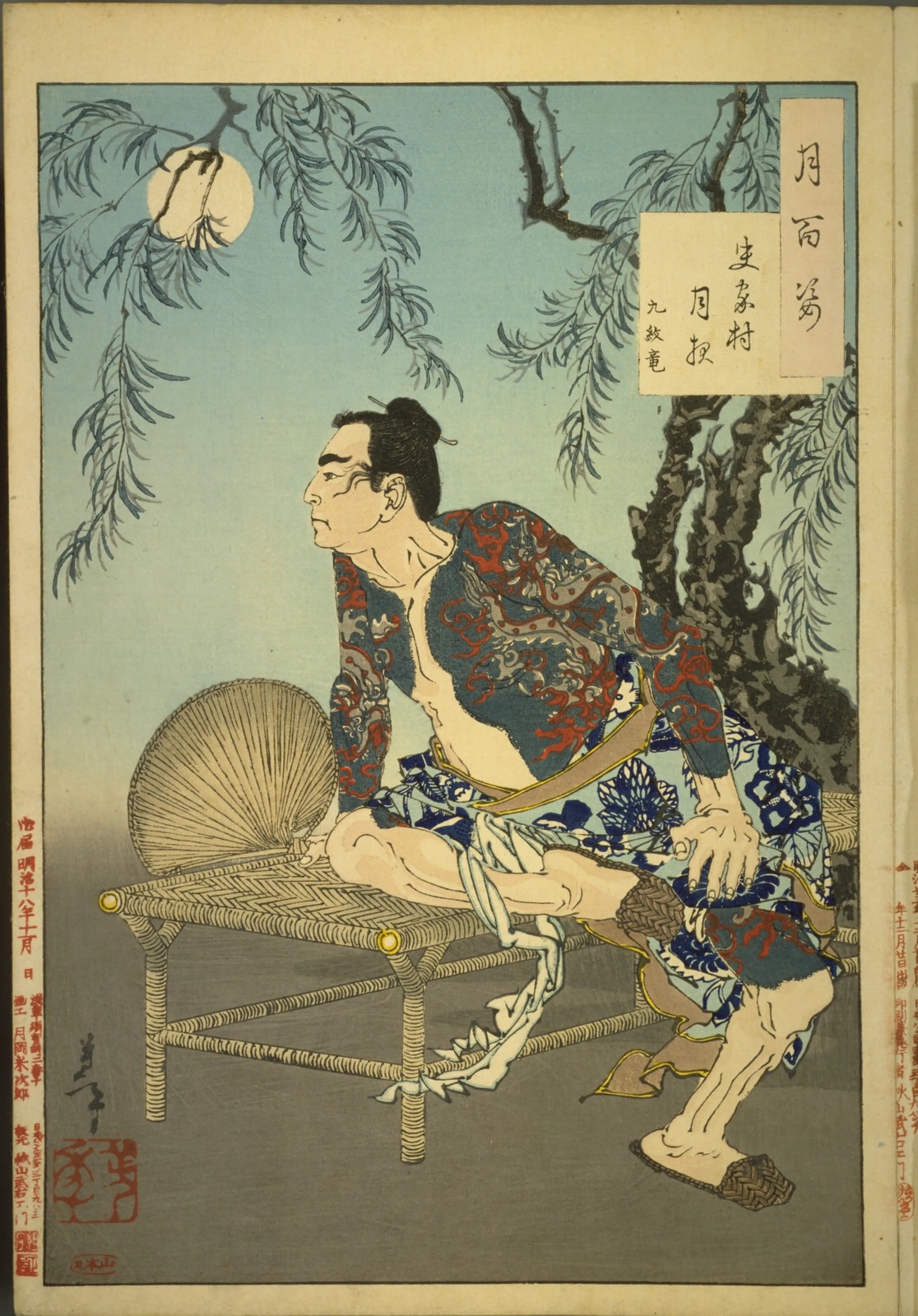
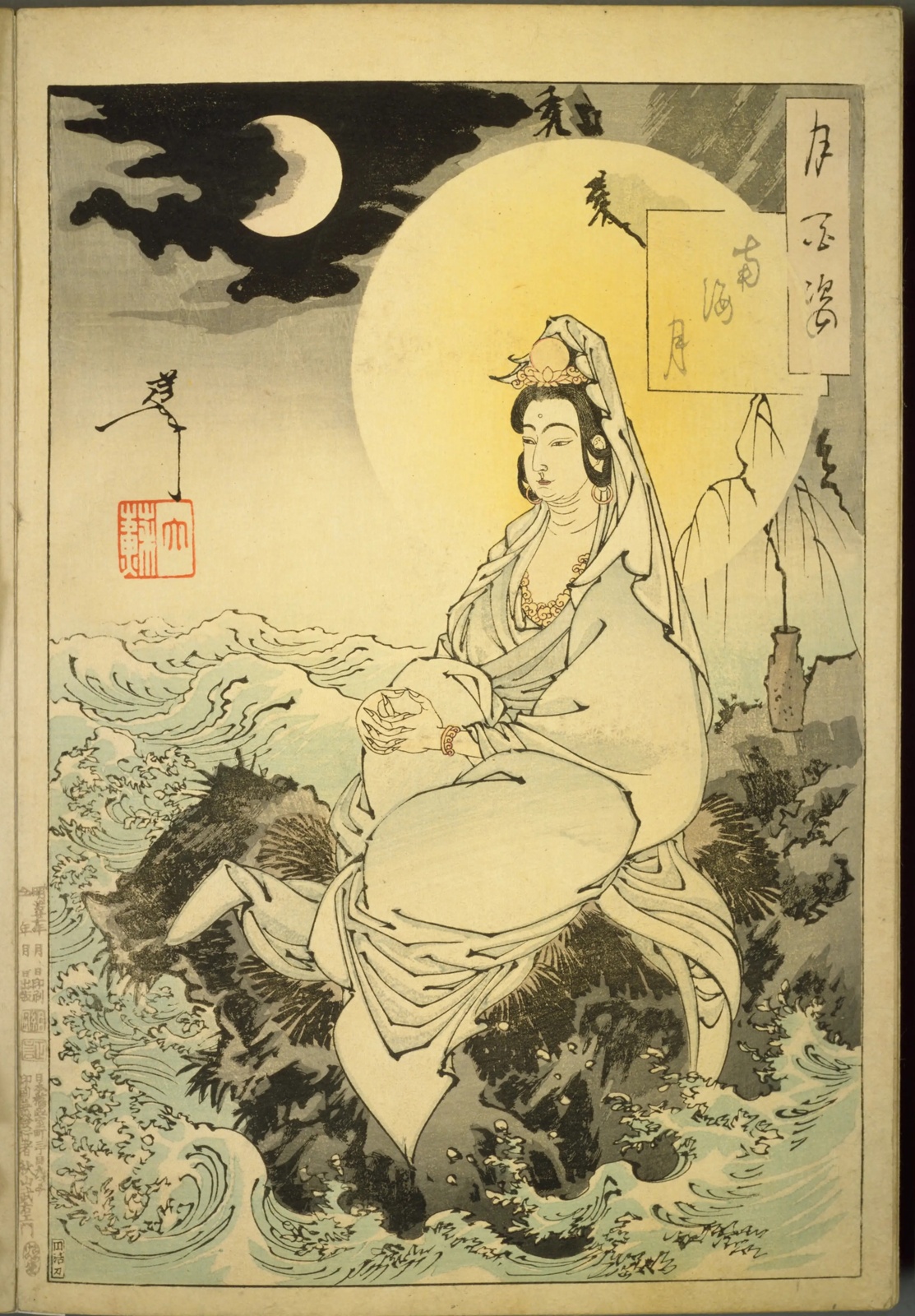
One Hundred Aspects of the Moon brings historical, literary and legendary subjects into a shared lunar setting. The retained reading collection assembles reproductions of separate prints; its modern cover belongs to that assembly. Individual leaves preserve inscriptions, seals and the designed relationship between figure, text and surrounding space.
Among the inspected images, a seated man beneath willow branches, armoured figures and a creature running against a pale moon establish strikingly different rhythms. Scale and empty sky affect the mood before the subject is identified. The moon can become an immense backdrop, a distant point or a source of implied light. An individual caption or museum record restores the poem, performance or story behind a composition, while comparison across the sequence shows how variation holds the series together.