A working life devoted to ancient philosophy
Born in 1758 and raised in a dissenting household, Taylor initially studied for the ministry under Hugh Worthington in London. An early marriage and the need to earn a living led to work as a bank clerk. Support from patrons and friends, including the sculptor John Flaxman, later helped sustain his philosophical studies and translations.
His first translation appeared in 1787. Employment as assistant secretary to the Society of Arts provided another professional setting around the turn of the century. Translations of Plato, Aristotle and later Platonists formed a large and lasting body of work; the 1804 Plato also incorporated translations by Floyer Sydenham. Taylor treated these writings as parts of a living philosophical and religious tradition. His influence extended to Romantic writers and, later, American readers including Emerson. He died in 1835.
The soul interpreted through story and symbol
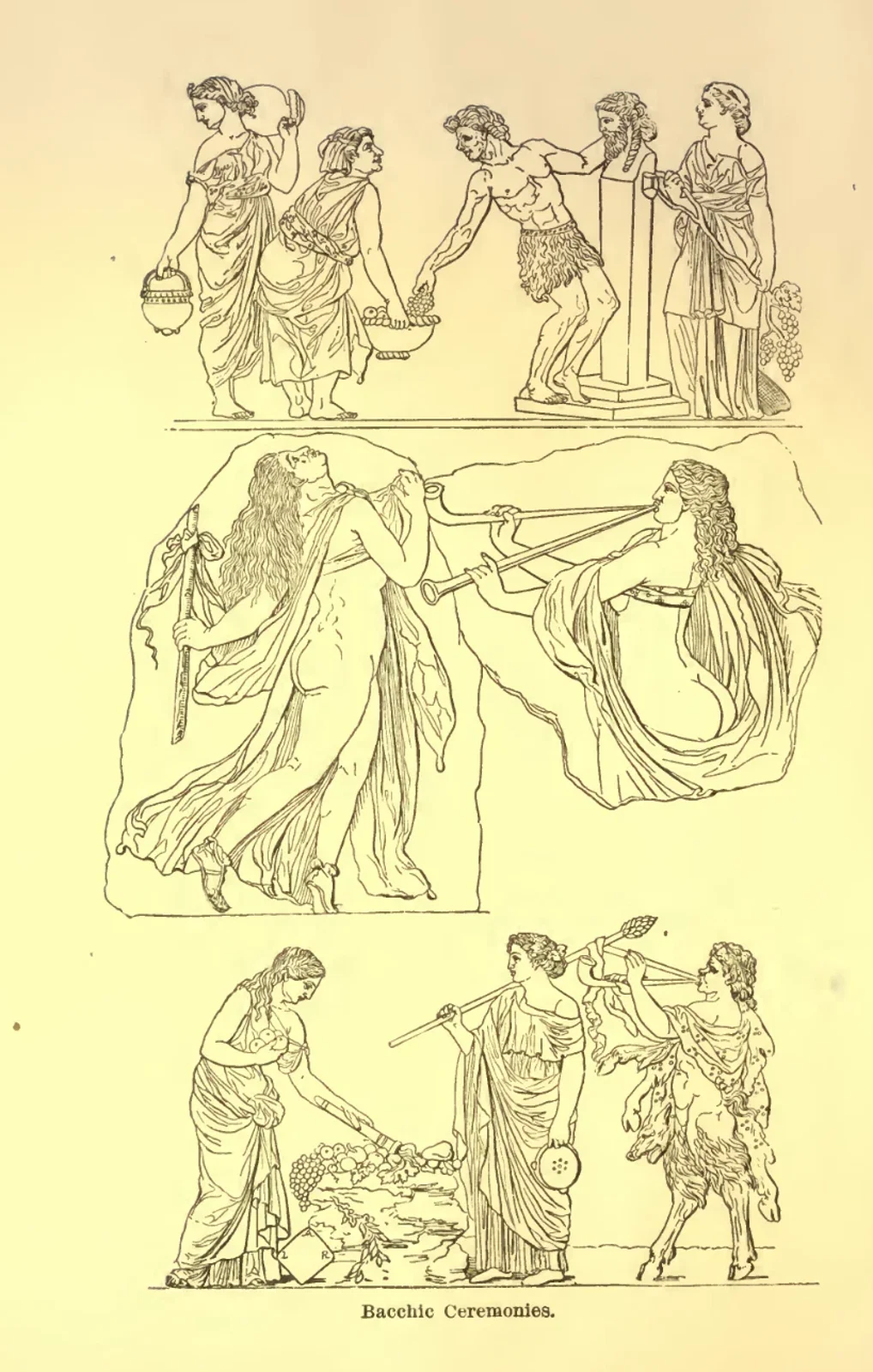
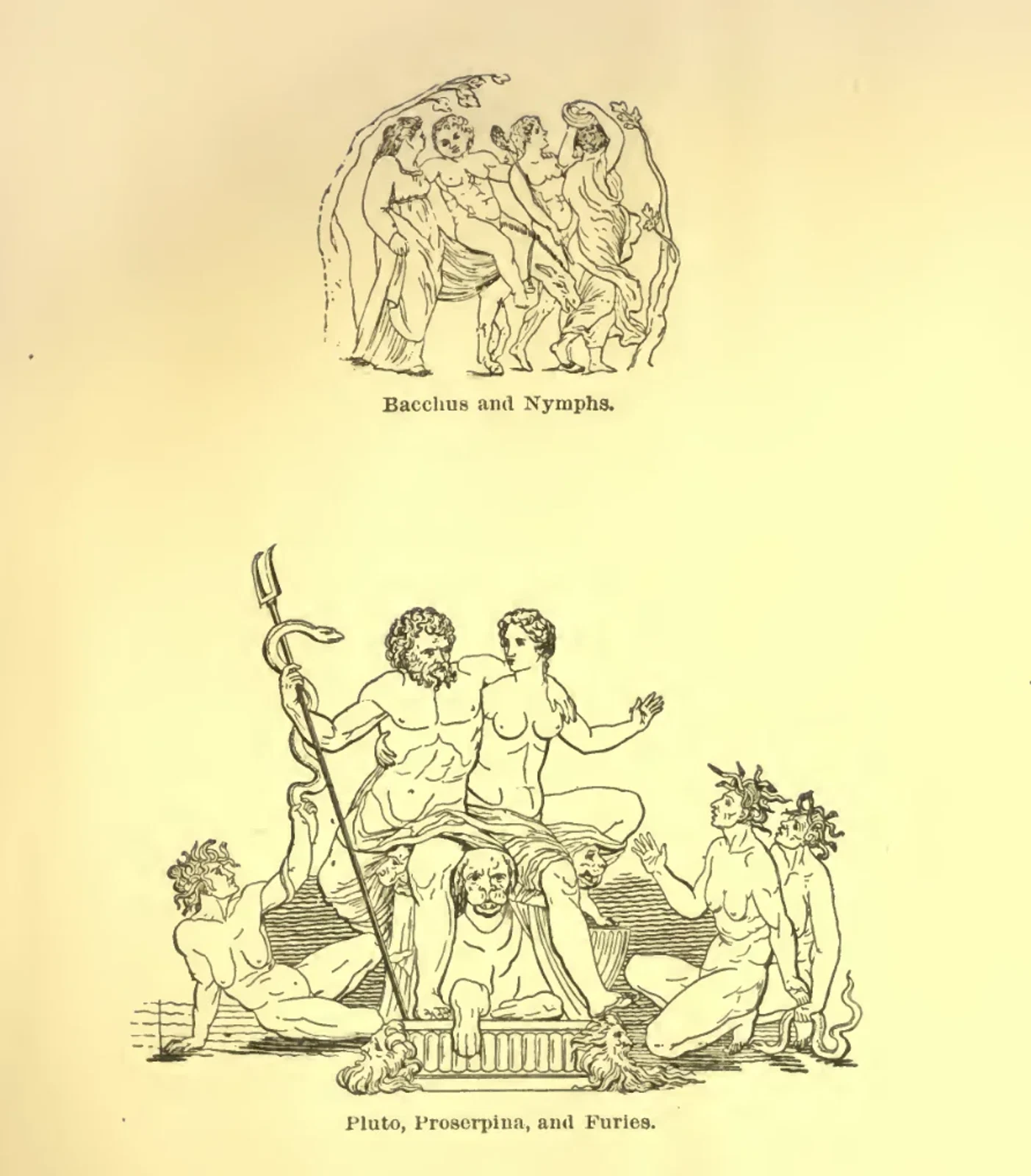
The held Eleusinian and Bacchic Mysteries is J. W. Bouton’s fourth edition of 1891. Its title distinguishes Taylor’s dissertation from Alexander Wilder’s introduction, notes, emendations and glossary, and from A. L. Rawson’s illustrations. The book therefore layers nineteenth-century editorial interpretation around Taylor’s earlier account.
Taylor reads attributes of Bacchic figures as connected symbols: a spotted garment suggests the moon among stars, while a golden belt is related to the ocean. Myth becomes a way of discussing the soul’s confinement, purification and return. The argument moves between ancient references and a later philosophical explanation of them. Attention to those transitions reveals both the coherence of Taylor’s Platonism and the interpretive distance between a surviving ancient source and the meaning he finds within it.