Art training, gift books and printmaking
Mackenzie was born in Bradford. Museum and Getty records give his birth year as 1887; a detailed later biography by Chris Beetles gives 1888. He entered Bradford School of Art in 1910 and won a scholarship to the Slade in 1912. Fellow student Florence Mary Anderson became his partner and an illustrator in her own right. Commissions and magazine drawings followed his departure from the Slade.
The war delayed the publication of his illustrations for Ransome’s Aladdin. Further books included Arthur and His Knights, Hassan and The Crock of Gold. Etching, linocut and drypoint became increasingly important to his work, extending beyond the colour gift book into landscape and literary illustration. After an unsuccessful attempt to establish himself as a painter in Paris, he returned to England. He later settled in Cornwall, where he and Katharine Clayton ran a summer art school before the war interrupted it. He died there in 1944.
The rhythm between large pictures and small designs
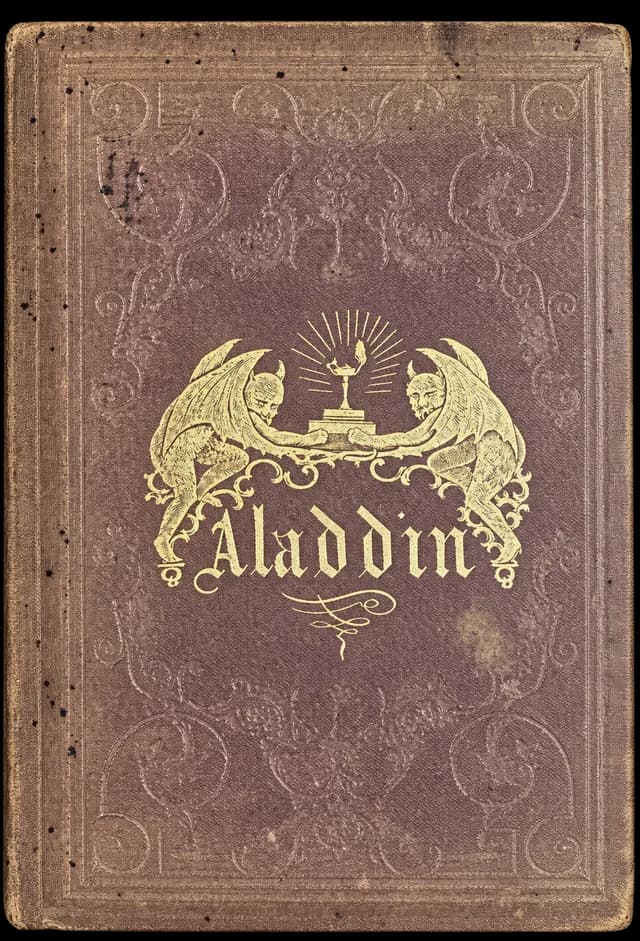
The held Aladdin and His Wonderful Lamp in Rhyme bears Brentano’s New York imprint and credits Arthur Ransome with the verse and Mackenzie with the illustrations. Its undated title should be distinguished from the Metropolitan Museum’s London Nisbet copy, catalogued approximately 1919–20. Twelve colour plates select major moments, while smaller drawings accompany the text.
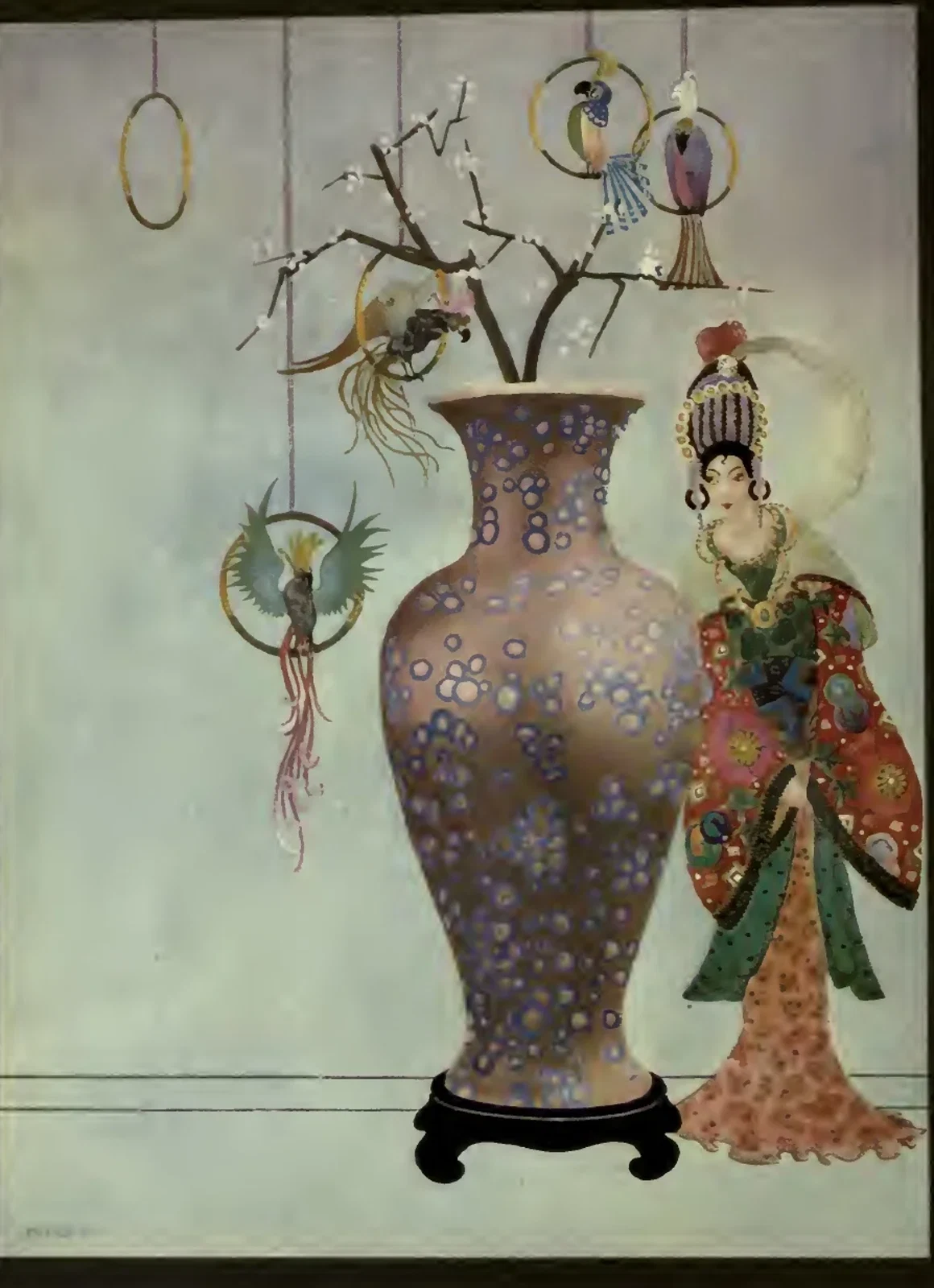
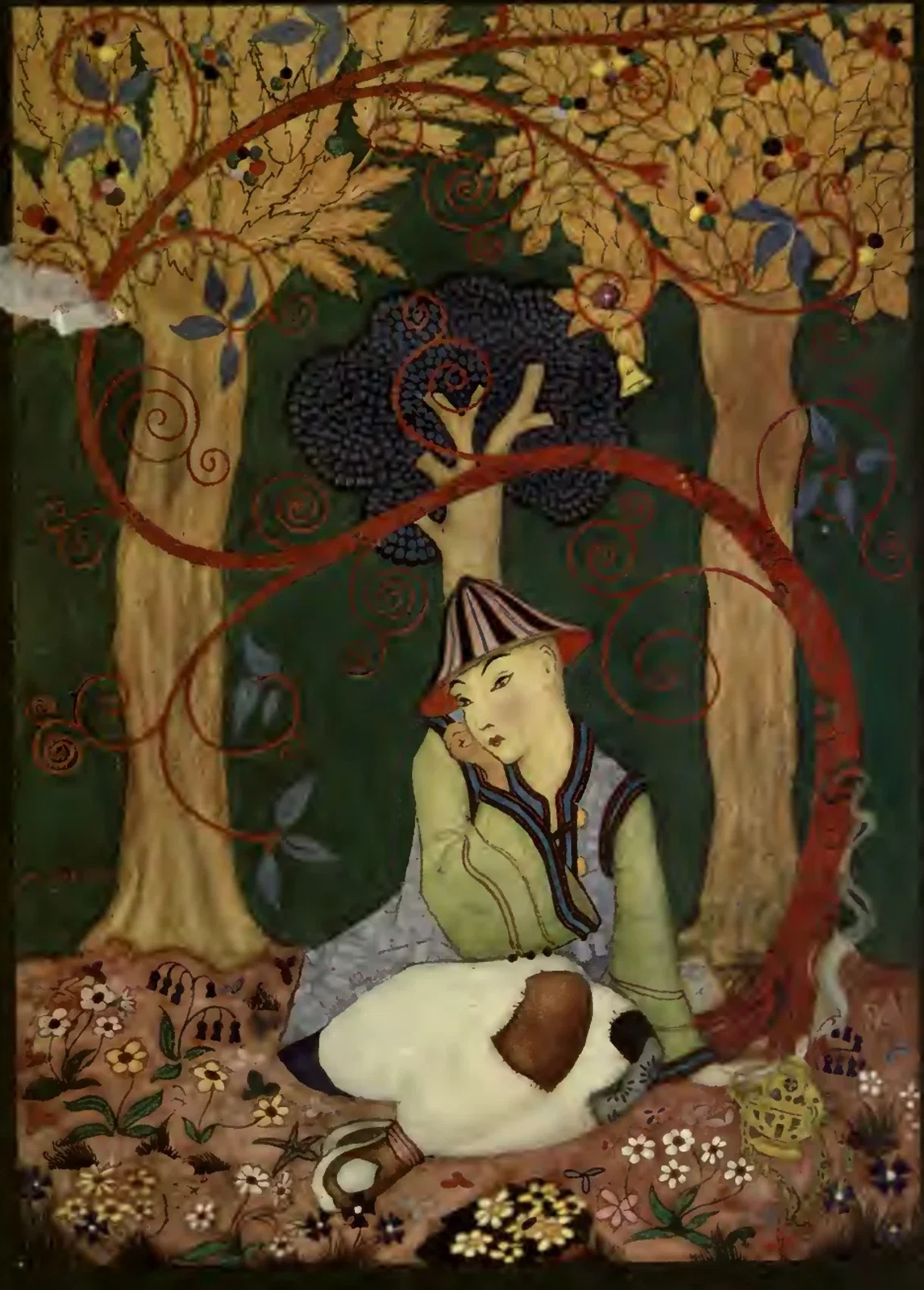
The princess beside an enormous vase and Aladdin beneath a branching tree show two ways of enclosing a figure in ornament. A tall object organises the first scene; dense foliage gathers around the seated boy in the second. Large plates pause the story for sustained looking, while compact designs shape its movement across the page. Ransome’s imagined Pekin and the book’s racial caricatures also frame these pictures, locating their fantasy within the assumptions of its period.