The Lake District, a family and a writing life
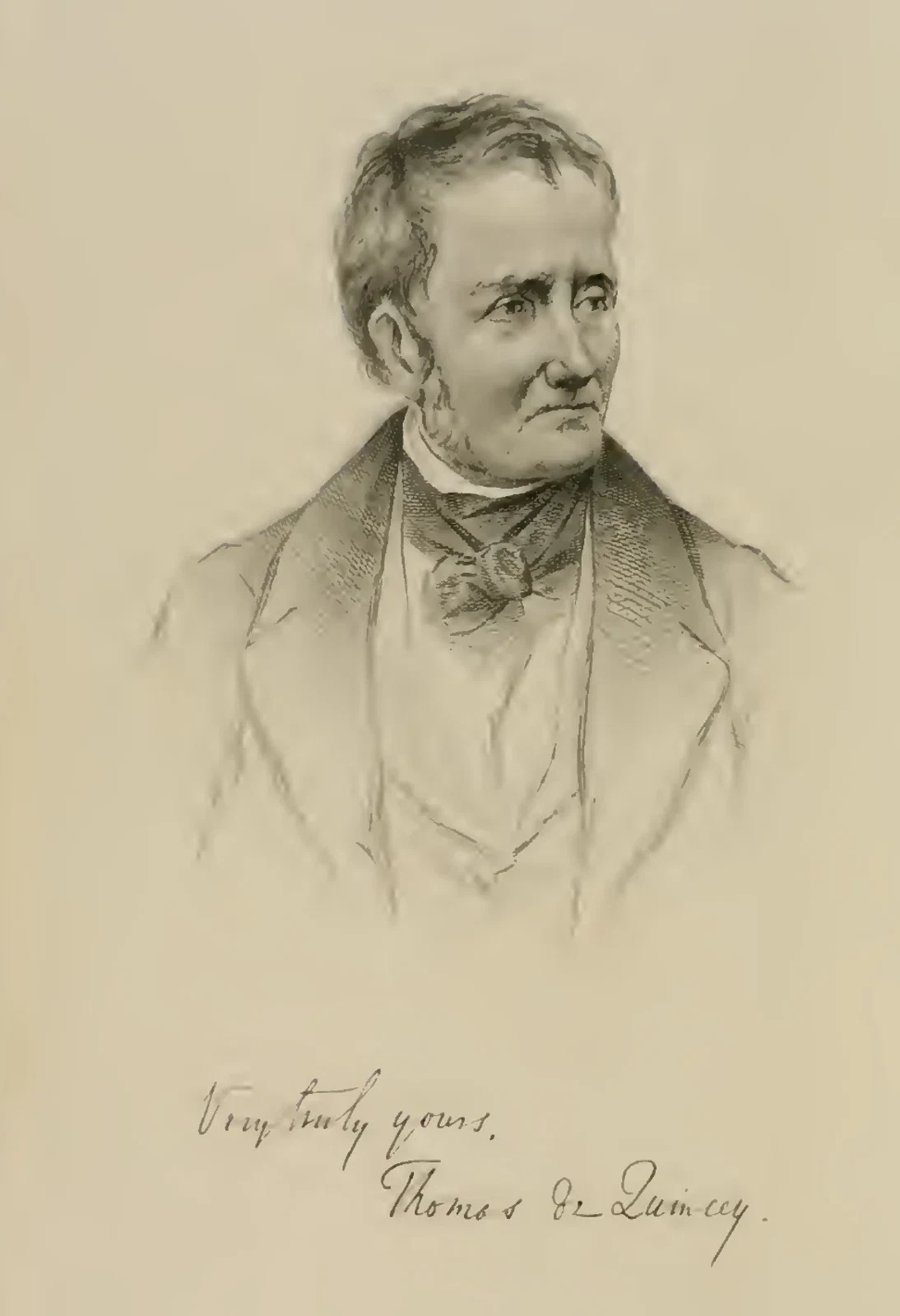
Born in Manchester in 1785, De Quincey ran away from Manchester Grammar School and travelled through Wales before enduring hardship in London. Reconciliation with his family preceded study at Worcester College, Oxford. An early admiration for Wordsworth and Coleridge developed into personal acquaintance; in 1809 he moved into Dove Cottage, which the Wordsworths had recently left.
He married Margaret Simpson in 1817, and they had eight children. Debt and dependence on opium complicated family and professional life. Confessions first appeared in magazine form in 1821 and as a book in 1822. Journalism provided income as his writing expanded into biography, history, economics and philosophy. Later life centred on Edinburgh, where he died in 1859. His recollections of the Lake poets preserved vivid portraits that did not always please their subjects.
A narrator making a case about himself
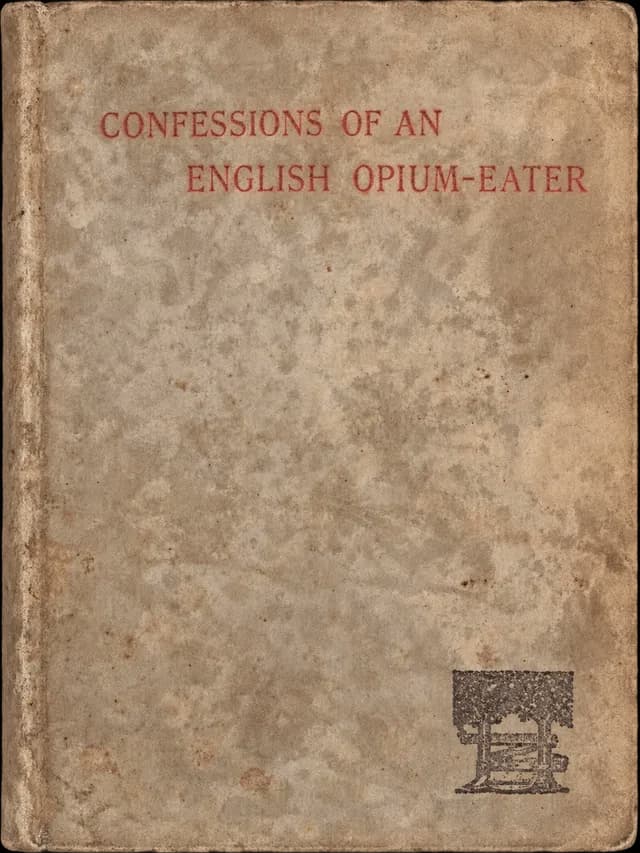
Confessions of an English Opium-Eater, and Kindred Papers here identifies itself as a forty-first edition from Houghton, Mifflin and Company. The publishers’ advertisement places it within an American collected series incorporating English revisions and additions. It also distinguishes editorial notes, printed in square brackets, from the author’s own text.
Before narrating his experiences, De Quincey addresses the reader and weighs the reasons for making them public. Personal recollection, accounts of other users and observations attributed to druggists support different parts of his argument. Pleasure and suffering change the pace and imagery of the prose, while explanation repeatedly interrupts memory. This self-conscious arrangement makes the confession a literary performance as well as a record of a life: the narrator seeks to govern how his reader will understand and judge him.