A life story within the alchemical tradition
The account published as Trismosin’s Alchemical Wanderings presents a young seeker frustrated by a miner who will not reveal his secret. It dates the beginning of his travels to 1473 and carries him through Italy towards employment in a laboratory near Venice. Episodes of disappointment, testing and apparent success turn the pursuit of knowledge into an adventure. They are the story told under Trismosin’s name.
That narrative does not establish the historical life of a known author. The British Library’s study of Splendor Solis states that neither its author nor its commissioner is known. The Harley manuscript is dated 1582, with the work’s origins traced to earlier sixteenth-century Germany. The later presentation of Trismosin as an adept and teacher of Paracelsus should therefore be distinguished from what the manuscripts securely document.
Alchemical text, painted allegory and later commentary
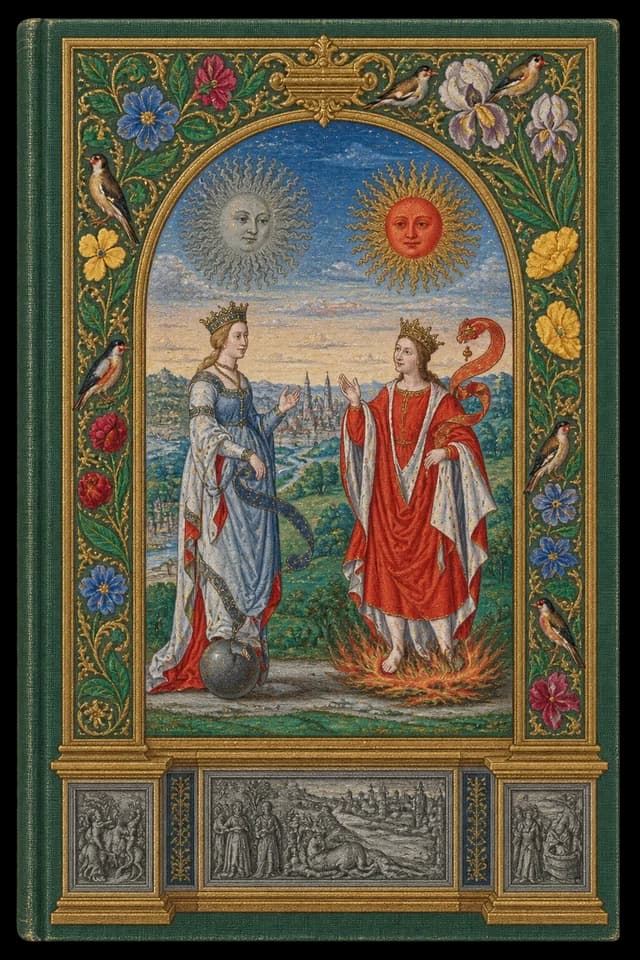
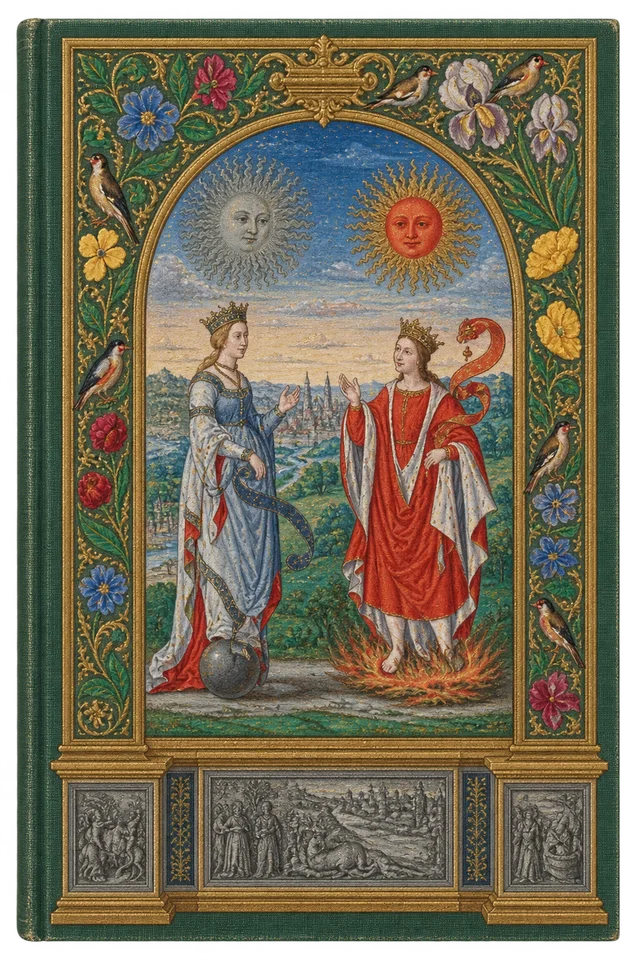
Splendor Solis combines a sequence of alchemical treatises with elaborate pictures. The imagery includes kings and queens, planets, vessels and transformations. These scenes give visual form to the work’s account of change while drawing on material beyond the immediate operations of a laboratory. The Harley manuscript preserves twenty-two full-page miniatures, set within richly decorated borders.
Lumitheca’s English edition credits its introduction, explanations and notes to J. K. It reproduces the manuscript pictures and adds the wanderings narrative and an account of the process called the Red Lion. The introduction interprets the book through both physical alchemy and spiritual regeneration. That commentary is a later reading of the material, rather than a direct statement by a securely identified sixteenth-century author.