Mathematics, observatories and a public audience
Born in Dublin in 1840, Ball studied at Trinity College despite financial difficulty following his father’s death. A post tutoring Lord Rosse’s sons at Birr Castle gave him access to the great reflecting telescope and practical astronomical observation. In 1867 he became professor of applied mathematics and mechanics at the Royal College of Science in Dublin.
His research on the theory of screws examined the motion of rigid bodies. He became Royal Astronomer of Ireland and professor at Trinity in 1874, moving to Cambridge’s Lowndean professorship in 1892. Public lectures and books developed another audience for his work, using vivid demonstrations and accessible explanation. He continued both mathematical research and popular astronomy at Cambridge until his death in 1913. The breadth of that career connects technical investigation with the craft of communicating its questions.
Seeing something before knowing what it means
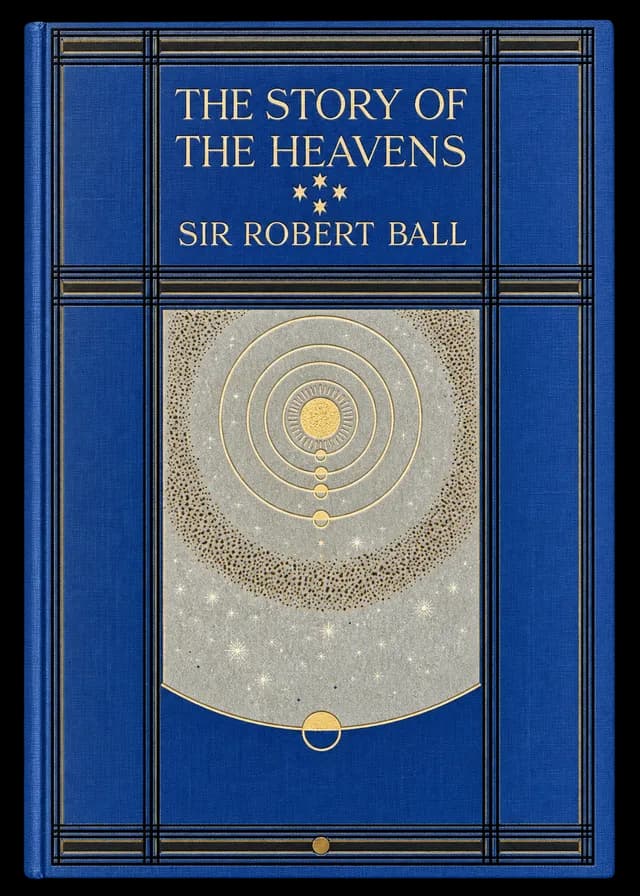
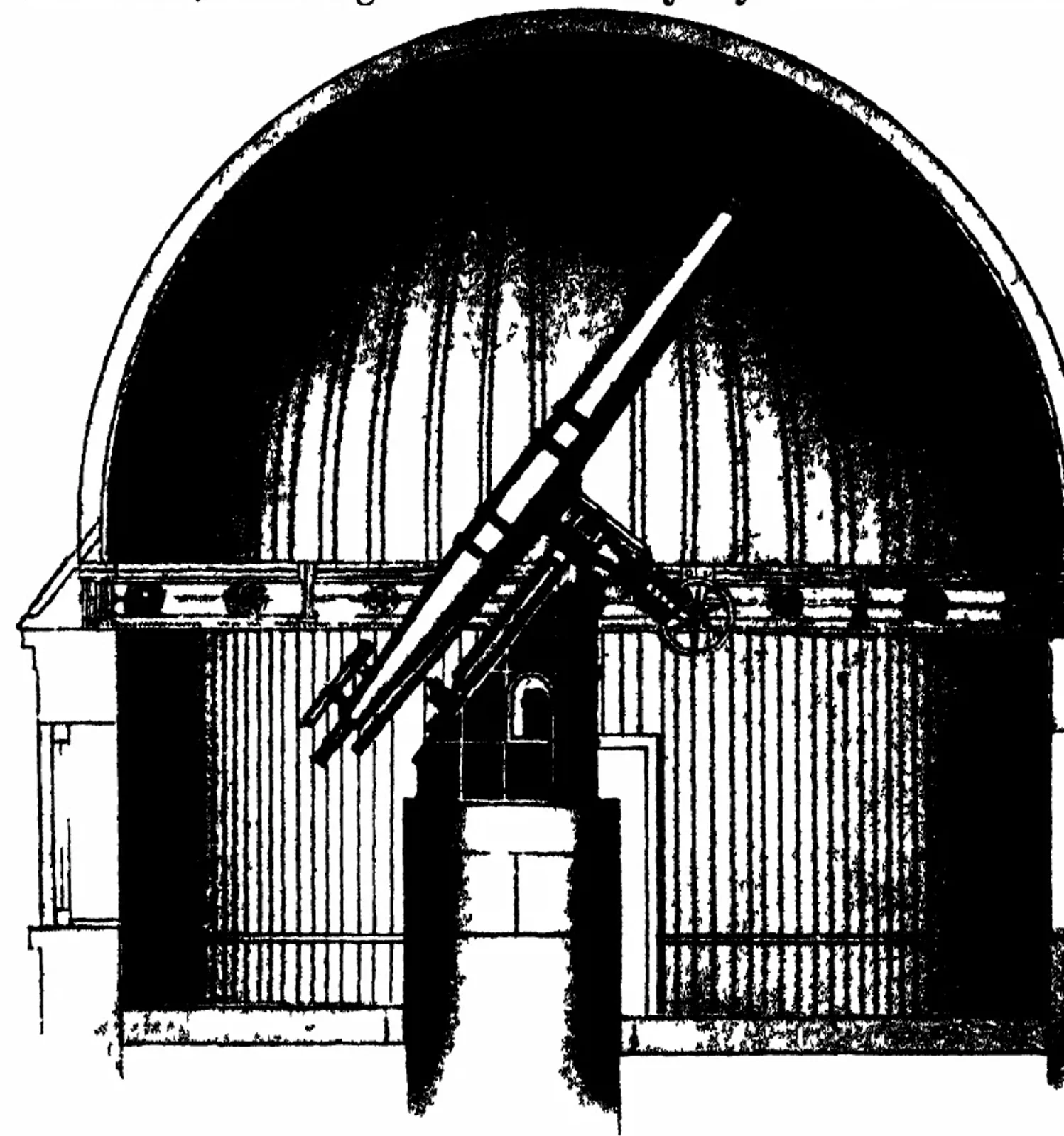
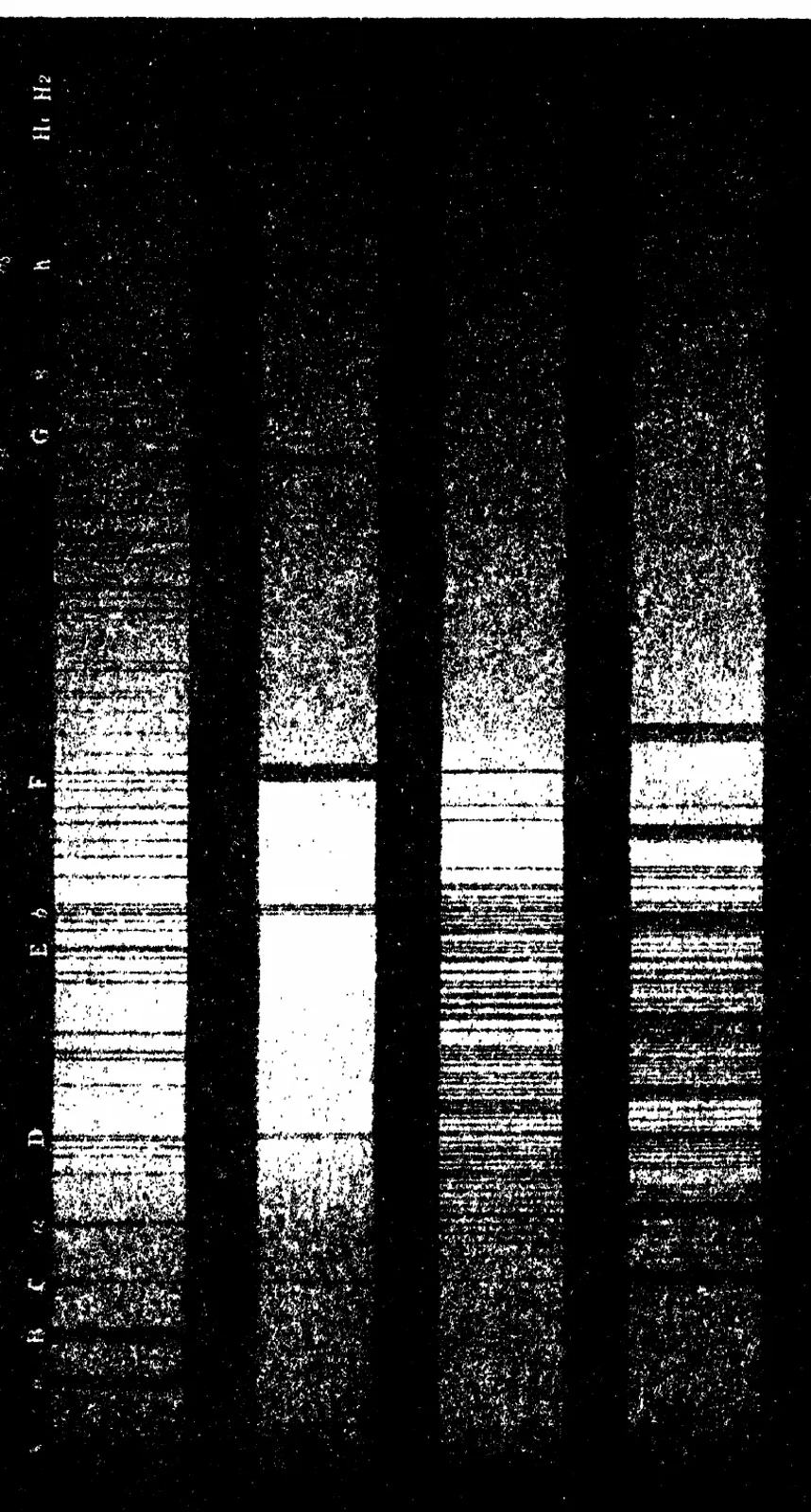
The Story of the Heavens here is the revised 1905 edition. Its opening asks about the Sun’s size, heat and distance before extending the inquiry to stars and nebulae. Telescopes, observatories and geometrical diagrams appear alongside celestial objects, making the means of obtaining knowledge part of the story.
The discussion of Saturn follows the difficulty of interpreting its changing appearance through an early telescope. Galileo’s observations and an adequate explanation do not arrive together; repeated views and improved instruments gradually clarify the problem. Ball’s narrative turns uncertainty into a stage of inquiry. Read as a historical work, the book preserves both the knowledge of its period and a method of explanation in which questions, measurements and revisions give a view of the heavens its form.