Teaching, journalism and religious verse
Arnold was born at Gravesend in 1832 and studied at University College, Oxford. School teaching preceded his appointment as principal of the Government Deccan College at Poona in 1856. During the years in India his engagement with Asian languages and religious literature developed alongside his educational work. He returned to England in 1861 and joined the Daily Telegraph.
The newspaper became a long professional base, including an editorship beginning in 1873. Poetry and accounts of travel in India and Japan reached readers through books and periodicals. The Light of Asia, published in 1879, brought particular fame for its presentation of the Buddha’s life. The Light of the World later attempted a corresponding poetic treatment of Jesus. Arnold died in 1904, leaving an influential Victorian effort to interpret religious narratives through English literary forms.
An imagined Buddhist voice and a later visual accompaniment
The Light of Asia’s subtitle presents its story as told by an Indian Buddhist. This is Arnold’s adopted narrative voice. His preface offers greater understanding between East and West as a purpose of the poem, while selection, language and blank verse give that encounter its particular form.
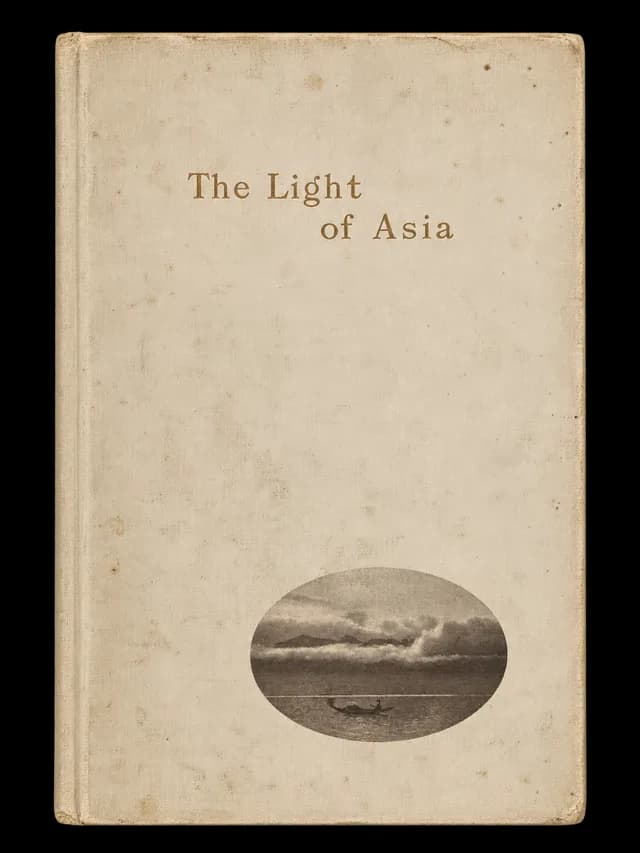
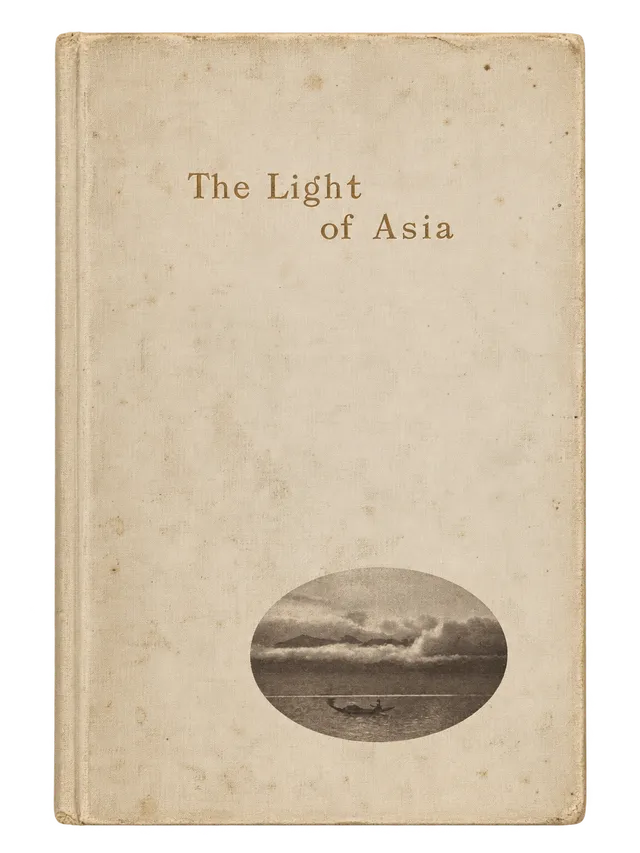
The 1908 edition here appeared after his death and credits Mabel Eardley-Wilmot with thirty-two photographs of Indian scenery. Its illustration list pairs landscapes with lines from the poem. Rivers, trees and changing light become contemplative accompaniments to the prince’s movement from protected life towards suffering and renunciation. These pictures need not document the historical events they accompany: their captions invite a later reader to connect a view of place with the action and mood of the verse.