Journalism, literary success and family life
Born in Bombay in 1865, Kipling was educated in England before returning to India to work in newspapers. Stories and verse grew from that journalistic experience. After returning to England in 1889, he married Caroline Balestier and spent several years in Vermont, where The Jungle Books formed part of his expanding literary career.
The family later settled in Sussex, purchasing Bateman’s in 1902. Kipling wrote fiction for adults and children, poetry and historical fantasies, and received the Nobel Prize in Literature in 1907. He championed British imperial power, a commitment inseparable from important parts of his writing. Family losses also marked his life: his daughter Josephine died in 1899 and his son John was killed in the First World War. Kipling’s later work included service with the Imperial War Graves Commission. He died in 1936.
Routes, labour and a claimed inheritance
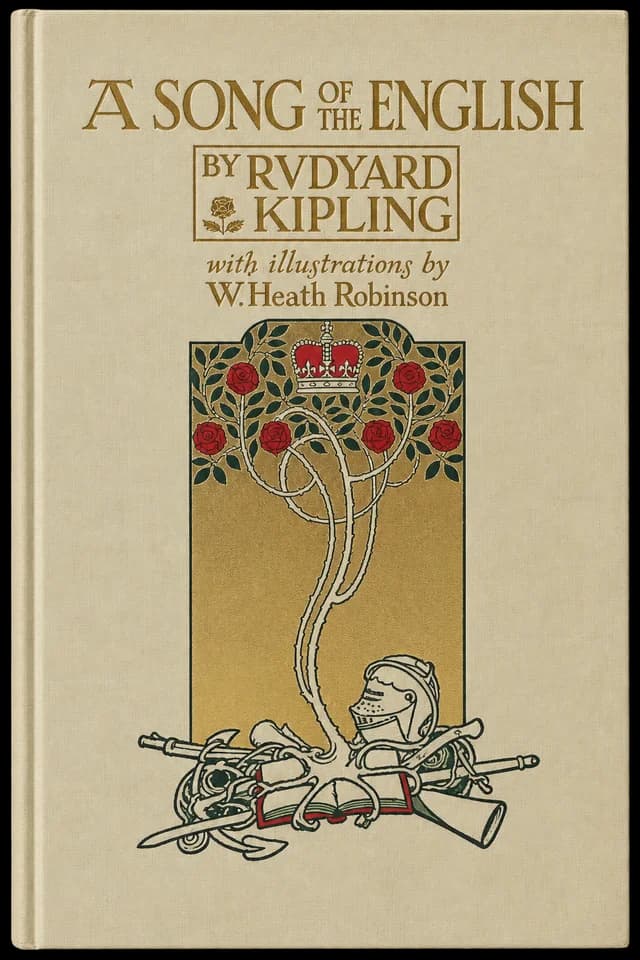
The illustrated A Song of the English here names W. Heath Robinson as artist. The New York title is undated, while the copyright leaf gives 1909. Its poems move among coastal lights, dead voyagers, deep-sea cables and voices addressing a dispersed imperial community.
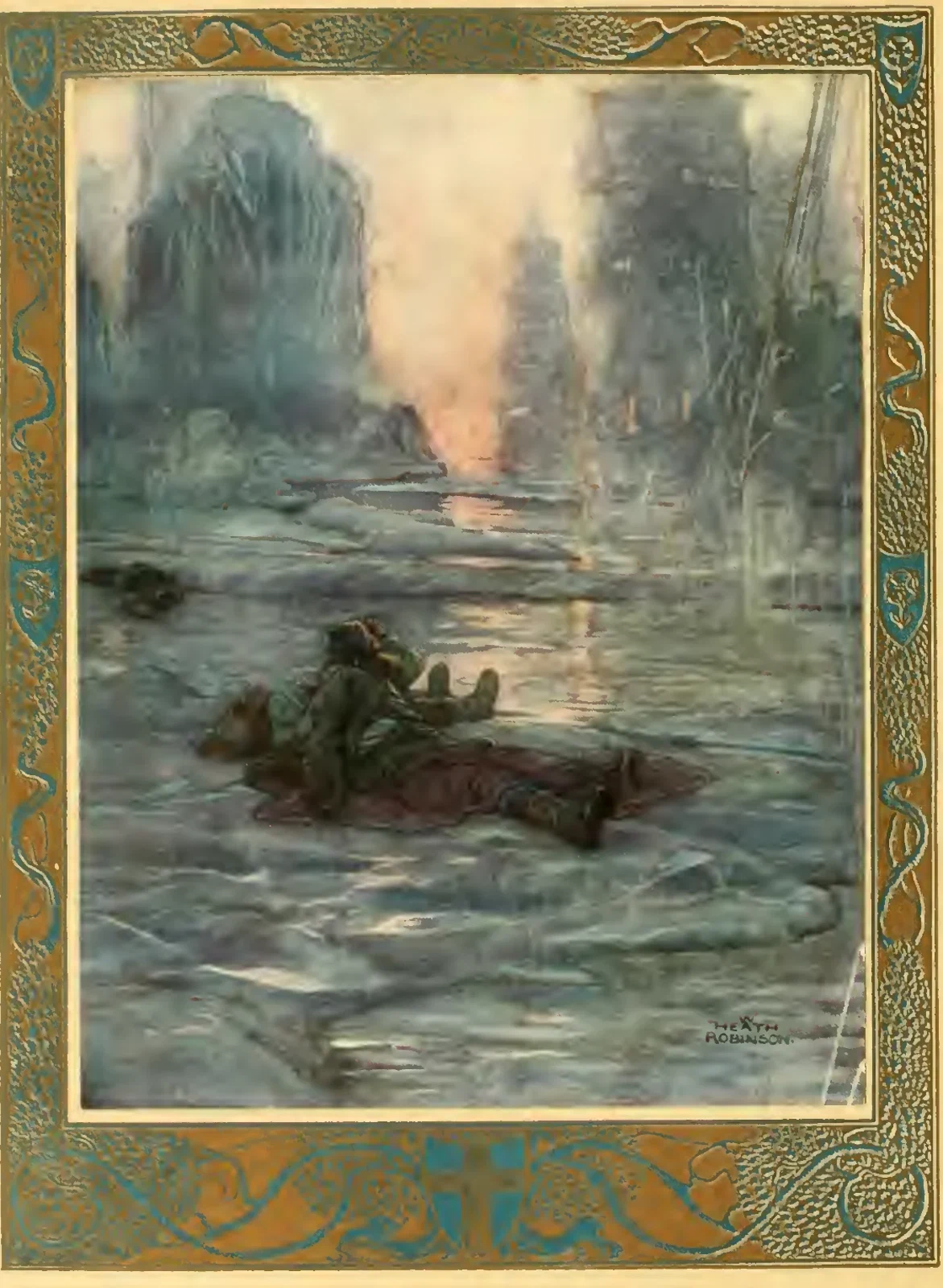
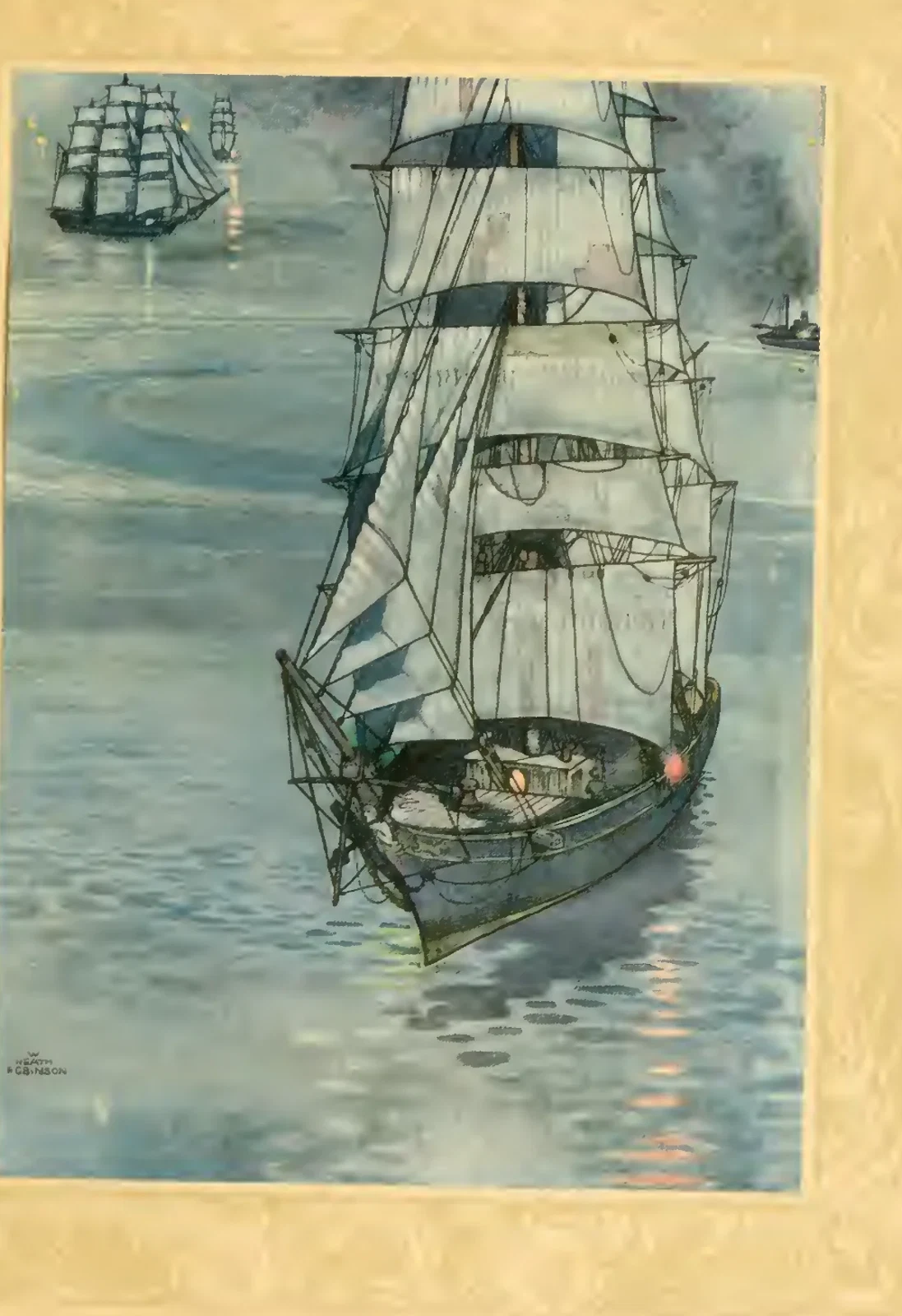
In The Deep-Sea Cables, an otherwise silent ocean floor carries warning, commerce, sorrow and greeting. Infrastructure becomes a means of imagining distant lives as connected. Elsewhere the dead direct the living towards paths marked by earlier sacrifice, turning loss into a claimed inheritance. The collective voice gives duty and possession a persuasive continuity while leaving other perspectives outside its account. Robinson’s figures, landscapes and changes of scale add visual force to this poetic world. Formal invention and the politics of belonging work together throughout the volume.