An asylum superintendent and a literary disciple
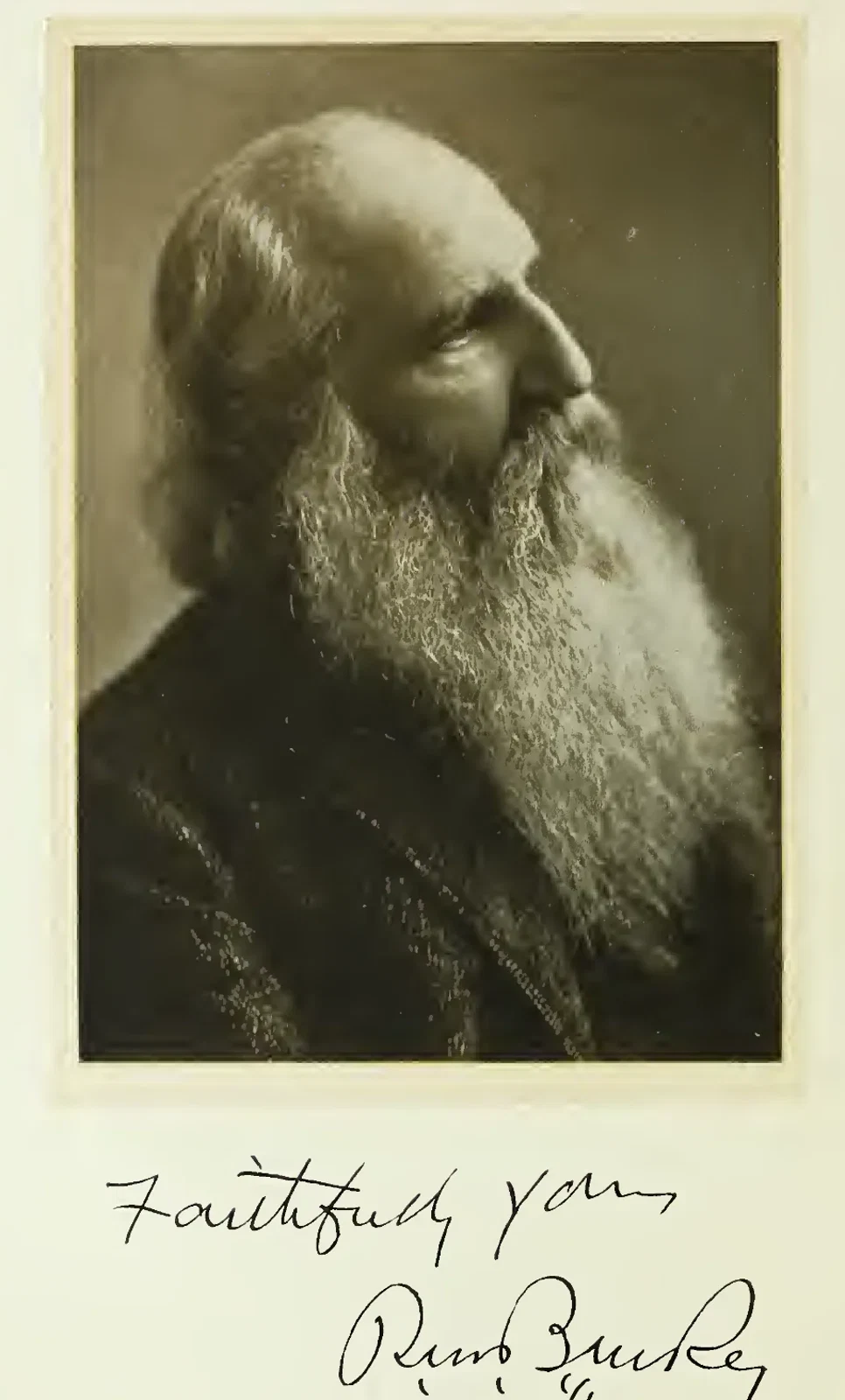
Born in England in 1837, Bucke moved with his family to Upper Canada as an infant. Reading in his father’s library, travel in the United States and medical training at McGill preceded practice in Sarnia. He became superintendent of the Hamilton asylum in 1876 and transferred to the London, Ontario, asylum in 1877, remaining there until his death in 1902.
His administration reduced reliance on restraints while also authorising harmful surgical experiments, including gynaecological operations on women under unproved theories of mental illness. Literary and philosophical interests occupied another part of his life. He became a friend, biographer and literary executor of Whitman, whose poetry he associated with his own reported illumination. His medical work and spiritual writing both drew on theories of nervous function and human development, making their historical assumptions part of his legacy.
An intense experience and a framework for other lives
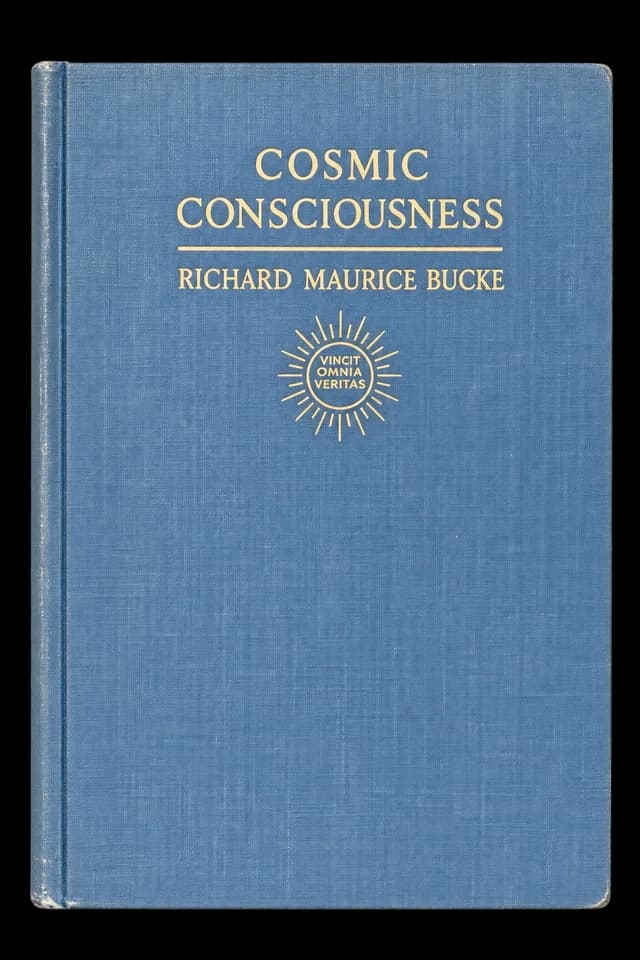
The Innes & Sons copy of Cosmic Consciousness here is dated Philadelphia 1905. Its notice distinguishes commentary from extracts through different type sizes, helping readers separate Bucke’s interpretation from the words and accounts he brings together.
The opening illumination is first perceived as an external fire and then understood as inward light, accompanied by joy and certainty about life and immortality. Bucke makes such experiences the basis of a further stage beyond ordinary awareness and self-consciousness. Religious figures, poets and personal witnesses become cases within that scheme. The intensity of a testimony and the evolutionary classification imposed on it remain distinct kinds of claim. His period’s racial hierarchies also enter the argument; they reveal the limitations of the framework through which he sought to explain spiritual experience.