A lawyer writing as a professor
Lewis was born in London in 1839. His professional life included law, journalism and translation, while his interest in conjuring led to books published under the Hoffmann name. Modern Magic appeared in 1876 and became the beginning of a sequence of substantial manuals. He also translated work by the French conjurer Robert-Houdin.
The books brought practical explanations into a form readers could study and rehearse. Lewis acknowledged the performers, dealers and periodicals whose material he used, while recognising how difficult it could be to establish who first invented a successful effect. His public identity as Professor Hoffmann linked a body of instructional writing that continued through the later years of his life.
The trick as the audience sees it
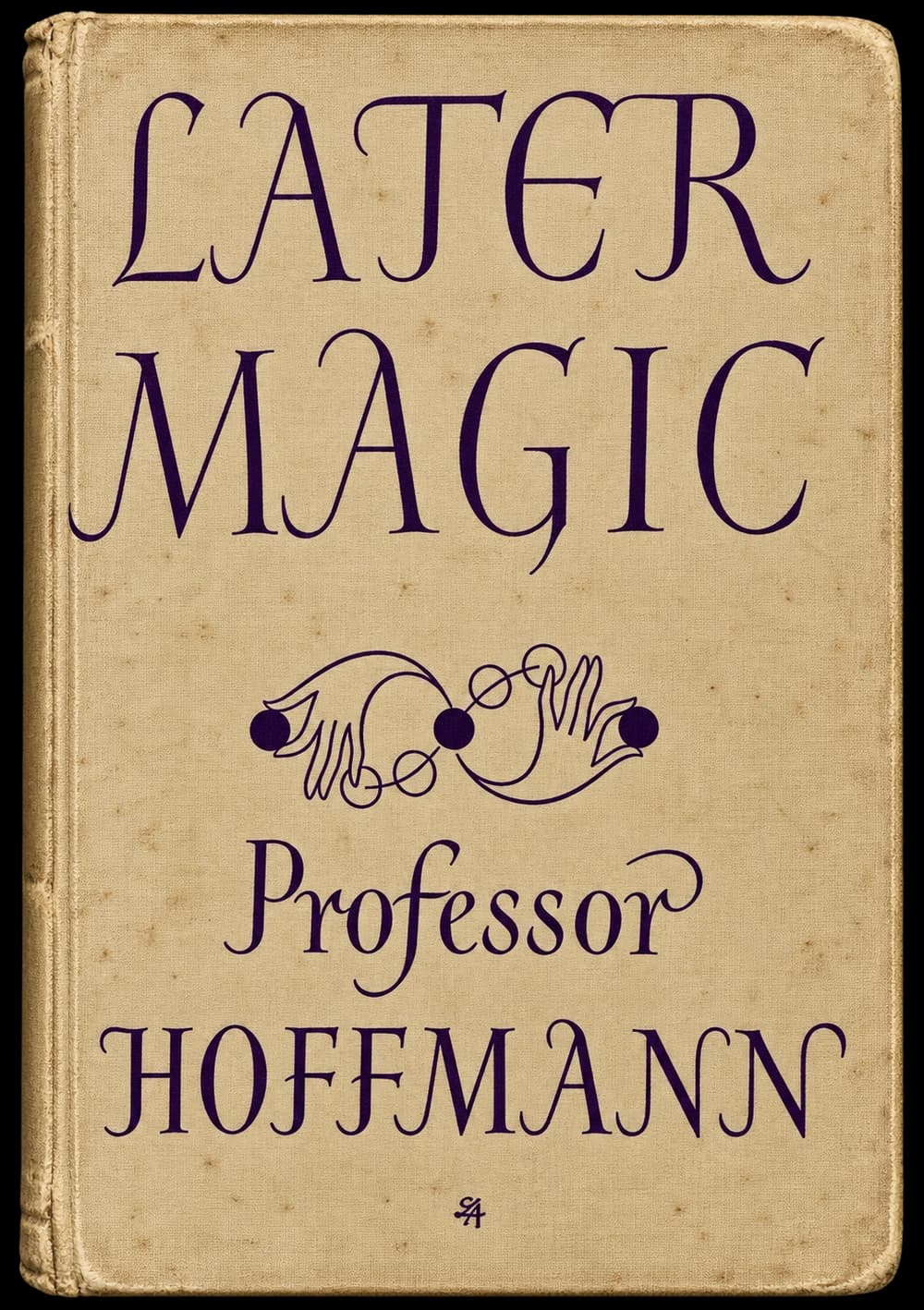
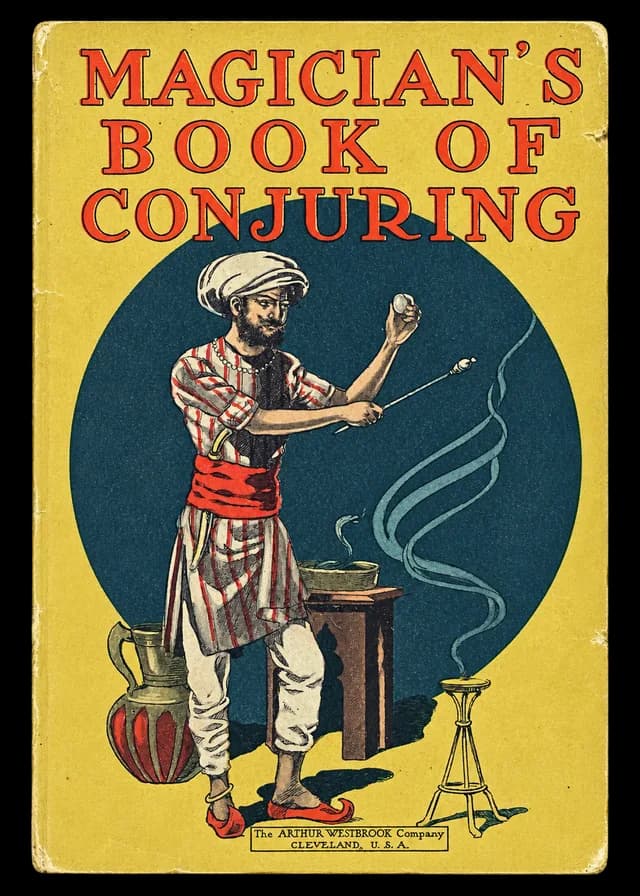
Later Magic begins with the performer’s clothing and the devices that can be hidden within it. Drawings and instructions reveal the concealed action, but Hoffmann insists that disclosure alone falls short of an artistic performance. The smaller Magician’s Book of Conjuring works through familiar objects, including cups and balls. A spoken explanation can direct attention while a hand makes a different movement. Lumitheca holds a 1904 Later Magic and an undated Cleveland printing of the shorter handbook.