Collecting stories and studying the natural world
Born in Christiania in 1812, Asbjørnsen grew up in a glazier’s household where apprentices and customers could bring stories from elsewhere. He met Jørgen Moe during his schooling, and their collecting partnership developed in the 1830s. Norske folkeeventyr began appearing in instalments in December 1841. Their retellings adapted oral narratives to literary publication and helped shape a distinctly Norwegian written voice.
Teaching and scientific study accompanied the collecting. Asbjørnsen investigated marine life, including a notable starfish discovery in the Hardangerfjord, and later trained in forestry at Tharandt in Saxony. Government work took him into forest management and the study of peat resources. He also wrote about natural history, agriculture and cooking for wider audiences. He died in 1885, leaving a career in public knowledge that extended well beyond the fairy-tale partnership.
A bargain and an impossible journey
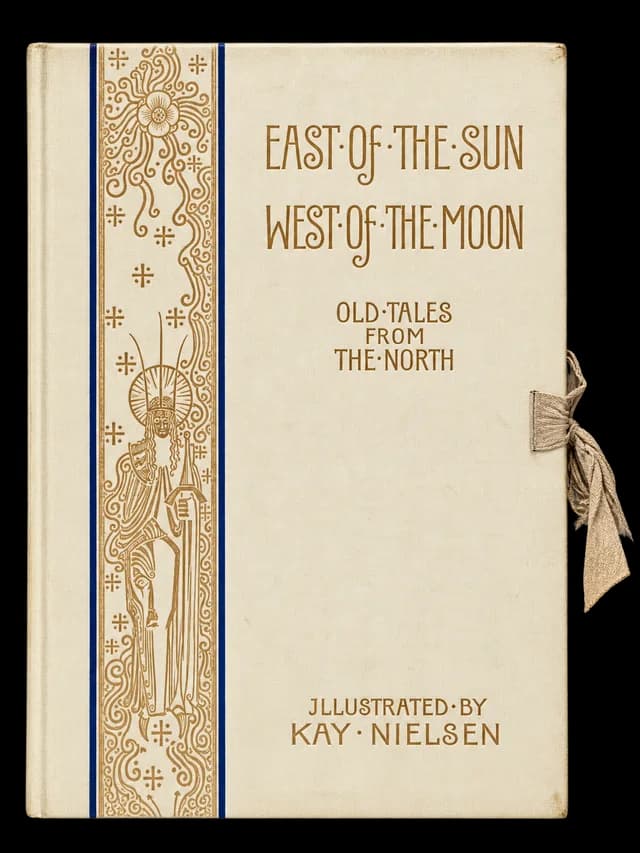
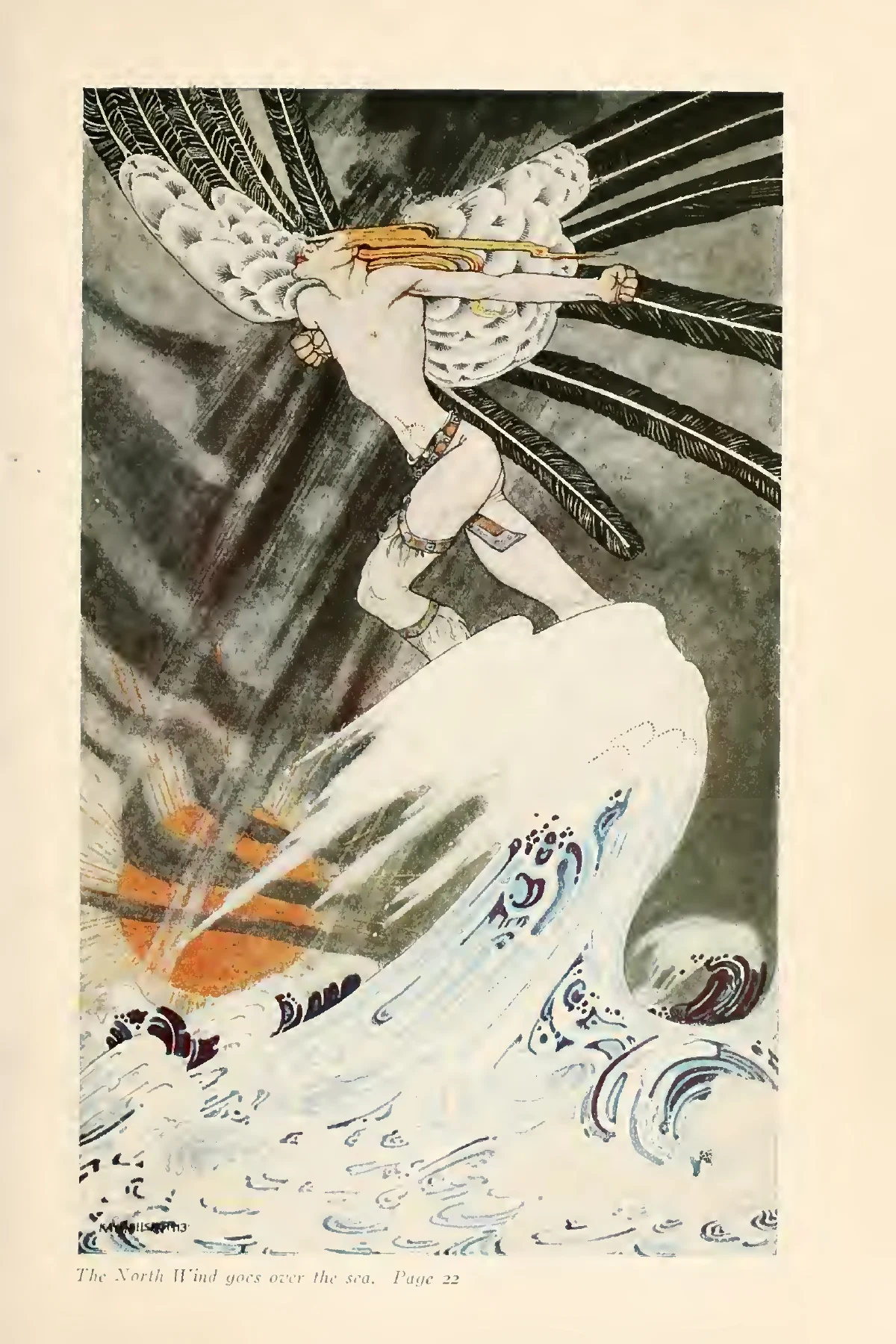
East of the Sun and West of the Moon selects fifteen stories from the joint collection. Its preface acknowledges George Webbe Dasent’s English versions and Kay Nielsen’s illustrations. The New York copy here is undated. Collection and retelling, English translation and visual interpretation each contribute to the book’s form.
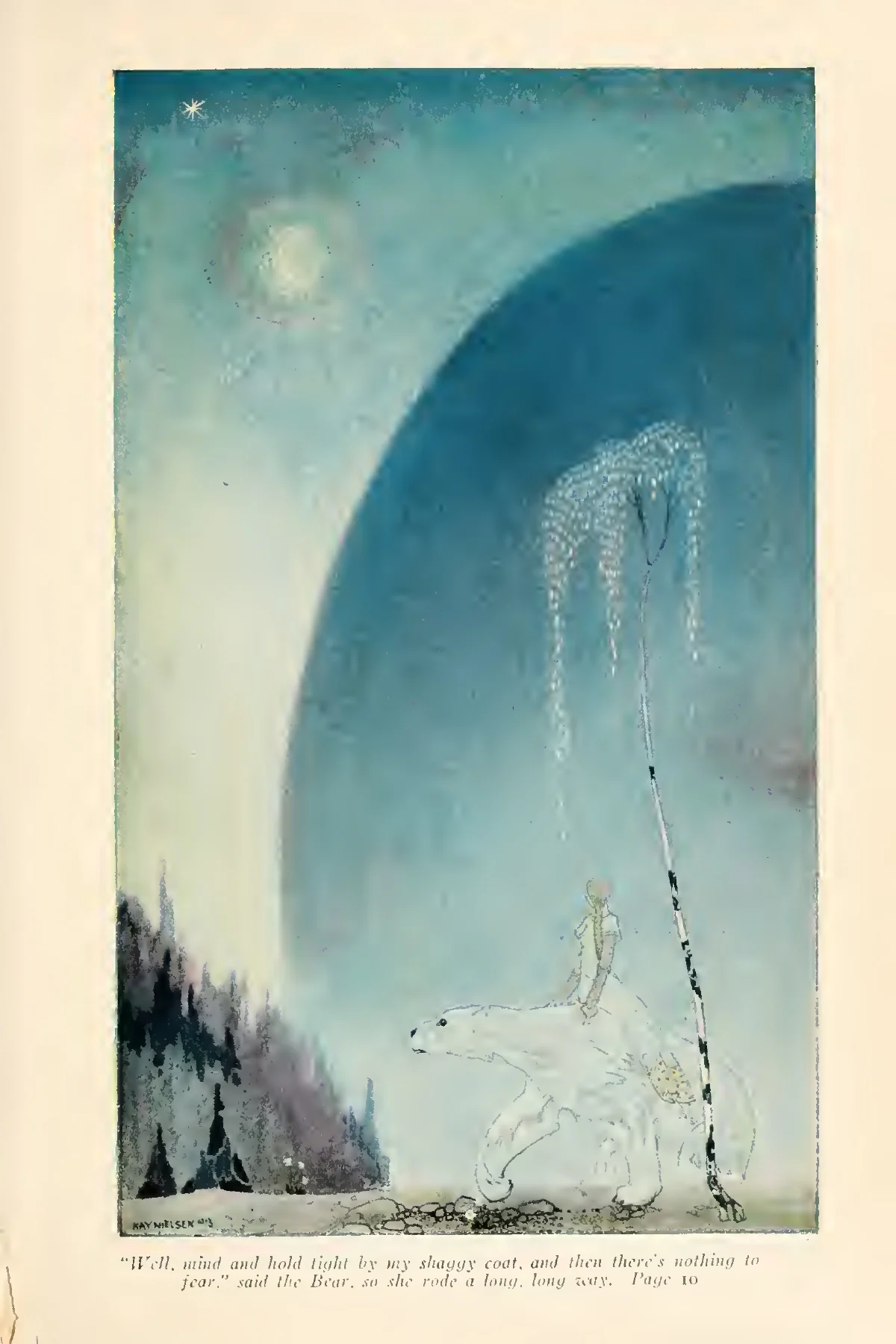
The title story begins when a white bear offers a poor household riches in exchange for its youngest daughter. Her initial refusal gives the bargain human resistance before the fantastic journey begins. Once she enters the illuminated castle, a silver bell appears to make wishes effortless. That movement between pressured choice and apparent abundance supplies a thread through the adventure. Nielsen’s scenes enlarge selected distances, figures and moments of waiting, giving a later visual rhythm to narratives already shaped by tellers and collectors.