From excavations to the stage
As a boy near St Petersburg, Roerich accompanied an archaeologist excavating local burial mounds. He began collecting objects himself, and scenes of early Slavic life became subjects for his painting. A much larger audience saw his reconstruction of the distant past in Paris in 1913. For the Ballets Russes production of The Rite of Spring he designed the scenery and costumes and worked with Igor Stravinsky on the scenario.
Roerich exhibited across the United States before setting out with his family for Asia in 1923. His wife Helena shared his interest in religious traditions, and their son George brought a scholar’s knowledge of Asian languages to the expedition. The family eventually settled in the Kullu Valley in India. From there Roerich continued a campaign to protect museums and historic monuments in wartime. The treaty that bears his name was signed in Washington in 1935. Nicholas and Helena also founded the Agni Yoga Society in New York, connecting their religious interests with an ethic of spiritual development in everyday life.
The voices in Shambhala
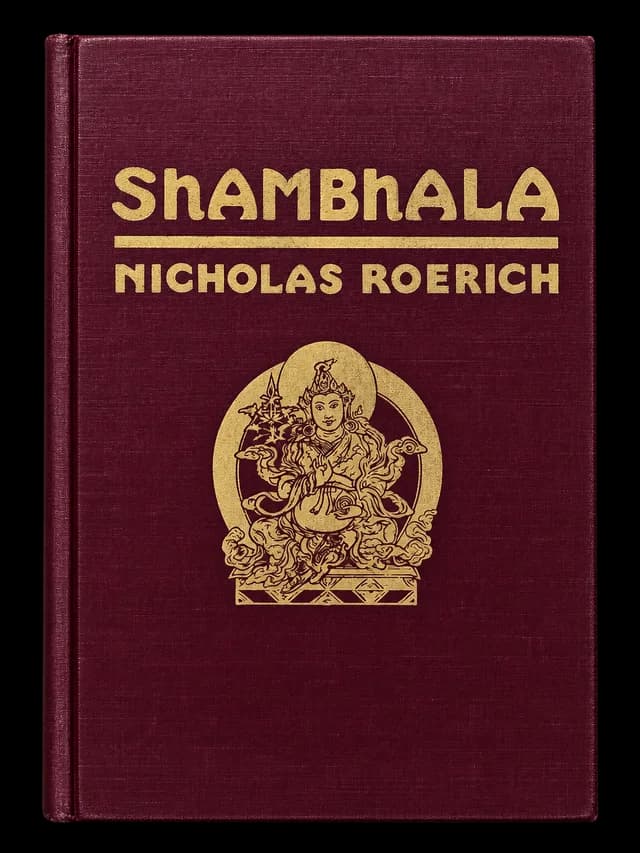
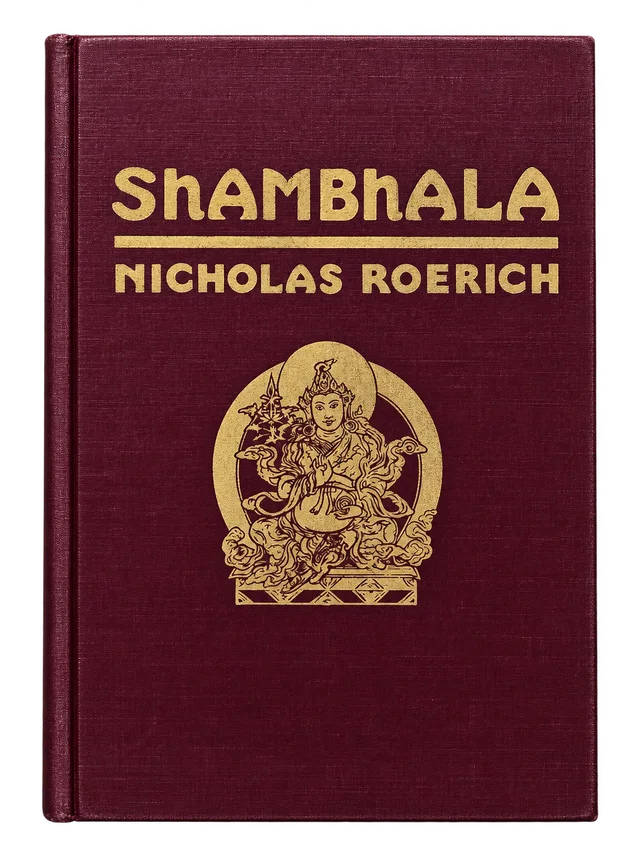
Roerich opens the title essay with a visitor questioning a lama. When the lama places Shambhala beyond the ocean, his visitor answers with a story of a salt caravan said to have passed its borders. Their exchange lets the reader hear two understandings of a sacred landscape, as a heavenly domain and as a place one might reach on foot. Elsewhere in the collection Roerich turns to American art and the difficulty of getting news of exhibitions while travelling in Asia.