The remembered master and the limits of biography
Sima Qian’s Records of the Historian supplies the best-known traditional life. It describes a keeper of Zhou archives, a consultation with Confucius and a departure towards the frontier, where a border official requests a written account of the teaching. These episodes belong to an influential transmitted story; their details do not establish a securely dated personal history.
Scholars continue to disagree about Laozi’s identity and the formation of the text bearing the name. Laozi also acquired a divine identity within religious Daoism, extending his significance beyond philosophical authorship. The Daodejing’s discussions of the Way, virtue, naturalness and non-action have supported different spiritual, ethical and political readings. That interpretive history is more securely accessible than a continuous life of a single ancient writer.
An ancient text through a modern interpreter
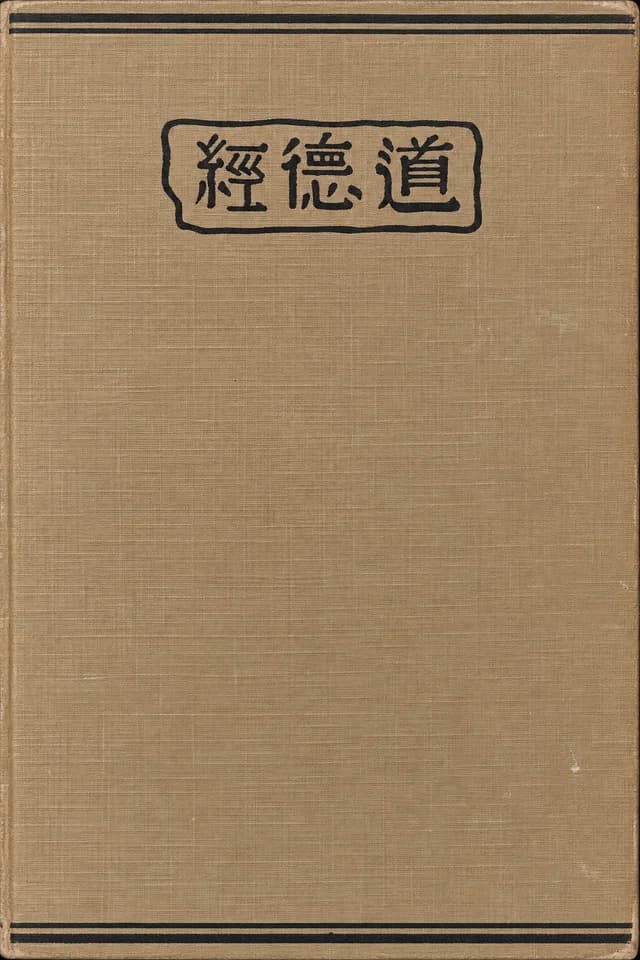
Philip Wellby published The Book of the Simple Way in 1904. Its title names Walter Gorn Old as translator, introducer and commentator. The sixth-century chronology printed there represents a traditional attribution. It should not be treated as proof that the English volume transmits a text fixed at that date.
Old’s chapter headings foreground nothingness, government, humility and return to nature, already directing the reader’s attention. His dedication to Andrew Carnegie connects the work with a contemporary ideal of assistance that permits development from within. Such framing reveals the interpreter’s own concerns alongside the received sayings. Chapters on non-action acquire particular force beside those on government: the question becomes how action works, and what kinds of intervention may defeat their intended purpose.