Education, faith and rural society
Day was born in 1824 in the Burdwan district of Bengal. His father sent him to Alexander Duff’s General Assembly’s Institution in Calcutta, where English education and Christian instruction were closely linked. He converted to Christianity in 1843 and later worked as a minister and teacher.
Experience in Burdwan brought him into close contact with village life and troubled relations between landlords and tenants. Bengal Peasant Life drew on that knowledge, giving rural suffering a place in English-language fiction. His editorial work also advocated education in Bengali, complicating any simple division between English learning and vernacular culture. The later Folk Tales of Bengal extended his attention to rural traditions through a collection made from several speakers. He died in 1894.
A collection that describes its own making
The preface to the held text is signed at Hooghly College in February 1883. Day recalls childhood storytelling, admits the limits of his memory and names later sources, including a Bengali Christian woman, Brahmans, a barber and a servant. They spoke in Bengali; he subsequently rendered their tales in English.
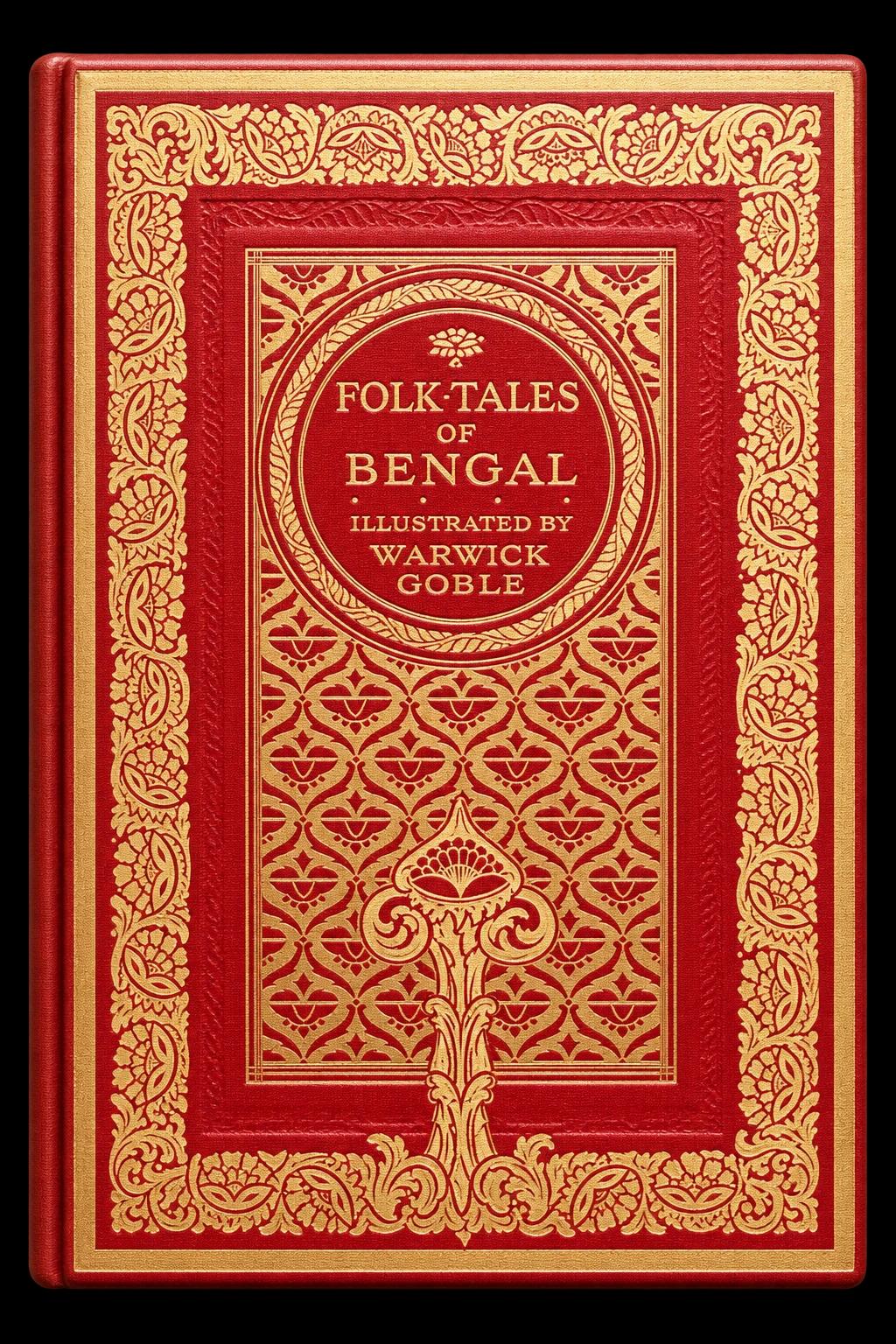
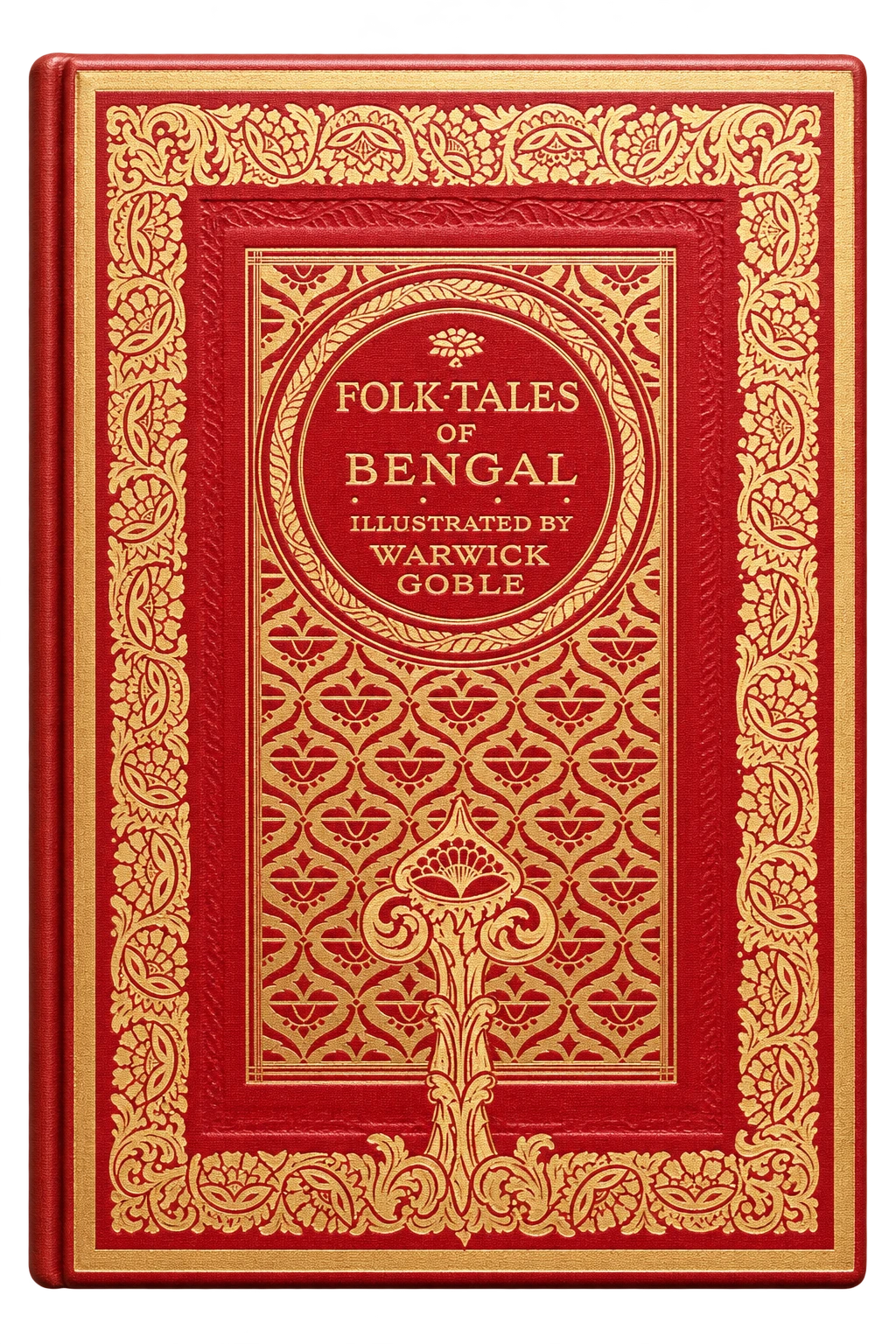
Selection accompanied translation: Day rejected material he judged to contain additions. Yet he also preserved a recurring ending formula whose meaning he could not fully explain. Stories such as Life’s Secret organise danger around objects nested within other objects, while a bell in The Boy with the Moon on His Forehead carries a perilous promise. The catalogue cover advertises Warwick Goble’s later illustrations; the retained Reader supplies the earlier 1883 text.