From the labour movement to Theosophy
Born in Iowa in 1859, Rogers worked in teaching, railway employment and the labour movement before becoming known for Theosophy. He edited labour newspapers and was among the American Railway Union officials imprisoned after the 1894 Pullman strike. Public speaking and organising remained central to his later work, even as his philosophical interests changed.
He joined the Theosophical Society in 1903 and travelled widely to lecture and establish local groups. He served as the American organisation’s president from 1920 to 1931. During his administration it secured a permanent headquarters at Wheaton, Illinois; the main building, first occupied in 1927, was later named for him. Rogers continued lecturing in later life and died in 1953.
Learning through conduct
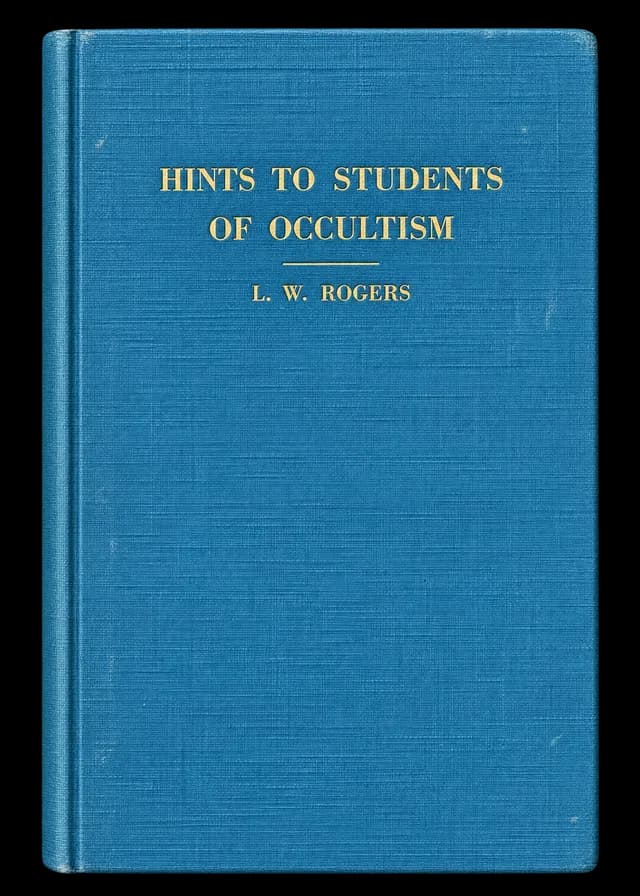
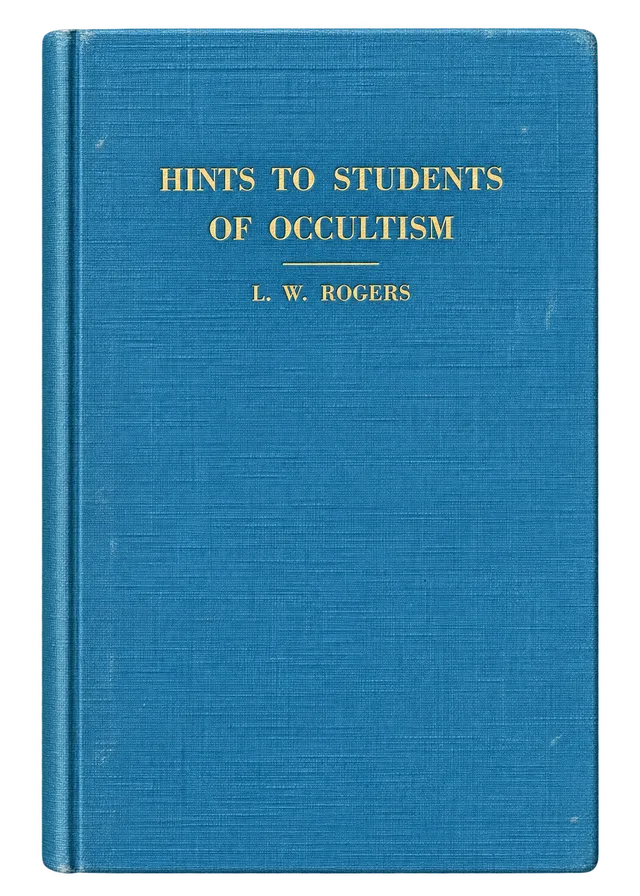
The held Hints to Young Students of Occultism is the fourth edition, published in Los Angeles in 1917, with a 1911 copyright. Its preface describes a modest purpose: suggestions for applying occult reading to ordinary life, rather than an exhaustive or systematic treatise. Rogers writes for beginners who have encountered Theosophy’s account of human evolution and want to understand what to do with it.
He begins by challenging the hope that a teacher can hand over a formula for immediate clairvoyance or spiritual power. Instruction can point a way, he argues, but cannot replace a student’s effort. Knowledge must be matched by the development of character. That emphasis connects the booklet’s spiritual aims with habits of work, attention and responsibility. The promised spiritual evolution belongs to his Theosophical outlook, while his argument centres on the sustained conduct he believed it required.