Literary innovation and political allegiance
Born Knud Pedersen in 1859, Hamsun grew up in Nordland. He worked in shops, teaching and other temporary occupations before two periods in the United States. Hunger, published in 1890 after his return, established his reputation for closely following an unsettled consciousness. Mysteries and Pan continued that exploration.
Farming and rural life later became central concerns, especially in Growth of the Soil. He received the Nobel Prize in Literature in 1920. His subsequent political allegiance cannot be separated from his public life: he supported Nasjonal Samling, urged Norwegian soldiers to cease resistance in 1940 and met Hitler in 1943. After the war he faced a compensation case, rather than a criminal trial. He died at Nørholm in 1952.
A northern summer remembered uncertainly
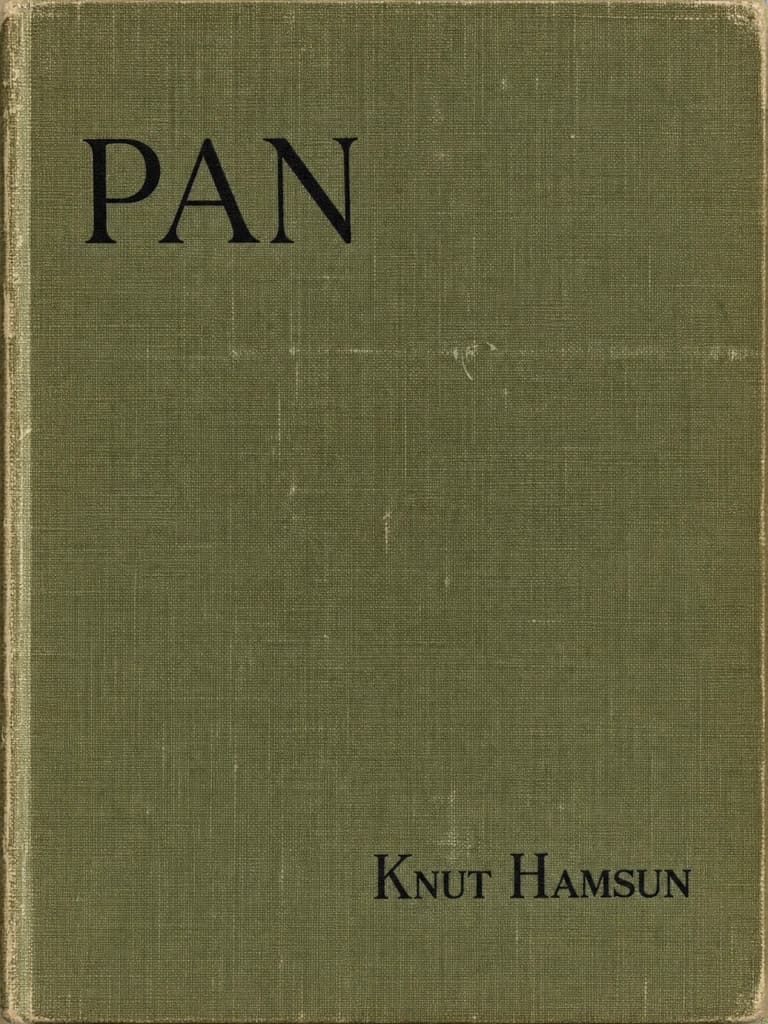
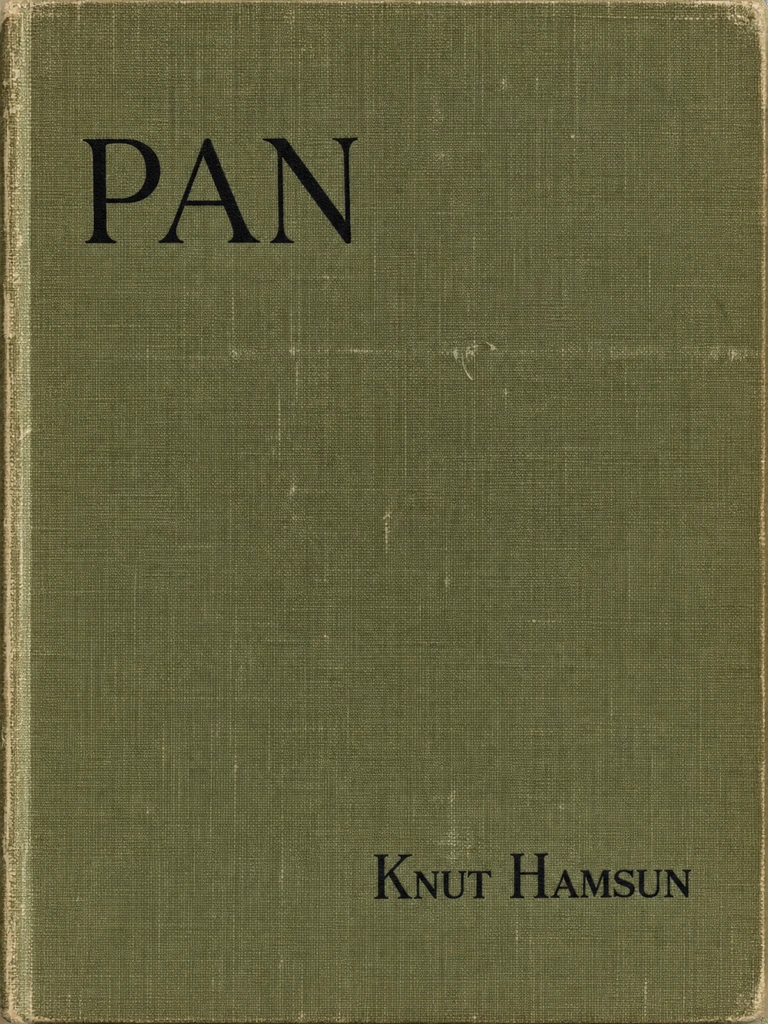
Pan first appeared in 1894. The held English copy credits W. Worster’s translation and identifies a second impression in April 1921. Its opening brings the narrator Thomas Glahn back to a remembered summer through a pair of feathers.
Glahn says that little troubles him, yet the recollection returns to an old wound and encounters he tries to minimise. He allows that some things may have been dreamed and others forgotten. The landscape seems easier for him to understand than Edvarda, whom he describes through small details of clothing, gesture and attention to his dog. His closeness to the woods does not guarantee insight into another person. The force of the account lies partly in the distance between his explanations and the doubts they create.